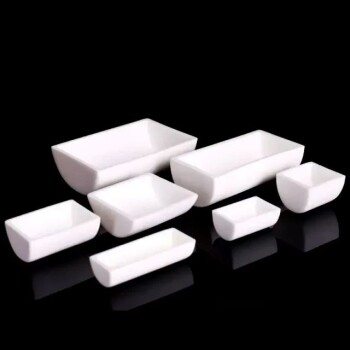
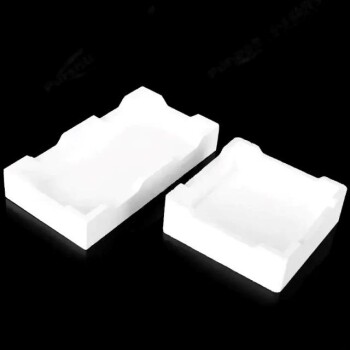
In the carbonization of aluminum-based metal-organic frameworks (Al-MOFs), a ceramic boat acts as a chemically inert, high-temperature vessel designed to safely contain powder precursors. By withstanding extreme heat without reacting, it ensures the structural integrity of the process and the purity of the resulting carbon nanomaterials.
The ceramic boat is critical for maintaining experimental precision. It provides a stable, non-reactive environment that withstands temperatures up to 900°C, ensuring that the carbonization process yields high-purity materials without contamination or loss.
The Necessity of Refractory Containment
Withstanding Extreme Thermal Stress
Carbonization is a high-energy process that exposes materials to intense heat. The ceramic boat is a refractory container, specifically engineered to maintain its physical shape and structural strength at elevated temperatures, such as 900°C.
Securing Powdered Precursors
Aluminum-based MOF precursors typically exist in a loose powder form. The boat provides a physical boundary that securely holds these powders, preventing them from displacing or dispersing inside the furnace during the heating cycle.
Ensuring Material Purity
Chemical Stability and Inertness
The most critical role of the ceramic boat is its chemical stability. It is designed to be totally inert, meaning it will not react with the aluminum-based precursors during the phase change.
Preventing Sample Contamination
Because the boat resists reacting with the sample, it prevents the introduction of impurities. This ensures that the resulting carbon nanomaterials are strictly derived from the MOF precursors, maintaining the high purity required for advanced applications.
Operational Advantages and Yield
Facilitating Complete Collection
Beyond protection, the boat serves a practical logistical role. Once the carbonization process is finished, the vessel allows for the complete collection of the derived carbon powder.
Maximizing Material Recovery
The design ensures that the final product is not lost to the furnace floor or fused to the container. This allows researchers to recover the maximum possible yield from their initial precursor input.
Optimizing Your Carbonization Setup
Selecting the right containment vessel is as important as the temperature profile itself when synthesizing carbon materials.
- If your primary focus is material purity: Rely on the ceramic boat's inert nature to prevent side reactions that could degrade the quality of your carbon nanomaterials.
- If your primary focus is sample recovery: Utilize the boat to ensure efficient and complete collection of the final powder, minimizing experimental loss.
Ultimately, the ceramic boat is the foundational tool that bridges the gap between raw precursor potential and a pure, usable carbon product.
Summary Table:
| Feature | Role in Al-MOF Carbonization | Key Benefit |
|---|---|---|
| Thermal Resistance | Withstands temperatures up to 900°C | Prevents vessel failure under extreme heat |
| Chemical Inertness | Non-reactive with aluminum precursors | Ensures high purity of carbon nanomaterials |
| Refractory Design | Securely contains loose powder precursors | Prevents sample displacement during heating |
| Material Recovery | Smooth, non-stick surface | Maximizes yield and simplifies collection |
Elevate Your Materials Synthesis with KINTEK Precision
Achieving high-purity carbon nanomaterials requires more than just heat; it requires the right containment. KINTEK specializes in premium laboratory equipment and consumables, including high-performance ceramic boats, crucibles, and PTFE products designed for the most demanding thermal processes.
Whether you are performing MOF carbonization in our high-temperature tube or vacuum furnaces or require specialized crushing and milling systems for precursor preparation, our comprehensive portfolio—from hydraulic pellet presses to high-pressure reactors—is engineered to ensure your experimental success.
Ready to optimize your lab's yield and precision? Contact our technical experts today to find the perfect solutions for your research!
References
- Dasom Jeong, Jeasung Park. Synthesis of Aluminum-Based Metal–Organic Framework (MOF)-Derived Carbon Nanomaterials and Their Water Adsorption Isotherm. DOI: 10.3390/nano13162351
This article is also based on technical information from Kintek Solution Knowledge Base .
Related Products
- Aluminized Ceramic Evaporation Boat for Thin Film Deposition
- Ceramic Evaporation Boat Set Alumina Crucible for Laboratory Use
- Alumina Al2O3 Ceramic Crucible Semicircle Boat with Lid for Engineering Advanced Fine Ceramics
- Carbon Graphite Boat -Laboratory Tube Furnace with Cover
- Engineering Advanced Fine Ceramics Alumina Al2O3 Crucible With Lid Cylindrical Laboratory Crucible
People Also Ask
- What is the source of evaporation for thin film? Choosing Between Thermal and E-Beam Methods
- Why are high-purity ceramic boats used for lignin activation? Ensure Purity & Thermal Stability
- Why is an alumina boat and Ti3AlC2 powder bed necessary for Ti2AlC sintering? Protect MAX Phase Purity
- Why use an alumina boat for high-temperature carbon activation? Ensure Maximum Material Purity & Thermal Stability
- Why is an alumina boat selected for catalyst precursors? Ensure Sample Purity at 1000 °C