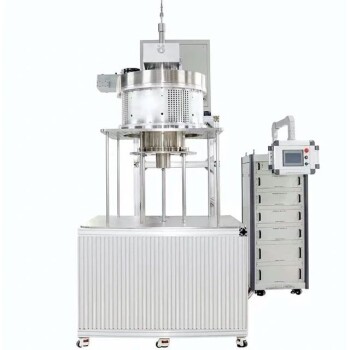
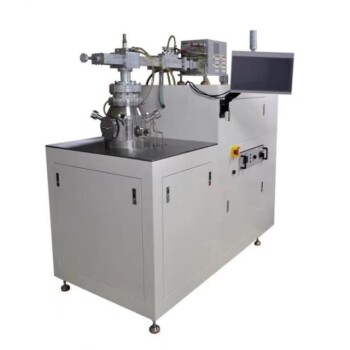
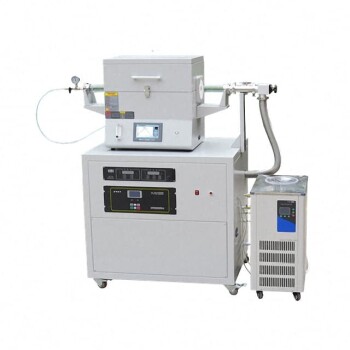
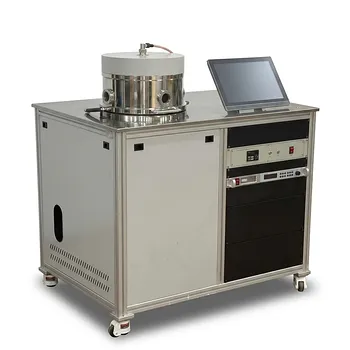
A laboratory-grade Chemical Vapor Deposition (CVD) reactor functions as a precision thermal degradation system. In the context of Low-Density Polyethylene (LDPE) and Polypropylene (PP) recycling, it serves as a controlled environment that facilitates the catalytic pyrolysis of these plastics into usable hydrocarbons.
While CVD systems are traditionally associated with depositing material layers, their role here is reversed: they provide the rigorous thermal stability and atmospheric isolation required to break down complex solid polymers into valuable liquid and gaseous fuels.
Creating the Ideal Pyrolysis Environment
Ensuring Anaerobic Integrity
The fundamental role of the CVD reactor is to maintain anaerobic conditions.
For pyrolysis to occur, oxygen must be strictly excluded to prevent the plastics from simply burning (combustion). The CVD reactor creates a sealed, stable atmosphere that forces the plastic to undergo thermal degradation.
High-Precision Thermal Control
Successful catalytic conversion relies on maintaining specific, high temperatures.
The reactor is tasked with holding the system at a precise set point, typically 500°C. This stability ensures the thermal energy is sufficient to crack the polymer chains without fluctuating enough to cause inconsistent results.
The Catalytic Conversion Mechanism
Managing Vapor-Phase Interactions
The reactor design plays a critical role in managing the physical state of the reactants.
As the solid LDPE and PP are heated, they volatilize into gases. The reactor chamber is engineered to guide these plastic vapors effectively through the system.
Maximizing Catalyst Contact
The core of this process is the interaction between the vapor and the N-clay catalyst.
The reactor ensures that the plastic vapors come into full, direct contact with the pre-set catalyst bed. This contact is the trigger that converts the long polymer chains into shorter hydrocarbon molecules.
Transformation of Matter
The ultimate function of the system is a phase conversion.
Through this controlled heating and catalytic exposure, the reactor successfully transforms solid plastic waste into liquid or gaseous hydrocarbons, suitable for use as fuels or chemical feedstocks.
Operational Considerations and Trade-offs
Dependence on Pre-Set Configuration
The system relies on a "pre-set" catalyst arrangement.
This implies that the reactor is likely optimized for batch processing or specific experimental runs rather than continuous, variable adjustments during operation. The setup phase is critical to success.
Sensitivity to Design Constraints
The efficiency of the conversion is dictated by the chamber design.
If the reactor design fails to facilitate "full contact" between the vapor and the catalyst, the conversion rate will drop. The hardware must be specifically matched to the volume and flow rate of the plastic vapors being generated.
Making the Right Choice for Your Research
To effectively utilize a CVD reactor for plastic pyrolysis, align your setup with your specific data requirements:
- If your primary focus is reaction kinetics: Prioritize the reactor's ability to maintain the target temperature of 500°C with minimal fluctuation to ensure data accuracy.
- If your primary focus is product yield: Ensure the reaction chamber geometry is optimized to force maximum contact time between the plastic vapors and the N-clay catalyst.
By leveraging the precise environmental controls of a CVD reactor, you turn a standard deposition tool into a high-efficiency engine for polymer degradation.
Summary Table:
| Feature | Role in Pyrolysis Process | Key Benefit |
|---|---|---|
| Atmosphere Control | Ensures strictly anaerobic conditions | Prevents combustion; enables thermal degradation |
| Thermal Precision | Maintains stable 500°C environment | Ensures consistent cracking of polymer chains |
| Vapor Management | Directs plastic vapors through the system | Facilitates phase conversion from solid to gas |
| Catalyst Interaction | Maximizes vapor contact with N-clay | Enhances yield of liquid and gaseous hydrocarbons |
| System Integrity | High-precision sealed chamber | Prevents contamination and ensures reaction safety |
Revolutionize Your Polymer Research with KINTEK
Maximize your catalytic pyrolysis yields and ensure absolute experimental precision with KINTEK’s advanced laboratory systems. Whether you are optimizing reaction kinetics at 500°C or engineering complex vapor-phase interactions, KINTEK specializes in high-performance CVD and PECVD reactors, high-temperature furnaces, and crushing systems tailored for material science.
From PTFE consumables and crucibles to specialized catalyst bed reactors, our equipment provides the anaerobic integrity and thermal stability your lab requires. Contact KINTEK today to discuss your specific research needs and find the ideal reactor configuration for your laboratory!
References
- Sunday Ogakwu Adoga, Patrick Ode. Catalytic pyrolysis of low density polyethylene and polypropylene wastes to fuel oils by N-clay. DOI: 10.2478/auoc-2022-0007
This article is also based on technical information from Kintek Solution Knowledge Base .
Related Products
- Microwave Plasma Chemical Vapor Deposition MPCVD Machine System Reactor for Lab and Diamond Growth
- 915MHz MPCVD Diamond Machine Microwave Plasma Chemical Vapor Deposition System Reactor
- Cylindrical Resonator MPCVD Machine System Reactor for Microwave Plasma Chemical Vapor Deposition and Lab Diamond Growth
- Customer Made Versatile CVD Tube Furnace Chemical Vapor Deposition Chamber System Equipment
- Split Chamber CVD Tube Furnace with Vacuum Station Chemical Vapor Deposition System Equipment Machine
People Also Ask
- How does a microwave plasma reactor facilitate the synthesis of diamond? Master MPCVD with Precision Technology
- What are the advantages of a Microwave Plasma CVD reactor for MCD/NCD coatings? Precision Multilayer Diamond Engineering
- How do vacuum pumps and valves collaborate in MPCVD? Achieve Precise Pressure Control for Superior CNT Synthesis
- How does MPCVD work? A Guide to Low-Temperature, High-Quality Film Deposition
- What is microwave plasma chemical vapor deposition? A Guide to High-Purity Diamond Film Growth