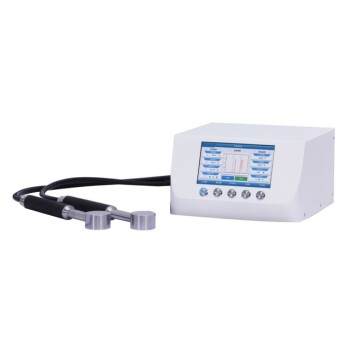
A constant temperature heating system serves as the critical regulatory mechanism during the organic acid treatment of H-beta zeolites. By locking the reaction environment at a precise 333 K for 4 hours, this system provides the thermal energy required for organic acids to effectively leach aluminum atoms from the zeolite framework. Without this stabilized heat source, the de-alumination and re-alumination processes would lack the kinetic consistency needed to modify the catalyst successfully.
Precision in thermal management is not merely operational; it is chemical control. By fixing the temperature at 333 K, the system ensures that organic acids act uniformly, allowing for the deliberate fine-tuning of aluminum content and acid site distribution within the zeolite structure.
The Mechanics of Thermal Control
Facilitating Aluminum Leaching
The primary function of the heating system is to enable the chemical activity of organic acids.
Acids such as oxalic acid, malic acid, and tartaric acid require specific thermal conditions to interact with the zeolite lattice.
The 333 K setpoint ensures these acids have sufficient energy to break specific bonds and leach aluminum atoms from the framework effectively.
Ensuring Consistent Reaction Kinetics
In chemical modification, consistency is the definition of quality.
The heating system eliminates thermal gradients that could cause variable reaction rates.
By maintaining a stable environment, the system ensures that reaction kinetics are uniform across the entire batch, preventing uneven modification of the zeolite crystals.
Fine-Tuning Framework Composition
The ultimate goal of this thermal treatment is structural customization.
Controlled heating allows for the precise regulation of the de-alumination and re-alumination processes.
This control enables researchers to dictate the final aluminum content and the specific distribution of acid sites, tailoring the catalyst for specific applications.
Understanding Operational Constraints
The Impact of Temperature Deviation
Strict adherence to the 333 K setpoint is non-negotiable for reproducible results.
If the temperature drops, the organic acids may fail to leach aluminum efficiently, leading to an under-modified framework.
Conversely, excessive heat could lead to aggressive leaching that compromises the structural integrity of the zeolite beyond the intended design.
The Time-Temperature Relationship
The heating system's role is inextricably linked to the duration of exposure.
The reference standard specifies a 4-hour duration at constant temperature.
Interrupting the heat supply or failing to maintain constancy for the full duration disrupts the equilibrium of the reaction, resulting in incomplete acid distribution.
Optimizing Your Modification Process
To achieve high-performance modified H-beta zeolites, you must treat the heating system as a primary reaction variable.
- If your primary focus is Reproducibility: Ensure your equipment can maintain 333 K with negligible fluctuation to guarantee identical kinetics across different batches.
- If your primary focus is Structural Tuning: Use the stability of the heating system to isolate the effects of different organic acids (oxalic vs. malic vs. tartaric) on aluminum leaching.
Controlled heat is the invisible catalyst that transforms raw chemical potential into a precise structural reality.
Summary Table:
| Parameter | Specification | Function in Zeolite Modification |
|---|---|---|
| Temperature Setpoint | 333 K (60°C) | Provides kinetic energy for aluminum bond cleavage |
| Treatment Duration | 4 Hours | Ensures full equilibrium for de-alumination processes |
| Acid Compatibility | Oxalic, Malic, Tartaric | Facilitates specific aluminum leaching pathways |
| System Goal | Thermal Stability | Prevents uneven reaction rates and structural damage |
Elevate Your Catalyst Research with KINTEK Precision
Achieving the perfect acid site distribution in H-beta zeolites requires more than just chemistry—it requires uncompromising thermal precision. KINTEK specializes in high-performance laboratory equipment designed to meet the rigorous demands of material science.
Whether you are performing organic acid treatments or complex hydrothermal synthesis, our comprehensive range of high-temperature furnaces (muffle, vacuum, and tube), high-temperature high-pressure reactors, and precision cooling solutions ensure your reaction kinetics remain flawless.
Ready to achieve superior reproducibility in your lab? Contact KINTEK today to discover how our advanced heating systems and laboratory consumables can streamline your zeolite modification process.
References
- Jianhua Li, Xiaojun Bao. Carboxylic acids to butyl esters over dealuminated–realuminated beta zeolites for removing organic acids from bio-oils. DOI: 10.1039/c7ra05298g
This article is also based on technical information from Kintek Solution Knowledge Base .
Related Products
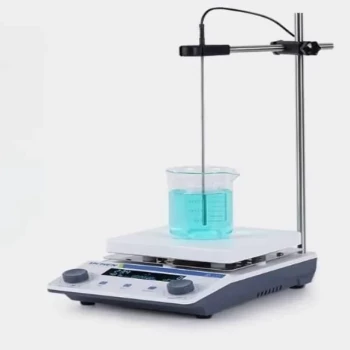
- Laboratory Small Constant Temperature Heated Magnetic Stirrer Heater and Stirrer
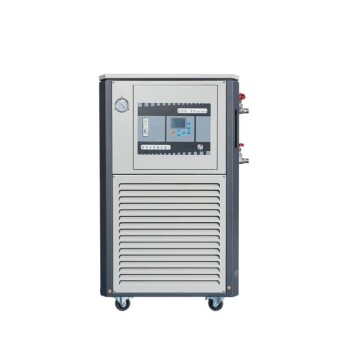
- High Temperature Constant Temperature Heating Circulator Water Bath Chiller Circulator for Reaction Bath
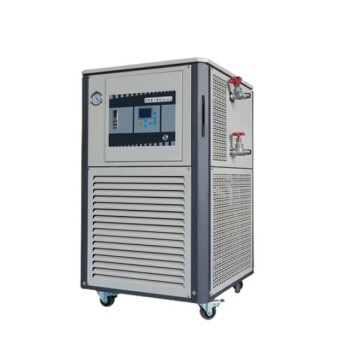
- 5L Heating Chilling Circulator Cooling Water Bath Circulator for High and Low Temperature Constant Temperature Reaction
- 10L Heating Chilling Circulator Cooling Water Bath Circulator for High and Low Temperature Constant Temperature Reaction
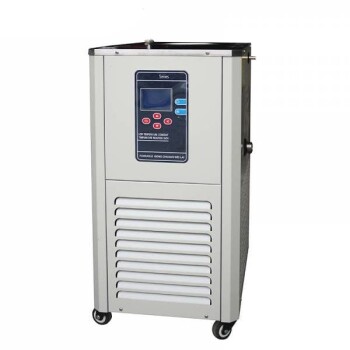
- 100L Heating Chilling Circulator Cooling Water Bath Circulator for High and Low Temperature Constant Temperature Reaction
People Also Ask
- What role does a magnetic stirrer with heating play in ZnO nanoparticle synthesis? Precision Control for Quality Results
- What role does a constant temperature heating magnetic stirrer play in MFC-HAp synthesis? Achieve Material Homogeneity
- What is the function of a laboratory magnetic stirrer in Ni–Cr–P electrodeposition? Optimize Ion Transport & Coating
- Why is a laboratory magnetic stirrer required for benzoic acid esters? Boost Reaction Speed & Yield with High RPM
- What role does a laboratory magnetic stirrer play in TiO2 and TiO2-Ag sol preparation? Master Chemical Kinetics