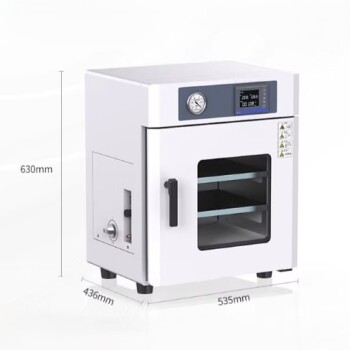
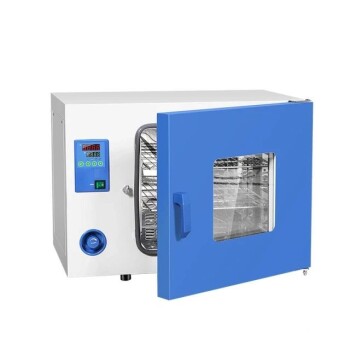
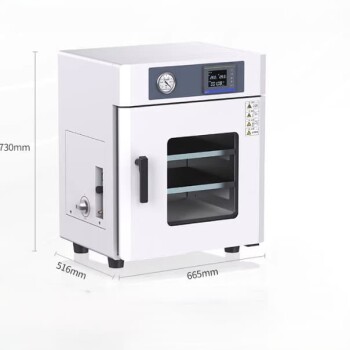
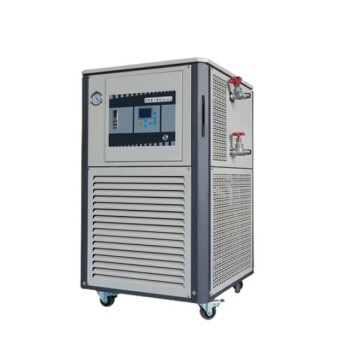
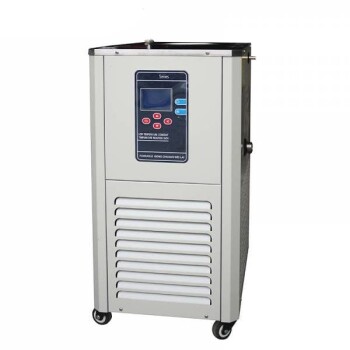
A constant temperature laboratory oven serves as the critical pre-treatment vessel for preparing waste eggshell catalysts. Its specific role is to subject the raw shells to a steady thermal environment—typically 120°C for approximately 12 hours—to rigorously remove physically adsorbed moisture before mechanical processing begins.
Precise moisture elimination is the foundation of catalyst preparation; without this step, moisture causes mechanical failures during grinding and inefficiencies during the chemical conversion of calcium components.
The Mechanism of Moisture Removal
Targeting Physically Adsorbed Water
The primary function of the oven is to target water molecules that have adhered to the surface of the eggshells.
By maintaining a constant temperature of 120°C, the oven ensures that the energy supplied is sufficient to break the weak bonds holding this surface moisture.
Establishing Material Stability
This process stabilizes the raw material. It ensures that the weight of the eggshells is based on the solid calcium structure, not variable water content.
Impact on Mechanical Processing
Preventing Powder Clumping
The most immediate benefit of the drying phase is seen during the grinding stage.
If moisture remains, the resulting powder becomes cohesive and sticky.
The oven ensures the shells are thoroughly desiccated, preventing the powder from clumping. This allows for the production of a fine, free-flowing powder essential for high-surface-area catalysts.
Ensuring Uniform Particle Size
Dry shells are brittle and fracture cleanly.
This brittleness allows the grinder to produce a consistent particle size distribution, which is vital for the catalyst's final performance.
Facilitating Chemical Transformation
Preparing for High-Temperature Calcination
The drying step is a prerequisite for the subsequent calcination phase, where the material is heated to much higher temperatures.
The primary reference notes that drying ensures the calcium components are primed for efficient chemical transformation.
Removing Thermal Variables
By removing water beforehand, you ensure that the energy input during calcination is used for changing the chemical structure (converting calcium carbonate to calcium oxide), rather than evaporating residual water.
Understanding the Trade-offs
The Cost of Time vs. Quality
The process described requires an extended duration—typically 12 hours.
The trade-off is a significant increase in total preparation time. However, rushing this step often leads to "gumming" in grinding equipment, which requires downtime to clean and results in wasted raw material.
Temperature Sensitivity
While 120°C is standard, deviations can be problematic.
Significantly lower temperatures may fail to remove all adsorbed moisture within the timeframe. Conversely, excessively high temperatures during this drying phase (approaching calcination temperatures) could lead to uncontrolled or premature chemical changes before the material is properly ground.
Making the Right Choice for Your Goal
To maximize the efficacy of your waste eggshell catalyst preparation, consider your specific objectives:
- If your primary focus is Physical Consistency: Ensure the full 12-hour drying cycle is completed to guarantee the shells are brittle enough to prevent clumping during grinding.
- If your primary focus is Chemical Efficiency: Verify that the oven maintains a stable 120°C to fully strip adsorbed moisture, ensuring the calcium components are isolated for pure calcination later.
Proper drying is not merely a preliminary step; it is the quality control checkpoint that dictates the success of all subsequent chemical engineering stages.
Summary Table:
| Stage of Preparation | Role of Constant Temperature Oven | Key Outcome |
|---|---|---|
| Pre-treatment | Maintains 120°C for 12 hours | Complete removal of adsorbed moisture |
| Mechanical Processing | Desiccates shells to increase brittleness | Prevents clumping; ensures fine, uniform powder |
| Chemical Transformation | Stabilizes calcium components | Primes material for efficient high-temp calcination |
| Quality Control | Eliminates thermal variables | Ensures energy is used for chemical change, not evaporation |
Elevate Your Catalyst Research with KINTEK Precision
Unlock the full potential of your waste-to-energy projects with KINTEK’s high-performance laboratory solutions. From the critical drying phase to the final chemical transformation, our industry-leading constant temperature ovens, muffle furnaces, and crushing systems provide the thermal stability and mechanical precision required for high-surface-area catalyst production.
Why partner with KINTEK?
- Comprehensive Equipment Range: We offer everything from precision ovens and muffle furnaces to high-temperature reactors and hydraulic pellet presses.
- Unmatched Reliability: Our tools are designed for rigorous lab environments, ensuring consistent particle size and pure chemical conversion.
- Expert Support: We help researchers optimize their workflows with high-quality consumables like crucibles and ceramics.
Don't let moisture compromise your results. Contact KINTEK today to equip your lab with the tools for success!
References
- Omojola Awogbemi, Victor Sunday Aigbodion. Pathways for Sustainable Utilization of Waste Chicken Eggshell. DOI: 10.32604/jrm.2022.019152
This article is also based on technical information from Kintek Solution Knowledge Base .
Related Products
- Laboratory Small Constant Temperature Heated Magnetic Stirrer Heater and Stirrer
- 1700℃ Muffle Oven Furnace for Laboratory
- 1200℃ Muffle Furnace Oven for Laboratory
- 1400℃ Muffle Oven Furnace for Laboratory
- High Temperature Muffle Oven Furnace for Laboratory Debinding and Pre Sintering
People Also Ask
- What role does a magnetic stirrer with heating play in ZnO nanoparticle synthesis? Precision Control for Quality Results
- What role does a constant temperature heating magnetic stirrer play in MFC-HAp synthesis? Achieve Material Homogeneity
- What is the function of a laboratory magnetic stirrer in Ni–Cr–P electrodeposition? Optimize Ion Transport & Coating
- Why is a laboratory magnetic stirrer required for benzoic acid esters? Boost Reaction Speed & Yield with High RPM
- What role does a laboratory magnetic stirrer play in TiO2 and TiO2-Ag sol preparation? Master Chemical Kinetics