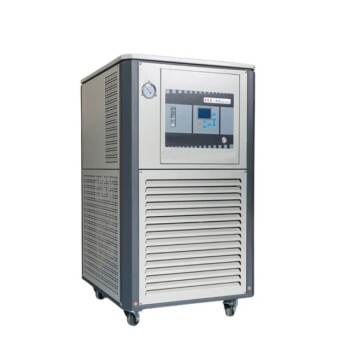
A high-temperature high-pressure (HTHP) reactor acts as a precise environmental simulator. It establishes and sustains the exact physical parameters—specifically temperatures around 600°C and pressures of 10 MPa—required to maintain carbon dioxide in a supercritical state (sCO2). By replicating these extreme conditions, the reactor enables the validation of materials intended for advanced energy systems before they are deployed in the field.
The core value of this equipment lies in its ability to combine high sealing integrity with extreme thermal and pressure resistance. This allows for the realistic evaluation of oxidation kinetics and crack initiation in critical materials like Alumina-Forming Austenitic (AFA) stainless steel, ensuring the safety of Gen-IV nuclear reactors.
The Physics of Environmental Replication
Achieving Critical Thresholds
The primary function of the reactor is to breach the critical point of carbon dioxide.
To achieve a supercritical state, the equipment must reliably reach and hold specific benchmarks, such as 600°C and 10 MPa.
Ensuring Sealing Integrity
Maintaining a supercritical fluid requires a closed system with exceptional integrity.
The reactor must possess robust pressure resistance to ensure the carbon dioxide remains in a supercritical state without leakage.
Any breach in sealing would result in a loss of pressure, causing the fluid to revert to a gas or liquid, thereby invalidating the test.
Validating Material Durability
Simulating Gen-IV Reactor Conditions
The ultimate goal of using an HTHP reactor is to mirror the operating environment of advanced energy systems.
Specifically, it replicates the conditions found in Gen-IV nuclear reactors, allowing researchers to predict how materials will behave during actual service.
Studying Oxidation Kinetics
In sCO2 environments, materials degrade differently than they do in water or air.
The reactor provides a controlled stage to observe the oxidation kinetics of alloys, such as Alumina-Forming Austenitic (AFA) stainless steel.
This reveals how quickly and deeply the material will corrode when exposed to the supercritical fluid over time.
Analyzing Crack Initiation
Beyond corrosion, structural integrity is paramount.
The reactor environment allows scientists to study crack initiation behavior under thermal and pressure stress.
Understanding where and how cracks begin is vital for preventing catastrophic failures in high-stakes energy infrastructure.
Operational Challenges and Considerations
Complexity of Long-Term Testing
While the primary reference highlights the specific conditions for sCO2, it is crucial to understand that these tests often require duration to be effective.
Similar to autoclaves used for Pressurized Water Reactors (PWR), which may run for 500 hours, sCO2 reactors must maintain stability over long periods to capture slow-developing phenomena like stress corrosion cracking.
Equipment Resilience
The reactor itself faces the same aggressive environment as the test sample.
Therefore, the materials used to construct the reactor must possess superior resistance to oxidation and creep than the samples being tested to ensure the equipment does not fail during the experiment.
Making the Right Choice for Your Goal
When selecting or designing a testing protocol involving HTHP reactors, consider your specific objectives:
- If your primary focus is sCO2 phase stability: Ensure the reactor allows for precise pressure control significantly above the critical point (e.g., maintaining 10 MPa) to prevent phase fluctuation.
- If your primary focus is material longevity: Prioritize a system with high sealing integrity that can sustain 600°C temperatures for extended durations without pressure loss.
- If your primary focus is safety certification: Design the test to specifically monitor crack initiation in AFA stainless steel to validate suitability for Gen-IV applications.
Reliable simulation is the only bridge between theoretical material science and safe, operational nuclear infrastructure.
Summary Table:
| Feature | Supercritical CO2 (sCO2) Test Requirements | HTHP Reactor Role |
|---|---|---|
| Temperature | Up to 600°C | Maintains stable thermal benchmarks for critical phase transitions. |
| Pressure | Approx. 10 MPa | Ensures high sealing integrity to prevent fluid phase reversion. |
| Material Focus | AFA Stainless Steel / Alloys | Evaluates oxidation kinetics and crack initiation behavior. |
| Application | Gen-IV Nuclear Reactors | Provides realistic environmental replication for safety validation. |
| Stability | Long-term exposure (e.g., 500+ hours) | Sustains extreme conditions over extended periods for creep testing. |
Advance Your Material Research with KINTEK Precision
Bridge the gap between material science and operational reality with KINTEK’s premium high-temperature high-pressure reactors and autoclaves. Specifically designed to handle the aggressive demands of supercritical CO2 and Gen-IV nuclear simulations, our equipment offers unmatched sealing integrity and thermal stability.
From crushing systems to advanced electrochemical cells, KINTEK provides the comprehensive laboratory solutions needed for high-stakes energy infrastructure testing. Ensure the safety and longevity of your critical materials—contact our technical experts today for a tailored consultation!
References
- Shuo Cong, Xianglong Guo. On the role of Al/Nb in the SCC of AFA stainless steels in supercritical CO2. DOI: 10.1038/s41529-022-00258-w
This article is also based on technical information from Kintek Solution Knowledge Base .
Related Products
- Customizable Laboratory High Temperature High Pressure Reactors for Diverse Scientific Applications
- High Pressure Laboratory Autoclave Reactor for Hydrothermal Synthesis
- Mini SS High Pressure Autoclave Reactor for Laboratory Use
- Stainless High Pressure Autoclave Reactor Laboratory Pressure Reactor
- Customizable High Pressure Reactors for Advanced Scientific and Industrial Applications
People Also Ask
- How do high-pressure and high-temperature reactors ensure the effective treatment of lignocellulosic wastewater in WAO?
- What equipment is required for high-pressure high-temperature reactions? Master Extreme Chemistry Safely
- How do you control high pressure in a reactor? A Guide to Safe & Stable Operation
- Why is argon better than nitrogen for inert atmosphere? Ensure Absolute Reactivity & Stability
- How does initial oxygen pressure affect the wet oxidation of pharmaceutical sludge? Master Your Oxidation Depth