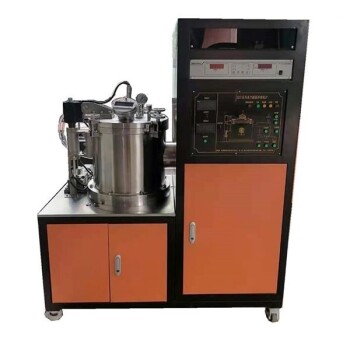
A high-temperature laboratory furnace serves as the primary simulation environment for verifying the safety and durability of materials used in nuclear reactors. It recreates the extreme thermal conditions necessary to evaluate how structural materials and coatings withstand corrosion from liquid Lead-Bismuth Eutectic (LBE) coolants.
By coupling high thermal capacity with a precision control system, the furnace maintains specific temperature nodes (such as 723 K and 823 K) to isolate the thermodynamic impact of liquid metal. This stability is the defining factor in verifying the mechanical properties and microstructural resistance of materials destined for fourth-generation reactors.
Simulating the Thermodynamic Environment
To understand the role of the furnace, you must look beyond simple heating. The furnace acts as a stable kinetic driver for chemical interactions.
Precise Temperature Regulation
The primary function of the furnace is to reach and hold specific thermal setpoints, typically between 723 K and 823 K.
These specific temperatures simulate the actual operating conditions of reactor coolants. Maintaining these nodes without deviation is critical for evaluating the stability of ceramic coatings and structural alloys under stress.
Accelerating Reaction Kinetics
Corrosion and dissolution kinetics in liquid metals follow exponential growth laws relative to temperature.
Because the reaction rate is thermally activated, even minor temperature fluctuations can distort experimental data. A precision control system ensures the environment remains constant, guaranteeing that the resulting corrosion data is linear and reliable.
Long-Duration Testing
LBE corrosion is a slow, cumulative process. The furnace provides a constant-temperature environment for extended durations, often exceeding 1000 hours.
This endurance capability allows researchers to observe long-term microstructural changes that short-term tests would miss.
Establishing a Controlled Corrosion System
The furnace does not operate in isolation. It powers a complex containment system designed to ensure data purity.
Isolation via Quartz and Vacuum
In static tests, samples are often sealed within quartz tubes that have been evacuated to low pressures.
The furnace heats these tubes to keep the sample immersed in liquid alloy while preventing abnormal oxidation. The vacuum environment is essential to stop oxygen from contaminating the LBE, which would skew the corrosion results.
Prevention of Secondary Reactions
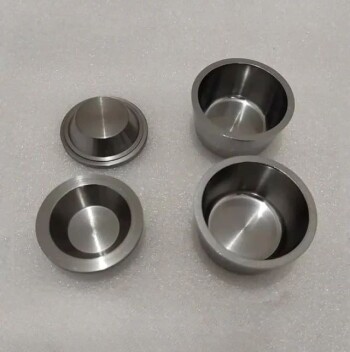
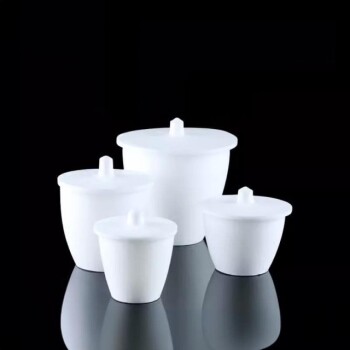
High-purity alumina crucibles are often used as liners within the furnace setup during 600°C experiments.
Alumina provides exceptional chemical inertness. This isolates the corrosive liquid metal from the external metal pressure vessel, preventing the vessel walls from reacting with the LBE.
Ensuring Data Accuracy
By preventing the vessel walls from participating in the reaction, the furnace setup ensures the data reflects pure interactions between the LBE and the test material (such as T91 or HT9).
If the LBE were to corrode the container, the chemistry of the liquid metal would change, rendering the experiment invalid.
Understanding the Trade-offs
While high-temperature furnaces are the standard for LBE testing, there are critical variables that must be managed to avoid misleading results.
Thermal Gradients vs. Isothermal Zones
A common pitfall is assuming the entire furnace chamber is at the uniform setpoint.
You must ensure the sample sits within the furnace's isothermal zone. If the sample is placed near the edges where thermal gradients exist, the corrosion rate will deviate from the calculated kinetic model.
The Oxidation Balance
While the furnace provides heat, it cannot inherently stop oxidation if the containment fails.
The reliance on quartz tubes or vacuum sealing means that any breach at high temperature will lead to rapid, abnormal oxidation of the LBE. The furnace's precision is useless if the chemical environment is compromised by a seal failure.
Making the Right Choice for Your Goal
The configuration of your furnace system should depend on the specific data you need to extract from the LBE experiment.
- If your primary focus is Thermodynamic Verification: Prioritize a furnace with tight PID control to hold precise nodes (e.g., 823 K) to validate coating stability against theoretical models.
- If your primary focus is Kinetic Modeling: Ensure the system has a proven isothermal zone and rapid recovery times to maintain the linearity of exponential reaction rates.
Ultimately, the furnace is not just a heat source; it is the precision instrument that validates whether a material can survive the harsh reality of a nuclear core.
Summary Table:
| Feature | Function in LBE Corrosion Experiments | Impact on Research |
|---|---|---|
| Precision Control | Maintains thermal nodes (e.g., 723K - 823K) | Ensures thermodynamic stability for reliable data |
| Extended Endurance | Consistent heat for 1000+ hour durations | Enables observation of long-term microstructural changes |
| Isothermal Zones | Uniform heating across the entire sample | Prevents data deviation caused by thermal gradients |
| Sealed Containment | Facilitates vacuum/quartz tube integration | Prevents oxygen contamination and secondary reactions |
| Kinetic Activation | Accelerates chemical interaction rates | Provides linear data for corrosion & dissolution modeling |
Advance Your Nuclear Research with KINTEK Precision
Precise thermal simulation is the backbone of reliable Lead-Bismuth Eutectic (LBE) corrosion studies. At KINTEK, we specialize in high-performance laboratory solutions designed for the rigorous demands of nuclear and materials science. From high-temperature muffle and tube furnaces with ultra-stable PID control to high-pressure reactors, alumina crucibles, and vacuum systems, we provide the tools necessary to ensure your experiments yield accurate, reproducible data.
Whether you are testing structural alloys like T91 or developing next-generation ceramic coatings, KINTEK’s comprehensive range of furnaces, crushing systems, and cooling solutions support every stage of your workflow.
Ready to achieve superior thermal stability in your lab? Contact our specialists today to find the perfect equipment for your research goals.
References
- Yong Chen, Yanxi Li. Influence of LBE Temperatures on the Microstructure and Properties of Crystalline and Amorphous Multiphase Ceramic Coatings. DOI: 10.3390/coatings9090543
This article is also based on technical information from Kintek Solution Knowledge Base .
Related Products
- 1700℃ Laboratory High Temperature Tube Furnace with Alumina Tube
- High Temperature Muffle Oven Furnace for Laboratory Debinding and Pre Sintering
- 1800℃ Muffle Oven Furnace for Laboratory
- 1200℃ Split Tube Furnace with Quartz Tube Laboratory Tubular Furnace
- 1400℃ Muffle Oven Furnace for Laboratory
People Also Ask
- What functions does a laboratory high-temperature tube furnace perform? Master Catalyst Synthesis & Carbonization
- What roles does a high-temperature tube furnace play in the synthesis of N/O co-doped carbon? Master Precise Doping
- How does a laboratory tube furnace facilitate methane catalyst evaluation & regeneration? Optimize Thermal Performance
- How does a high-temperature tube furnace influence 253MA steel? Master Microstructure & High-Temp Creep Resistance
- Why is a high-temperature tube furnace required for the production of biochar from tobacco straw? Expert Pyrolysis Guide