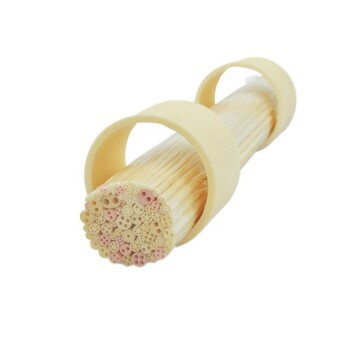
A horizontal alumina tube furnace is the optimal reaction vessel for mixed gas corrosion experiments at 650 °C due to its combination of thermal precision and exceptional chemical resistance. The high-purity alumina material remains inert when exposed to complex corrosive gases, ensuring the vessel itself does not degrade or release volatile impurities. This stability is essential for isolating specific chemical vapor deposition phenomena without the interference of external contamination.
The core value of this setup is the guarantee of data integrity. By eliminating the reaction vessel as a variable, you ensure that any observed deposition originates exclusively from your intended experimental reactants—such as silicon species—rather than from the degradation of the furnace walls.
Ensuring Experimental Integrity
Chemical Inertness at High Temperatures
The primary reason for selecting this apparatus is the material properties of high-purity alumina.
At an operating temperature of 650 °C, this material exhibits excellent chemical inertness. It withstands long-term exposure to mixed corrosive gases without reacting or breaking down.
Prevention of Volatile Impurities
In corrosion experiments, the purity of the environment is paramount.
Alumina tubes prevent the release of volatile impurities that commonly occur with less stable materials. This ensures the environment remains chemically isolated to the intended gases and samples.
Control and Stability
Precise Thermal Field Management
The horizontal configuration of the furnace is designed to provide a specific advantage in temperature management.
It creates a stable and precisely controlled thermal field. This uniformity is critical for maintaining consistent reaction kinetics across the entire experimental zone.
Isolating the Reaction Source
The ultimate goal of using this specific vessel is to attribute results correctly.
Because the vessel does not contribute impurities, researchers can be certain that observed chemical vapor deposition phenomena are genuine. They originate entirely from the experimental silicon species introduced to the system.
Operational Considerations
The Necessity of High Purity
While alumina is generally robust, the benefits described here depend specifically on the use of high-purity material.
Using lower-grade ceramics may introduce the very contaminants you are trying to avoid. The "inertness" is not a given; it is a function of the material quality chosen for the tube.
Thermal Field Dependence
The stability of the experiment relies on the horizontal orientation working in tandem with the heating elements.
If the furnace calibration drifts, the precise thermal field mentioned in the reference is compromised, regardless of the tube's material quality.
Making the Right Choice for Your Goal
To ensure your corrosion experiments yield valid data, consider the following specific applications:
- If your primary focus is characterizing deposition mechanisms: Ensure your alumina tube is certified high-purity to guarantee that all deposits originate solely from your reactant species.
- If your primary focus is long-term corrosion resistance: Rely on the alumina tube's inertness to withstand extended exposure times without degrading the containment vessel.
By utilizing high-purity alumina in a horizontal configuration, you eliminate environmental noise and isolate the true chemical behavior of your reactants.
Summary Table:
| Feature | Advantage for Corrosion Experiments |
|---|---|
| Material | High-purity Alumina (Inert & Corrosive Resistant) |
| Temperature Stability | Precise 650 °C Thermal Field Management |
| Vessel Geometry | Horizontal configuration for uniform reaction kinetics |
| Contamination Control | Zero volatile impurity release for data integrity |
| Application Focus | Ideal for CVD phenomena & deposition mechanism studies |
Elevate Your Research Precision with KINTEK
Don't let vessel degradation compromise your data integrity. KINTEK specializes in high-performance laboratory equipment, providing the high-purity horizontal tube furnaces and alumina consumables essential for demanding corrosion studies and CVD research.
Our extensive portfolio includes:
- High-Temperature Furnaces: Muffle, Tube, Rotary, Vacuum, and Atmosphere furnaces tailored for precise thermal control.
- Reaction Vessels: High-pressure reactors, autoclaves, and specialized ceramics like high-purity alumina tubes and crucibles.
- Sample Processing: Crushing, milling, and hydraulic presses for professional sample preparation.
Whether you are analyzing silicon deposition or long-term material resistance, KINTEK delivers the reliability your lab requires. Contact us today to optimize your experimental setup!
References
- Thuan Dinh Nguyen, David J. Young. Effect of Volatile Species on Chemical Vapour Deposition of SiO2 During Corrosion of Chromia- and Alumina-Formers. DOI: 10.1007/s11085-023-10166-2
This article is also based on technical information from Kintek Solution Knowledge Base .
Related Products
- High Temperature Alumina (Al2O3) Furnace Tube for Engineering Advanced Fine Ceramics
- 1700℃ Laboratory High Temperature Tube Furnace with Alumina Tube
- 1400℃ Laboratory High Temperature Tube Furnace with Alumina Tube
- Horizontal High Temperature Graphite Vacuum Graphitization Furnace
- High Temperature Aluminum Oxide (Al2O3) Protective Tube for Engineering Advanced Fine Ceramics
People Also Ask
- What is the primary function of an Alumina (Al2O3) tube in LLZTO sintering? Optimize Your Thermal Processing
- What role does a high-alumina furnace tube play in high-temperature nickel slag reduction? Ensure 1400°C Precision
- How does an alumina tube furnace with a controlled atmosphere simulate conditions in CSP environments? Master Accuracy.
- How do you clean an alumina tube furnace? Extend Tube Life with Proper Maintenance
- How to clean an alumina tube furnace? Extend Tube Life and Ensure Experimental Purity