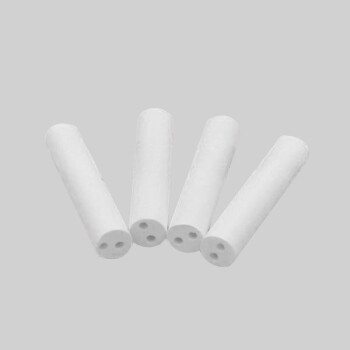
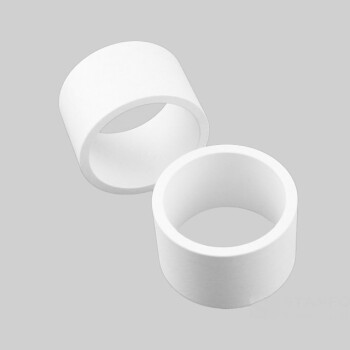
High-purity corundum (alumina) tubes serve as the critical structural and isolation backbone in oxygen permeation testing setups. In the context of Bi-doped dual-phase membranes, these tubes physically secure the sample within the high-temperature zone of a vertical furnace while strictly separating the air feed from the sweep gas. This physical isolation is essential to ensure that any oxygen detected on the sweep side has traveled exclusively through the membrane lattice.
By combining extreme thermal stability with chemical inertness, high-purity corundum tubes prevent system contamination and gas bypass, guaranteeing that observed oxygen transport is a true property of the membrane material rather than an artifact of the testing apparatus.
The Mechanics of Gas Isolation and Support
Establishing Distinct Atmospheres
The primary function of the corundum tube is to isolate two distinct gas environments. It separates the feed side (typically air) from the sweep side (typically Helium or CO2).
Facilitating Selective Permeation
By maintaining this separation, the tube ensures that oxygen molecules are forced to migrate through the dense membrane material. This setup allows researchers to accurately measure the oxygen flux driven by the partial pressure gradient.
Structural Positioning
In a vertical tube furnace setup, the corundum tube acts as the load-bearing component. It supports the weight of the Bi-doped membrane, holding it precisely in the isothermal zone of the furnace to ensure uniform heating.
Material Compatibility: Why High-Purity Matters
Chemical Inertness
Bi-doped membranes can be chemically sensitive or reactive at elevated temperatures. High-purity corundum is chosen because it is chemically inert, meaning it will not react with the bismuth species in the membrane.
Thermal Stability
Oxygen permeation tests operate at high temperatures where many materials degrade or soften. Corundum offers exceptional thermal stability, maintaining its rigidity and shape without warping during the heating and cooling cycles of the experiment.
Critical Considerations for Experimental Integrity
The Dependency on Sealing
While the tube itself is impermeable, its effectiveness is entirely dependent on the quality of the seal. The tube must be used in conjunction with specific sealing materials (such as glass or metal rings) to bond the membrane to the tube.
Preventing Gas Bypass
If the seal between the membrane and the corundum tube is imperfect, gas leakage occurs. This "bypass" compromises the data, as oxygen flows around the membrane rather than permeating through it.
Avoiding Contamination
Using tubes of lower purity could introduce contaminants into the sensing environment. High purity ensures that the background environment remains neutral, preventing foreign elements from interfering with the Bi-doped membrane's performance.
Making the Right Choice for Your Experiment
To ensure the validity of your oxygen permeation data, consider your primary experimental goals:
- If your primary focus is Data Accuracy: Prioritize the quality of the seal between the corundum tube and the membrane to prevent gas leakage that mimics permeation.
- If your primary focus is Material Longevity: Rely on the high-purity classification of the corundum to prevent chemical reactions that could degrade the Bi-doped membrane surface over long test cycles.
Ultimately, the corundum tube is not just a holder; it is the boundary condition that defines the validity of your entire permeation experiment.
Summary Table:
| Feature | Role in Oxygen Permeation Testing | Importance for Bi-doped Membranes |
|---|---|---|
| Gas Isolation | Separates feed side (air) from sweep side (He/CO2) | Ensures detected oxygen flux is from lattice permeation |
| Chemical Inertness | Prevents reactions between tube and sample | Protects sensitive bismuth species at high temperatures |
| Thermal Stability | Maintains rigidity in high-temperature furnace zones | Prevents warping and maintains sample positioning |
| Structural Support | Acts as the load-bearing component in vertical furnaces | Holds the membrane in the precise isothermal zone |
| High Purity | Minimizes background contamination | Prevents foreign elements from altering material data |
Elevate Your Research Precision with KINTEK
Don't let system contamination or gas bypass compromise your oxygen permeation data. KINTEK specializes in premium laboratory equipment and high-performance consumables designed for the most demanding research environments.
Our high-purity alumina and corundum tubes provide the ultimate thermal and chemical stability required for testing Bi-doped dual-phase membranes. Whether you are utilizing our high-temperature tube furnaces, vacuum systems, or crushing and milling equipment, KINTEK ensures your materials are processed and tested under perfect conditions.
Our value to you:
- Unmatched Durability: Reliable performance across repeated heating cycles.
- Total Integrity: High-purity ceramics to prevent sample interaction.
- Comprehensive Solutions: From furnace systems to high-pressure reactors and precision consumables.
Ready to optimize your experimental setup? Contact KINTEK experts today for tailored solutions and high-quality lab supplies!
References
- Chao Zhang, Huixia Luo. Effects of Bi Substitution on the Cobalt-Free 60wt.%Ce0.9Pr0.1O2−δ-40wt.%Pr0.6Sr0.4Fe1−xBixO3−δ Oxygen Transport Membranes. DOI: 10.3390/pr9101767
This article is also based on technical information from Kintek Solution Knowledge Base .
Related Products
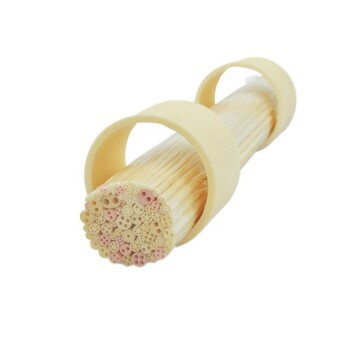
- High Temperature Aluminum Oxide (Al2O3) Protective Tube for Engineering Advanced Fine Ceramics
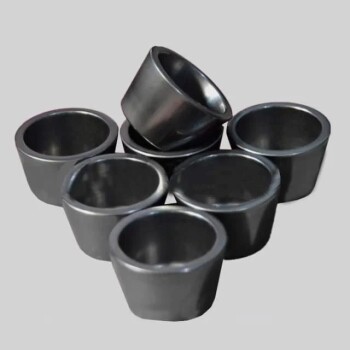
- High Purity Pure Graphite Crucible for Evaporation
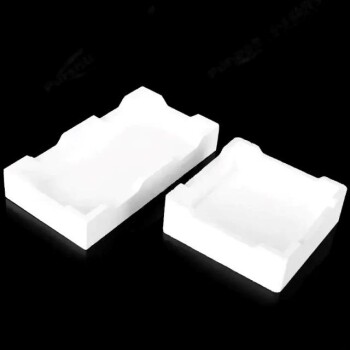
- Advanced Engineering Fine Ceramics Alumina Ceramic Saggar for Fine Corundum
- High Purity Pure Graphite Crucible for Electron Beam Evaporation
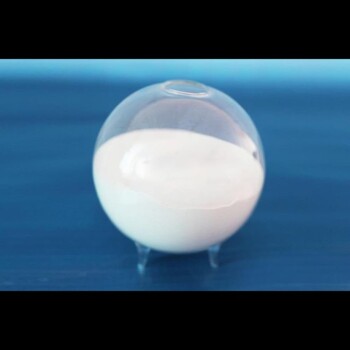
- High Purity Alumina Granulated Powder for Engineering Advanced Fine Ceramics
People Also Ask
- What is the process of alumina tube manufacturing? From Powder to High-Performance Ceramic
- What is the heating rate for alumina tubes? A Variable Schedule to Prevent Thermal Shock
- How do alumina ceramic tubes address technical challenges in electrochemical devices? Ensure Peak Signal Integrity.
- What is the working temperature of alumina tube? Achieve Safe & Reliable High-Temp Processing
- What is the maximum temperature for alumina tube? Unlock Its Full Potential with High Purity