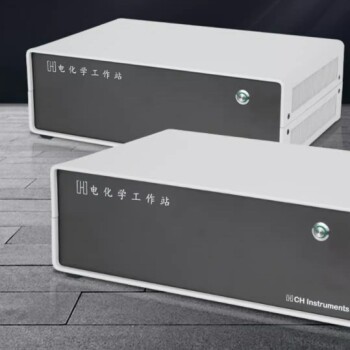
The laboratory potentiostat or galvanostat acts as the central analytical engine for quantifying the protective capabilities of polyester coatings. By precisely controlling electrical potential or current, specifically through Electrochemical Impedance Spectroscopy (EIS), this instrument allows you to monitor the degradation of a coating, its water absorption rates, and its overall shielding efficiency in real-time without physically damaging the sample.
By tracking the evolution of electrical signals over time, these instruments transform the assessment of coating failure from a visual, subjective observation into a quantitative, data-driven science.
Quantifying Barrier Performance via EIS
To truly understand how a polyester coating performs, you must look beyond the surface. The potentiostat enables this through Electrochemical Impedance Spectroscopy (EIS), which serves as the primary method for non-destructive evaluation.
Non-Destructive Real-Time Monitoring
The most significant advantage of using a high-precision potentiostat is the ability to gather data without destroying the coating.
Unlike physical stress tests, EIS applies a small AC signal that measures the coating's response over time. This allows you to track the evolution of the Open Circuit Potential (OCP) in saline environments, revealing how the coating's stability changes as exposure time increases.
Measuring Shielding Efficiency
The instrument quantifies how well the coating acts as an electrical insulator.
By measuring the impedance, researchers can directly calculate the coating shielding efficiency. A drop in impedance typically signals that the barrier is breaking down and allowing ions to penetrate the substrate.
Deciphering Protection Mechanisms
A potentiostat does not just tell you if a coating is failing; it provides the data necessary to understand why it is failing or succeeding. This is done by isolating specific electrochemical parameters.
Tracking Water Absorption
Polyester coatings can be susceptible to water uptake, which degrades their protective properties.
The potentiostat monitors changes in double-layer capacitance ($C_{dl}$). Since water has a different dielectric constant than the coating polymer, a rise in capacitance is a direct indicator of water permeating the coating matrix.
Evaluating Inhibitor Activity
If your coating formulation includes corrosion inhibitors, you need to verify their chemical effectiveness.
The instrument measures charge transfer resistance ($R_{ct}$). A high charge transfer resistance indicates that the electrochemical reactions required for corrosion are being effectively blocked by the inhibitors at the metal-coating interface.
Rapid Corrosion Rate Calculation
While EIS monitors long-term stability, the potentiostat can also perform potentiodynamic polarization tests.
This method forces the potential to sweep across a range, providing critical data points like current density and polarization resistance. These parameters allow for the precise, rapid calculation of instantaneous corrosion rates.
Understanding the Trade-offs
While indispensable, relying solely on electrochemical data requires careful interpretation to avoid misleading conclusions.
Complexity of Data Modeling
The raw data provided by a potentiostat (often in the form of Nyquist or Bode plots) is abstract.
To extract meaningful values for resistance or capacitance, you must fit the data to an equivalent electrical circuit model. Choosing the wrong circuit model can lead to incorrect interpretations of the physical mechanism.
Simulated vs. Real-world Environments
These instruments typically operate using simulated solutions, such as 3.5% NaCl.
While this provides a controlled environment for comparing formulations, it simplifies the complex biological and chemical variables found in actual marine or industrial environments.
Making the Right Choice for Your Evaluation
To get the most value from a potentiostat or galvanostat, align your testing method with your specific research objectives.
- If your primary focus is long-term durability: Prioritize EIS capabilities to monitor water uptake and barrier degradation over weeks or months without damaging the sample.
- If your primary focus is rapid screening: Utilize potentiodynamic polarization to quickly calculate corrosion rates and filter out poor-performing formulations.
- If your primary focus is mechanism analysis: Focus on extracting $R_{ct}$ and $C_{dl}$ parameters to verify exactly how your additives or inhibitors are interacting with the substrate.
Ultimately, the potentiostat bridges the gap between chemical formulation and physical performance, providing the hard metrics needed to validate the longevity of your coatings.
Summary Table:
| Feature/Method | Parameter Measured | Insight Provided |
|---|---|---|
| EIS (Spectroscopy) | Impedance (Z) | Shielding efficiency and barrier degradation over time |
| Capacitance Monitoring | $C_{dl}$ (Double-layer) | Real-time tracking of water absorption and permeability |
| Resistance Analysis | $R_{ct}$ (Charge transfer) | Effectiveness of corrosion inhibitors at the interface |
| Potentiodynamic Sweep | Current Density | Rapid calculation of instantaneous corrosion rates |
| OCP Tracking | Open Circuit Potential | Long-term stability and electrochemical equilibrium |
Elevate Your Coating Research with KINTEK Precision
Don't settle for subjective visual assessments when you can have quantitative, data-driven results. KINTEK specializes in advanced laboratory equipment designed for the most demanding research environments. Whether you are evaluating the shielding efficiency of polyester coatings or developing next-generation inhibitors, our high-precision instruments provide the accuracy you need.
Our comprehensive portfolio includes:
- Electrolytic cells and electrodes specifically designed for electrochemical analysis.
- Advanced high-temperature furnaces for testing coating stability in extreme conditions.
- A full range of high-pressure reactors and consumables like PTFE products and crucibles.
Ready to optimize your anti-corrosion testing? Contact KINTEK today to find the perfect electrochemical solutions for your laboratory's needs!
References
- Nicoleta Pleşu, Dorin Jurcău. Polyester-Based Coatings with a Metal Organic Framework: An Experimental Study for Corrosion Protection. DOI: 10.3390/jcs7100422
This article is also based on technical information from Kintek Solution Knowledge Base .
Related Products
People Also Ask
- How does an electrochemical workstation assist in assessing corrosion resistance? Quantify Laser-Remelted Steel Performance
- How does an electrochemical testing system evaluate mesoporous oxide electrodes? Precision Analysis for Battery Research
- What are the primary functions of an electrochemical workstation (Potentiostat)? Expert Titanium Alloy Corrosion Analysis
- What is the primary function of a high-precision electrochemical workstation? Optimize Your Reactor Performance
- What role do electrochemical workstations play in researching the corrosion resistance of carbon coatings? Expert Guide