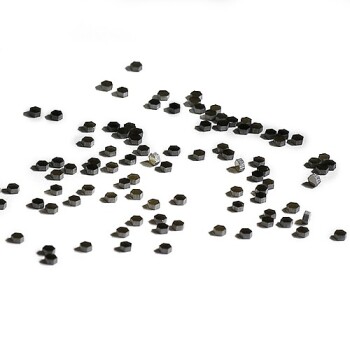
A tungsten carbide die serves as the essential structural foundation for the high-pressure densification of nano-Mg2Si materials. It enables the application of extreme forces—specifically up to 1.5 GPa—needed to consolidate loose powders into a solid bulk form. By maintaining its shape under these intense conditions, the die ensures that pressure is efficiently transmitted directly to the material rather than being lost to equipment deformation.
The tungsten carbide die is critical because it offers superior compressive strength and hardness compared to standard steel. Its ability to resist plastic deformation at 400°C and 1.5 GPa allows for the successful creation of bulk materials with a relative density of 91.5%.
The Mechanics of Densification
Facilitating Ultra-High Pressures
To consolidate nano-Mg2Si powder, the process requires ultra-high pressure hot pressing. The tungsten carbide die is specifically employed to withstand pressures reaching 1.5 GPa. This extreme environment is necessary to force the nano-particles together into a cohesive unit.
Thermal Stability Under Load
Pressure is not the only variable; the process occurs at elevated temperatures of 400°C. The die must maintain its structural integrity simultaneously against both the thermal load and the massive mechanical stress. Tungsten carbide provides the stability required to operate effectively in this dual-stress environment.
Why Tungsten Carbide is Superior to Steel
Preventing Plastic Deformation
The primary reason for selecting tungsten carbide over standard materials is its resistance to changing shape. Standard steel dies are prone to plastic deformation under the specific conditions of 1.5 GPa and 400°C. If the die deforms or bulges, pressure is lost, and the sample cannot be properly compacted.
Efficient Pressure Transmission
Because tungsten carbide is extremely hard and possesses superior compressive strength, it acts as a rigid vessel. This rigidity ensures that the force applied by the press is transmitted efficiently into the powder. There is minimal energy loss, resulting in a more effective consolidation process.
Achieving High Relative Density
The ultimate goal of this setup is to create a dense bulk material from nano-powder. The stability provided by the tungsten carbide die directly enables the material to reach a relative density of 91.5%. Without a die capable of withstanding these specific pressures, achieving such high density would be impossible.
Understanding the Material Constraints
The Limitations of Standard Steel
It is critical to recognize why standard equipment fails in this application. While steel is sufficient for lower-pressure applications, it lacks the necessary hardness for ultra-high pressure hot pressing. Attempting to use steel at 1.5 GPa would result in structural failure or permanent warping of the die.
The Necessity of Hard Materials
The trade-off for achieving high density in nano-materials is the requirement for specialized tooling. You cannot rely on general-purpose metallurgy; the die material must possess compressive strength that far exceeds the yield strength of the material being pressed.
Making the Right Choice for Your Experiment
- If your primary focus is achieving maximum density: utilize tungsten carbide dies to ensure pressure is maintained up to 1.5 GPa, enabling relative densities near 91.5%.
- If your primary focus is equipment reliability: choose tungsten carbide over steel to prevent plastic deformation and die failure at operating temperatures of 400°C.
By leveraging the extreme hardness of tungsten carbide, you ensure the precise and successful transformation of nano-powders into robust bulk materials.
Summary Table:
| Feature | Tungsten Carbide Die Performance | Advantage over Standard Steel |
|---|---|---|
| Max Pressure | Up to 1.5 GPa | Prevents failure at ultra-high loads |
| Thermal Limit | Stable at 400°C | Resists softening and warping |
| Deformation | Minimal/Zero Plastic Deformation | Ensures efficient pressure transmission |
| Final Result | 91.5% Relative Density | Achieves superior material consolidation |
Maximize Your Material Density with KINTEK Precision Tooling
Don't let equipment deformation compromise your research. KINTEK specializes in high-performance laboratory solutions designed for extreme environments. Our premium tungsten carbide dies and hydraulic pellet presses are engineered to withstand the rigorous demands of high-pressure densification, ensuring your nano-materials reach peak density without structural failure.
Whether you need robust crushing and milling systems for powder preparation or advanced high-temperature muffle and vacuum furnaces for thermal processing, KINTEK provides the reliability your lab deserves. From PTFE and ceramic consumables to specialized isostatic presses, we empower scientists to push the boundaries of material science.
Ready to elevate your lab's capabilities? Contact our technical experts today to find the perfect die and press configuration for your specific application.
Related Products
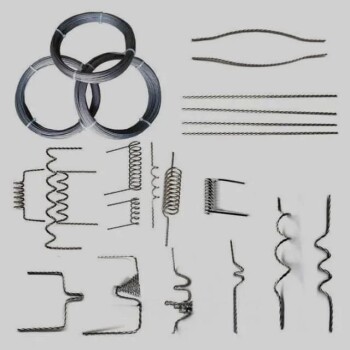
- Thermally Evaporated Tungsten Wire for High Temperature Applications
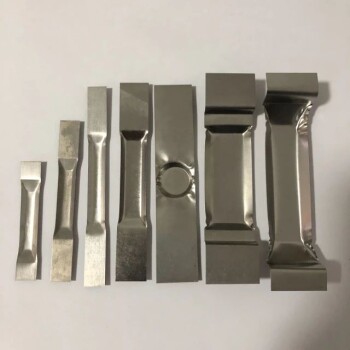
- Tungsten Evaporation Boat for Thin Film Deposition
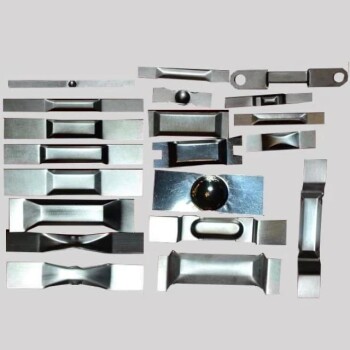
- Molybdenum Tungsten Tantalum Special Shape Evaporation Boat
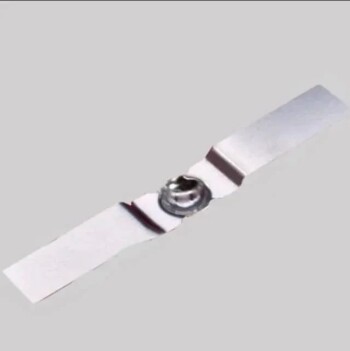
- Hemispherical Bottom Tungsten Molybdenum Evaporation Boat
- Ring Press Mold for Lab Applications
People Also Ask
- What are the disadvantages of tungsten filament? Key Limitations in Lighting Technology
- Does heat affect tungsten? Harnessing the Power of the Metal with the Highest Melting Point
- Is tungsten the most heat resistant material? It depends on your application's environment.
- What metal is closest to tungsten? Find the Best Alternative for Your High-Temp Needs
- Can tungsten withstand high temperature? Unlocking its full potential in extreme heat environments