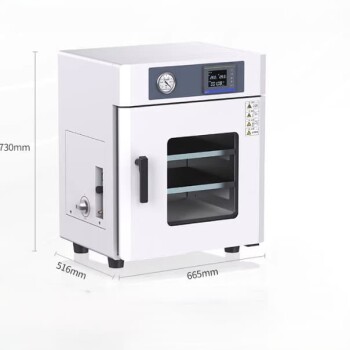
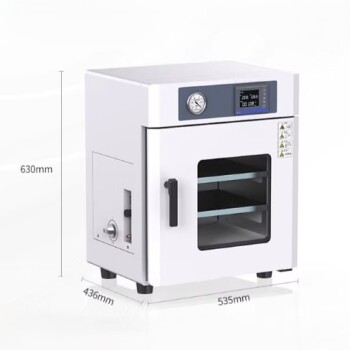
A vacuum drying oven acts as a critical purification shield during the fabrication of solid polymer electrolytes (SPE) and cathode electrodes. It utilizes a controlled, low-pressure heated environment to rigorously eliminate residual organic solvents—such as DMAc and NMP—and trace moisture that simple air drying cannot effectively remove.
The vacuum drying process is not merely about drying; it is an essential preservation step. By lowering the boiling point of solvents, it allows for deep cleaning without thermal damage, preventing the chemical side reactions that lead to increased interface impedance and battery failure.
The Mechanism of Protection
Lowering the Thermal Barrier
The primary advantage of a vacuum oven is its ability to lower the boiling point of liquids. Organic solvents used in slurries, such as DMAc (Dimethylacetamide) or NMP (N-methyl-2-pyrrolidone), have high boiling points at standard pressure.
Gentle Efficiency
By creating a negative pressure environment, the oven forces these solvents to evaporate at significantly lower temperatures (often between 60°C and 120°C). This ensures the solvent is removed rapidly without subjecting sensitive polymer chains or electrode binders to excessive heat that could degrade their structure.
Preventing Atmospheric Contamination
Standard ovens expose materials to air. A vacuum oven removes atmospheric oxygen and moisture. This prevents oxidation of the active cathode materials and ensures the electrolyte membrane remains chemically pure during the heating phase.
Critical Functions in Component Preparation
Safeguarding the Anode Interface
This is the most vital role according to your primary objective. In solid-state lithium batteries, any residual solvent or moisture left in the SPE or cathode will eventually migrate to the anode.
Stopping Side Reactions
These residues react chemically with the metallic lithium anode. These reactions create a resistive layer that leads to increased interface impedance. Over time, this degradation severely limits the battery's performance and cycle life.
Ensuring Structural Integrity
For cathode electrodes, the vacuum drying process is essential for physical mechanics. It solidifies the bond between the active material, conductive agents, and the current collector.
Deep Pore Extraction
Electrodes are porous. Vacuum drying extracts volatiles from deep within the micropores of the electrode coating. Thorough removal ensures a uniform, strongly adherent electrode film that will not delaminate during battery operation.
Operational Considerations and Trade-offs
The Balance of Time and Temperature
While vacuum aids evaporation, aggressive heating can still be detrimental. You must balance the temperature against the thermal stability of your polymer electrolyte. Drying at 120°C is common for cathodes, but SPEs may require lower temperatures (60°C–95°C) to avoid melting or warping the membrane.
The Risk of "Good Enough" Drying
A common pitfall is underestimating the time required. Surface dryness appears quickly, but removing trace moisture trapped in the molecular structure typically requires extended dwelling times (often 12 hours or overnight). Cutting this cycle short compromises the electrochemical stability of the entire cell.
Making the Right Choice for Your Goal
To optimize your battery preparation process, tailor your drying strategy to your specific priority:
- If your primary focus is Long-Term Cycle Life: Prioritize the removal of trace moisture to prevent side reactions with the lithium anode.
- If your primary focus is Mechanical Stability: Ensure the drying cycle is long enough to fully evacuate solvents from micropores, guaranteeing strong adhesion to the current collector.
- If your primary focus is Material Purity: Utilize the vacuum environment to prevent oxidation of sensitive active materials that degrade in the presence of air at high temperatures.
The vacuum drying oven is the definitive barrier between a high-performance battery and one that fails due to internal chemical contamination.
Summary Table:
| Feature | Role in SPE & Cathode Preparation | Key Benefit |
|---|---|---|
| Low-Pressure Drying | Lowers boiling points of solvents like DMAc and NMP. | Prevents thermal degradation of polymer chains. |
| Vacuum Environment | Eliminates oxygen and atmospheric moisture. | Prevents oxidation of active cathode materials. |
| Deep Volatile Removal | Extracts residues from micropores and membranes. | Reduces interface impedance and prevents delamination. |
| Interface Protection | Removes trace moisture before lithium anode contact. | Stops chemical side reactions and extends cycle life. |
Elevate Your Battery Research with KINTEK Precision
Don't let trace moisture and residual solvents compromise your solid-state battery performance. KINTEK specializes in high-performance laboratory equipment designed for the rigorous demands of material science.
Our advanced vacuum drying ovens provide the precise temperature control and negative pressure environment essential for preparing high-purity solid polymer electrolytes (SPE) and cathode electrodes. Beyond drying, we offer a comprehensive suite of tools for your battery workflow, including:
- High-temperature furnaces (muffle, tube, and vacuum systems)
- Hydraulic presses (pellet and isostatic) for electrode preparation
- High-pressure reactors and autoclaves
- Crushing, milling, and sieving systems
- Electrolytic cells and battery research consumables
Ensure structural integrity and long-term cycle life today. Contact KINTEK for a tailored solution and see how our expertise in laboratory consumables and equipment can accelerate your innovation.
Related Products
- 56L Vertical Laboratory Vacuum Drying Oven
- 23L Laboratory Vacuum Drying Oven
- Laboratory Scientific Electric Heating Blast Drying Oven
- Benchtop Laboratory Vacuum Freeze Dryer
- Dental Porcelain Zirconia Sintering Ceramic Vacuum Press Furnace
People Also Ask
- Why is a laboratory vacuum drying oven recommended for rice straw residues? Protect Your Biomass Integrity
- What role does a laboratory vacuum drying oven play in the preparation of modified multi-walled carbon nanotubes?
- What is the importance of using a laboratory vacuum drying oven? Preserving Slow-Release Microcapsule Integrity
- Why is a Laboratory Vacuum Drying Oven recommended for PBAT microspheres? Protect Sensitive Polymer Integrity
- What role does a laboratory vacuum drying oven play in processing nanoparticle powder samples? Protect Sample Integrity