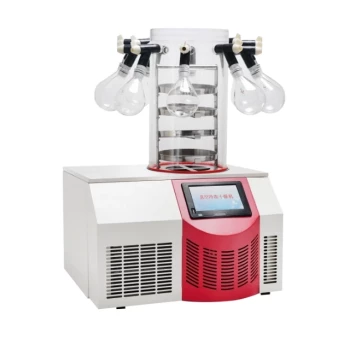
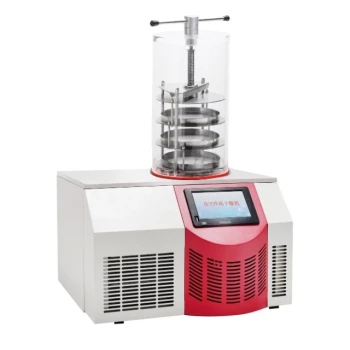
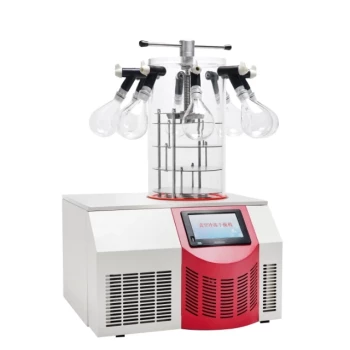
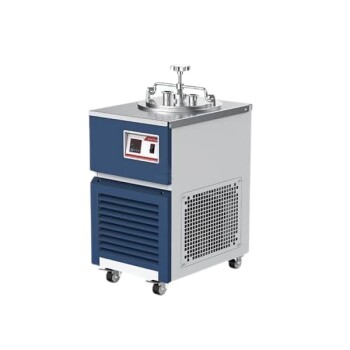
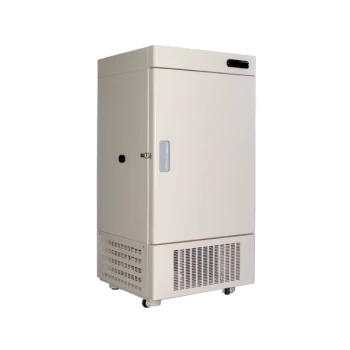
A vacuum freeze dryer serves as a critical sample preparation tool in microbial analysis by removing moisture from harvested cells without applying destructive heat. By utilizing a process called sublimation, it transforms bacterial biomass into a stable, dry state that is essential for accurate downstream chemical extraction and quantitative analysis.
The device safeguards the chemical integrity of microbial products, such as Polyhydroxybutyrate (PHB), by dehydrating samples at ultra-low temperatures. This ensures that subsequent steps, including sulfuric acid digestion and High-Performance Liquid Chromatography (HPLC), are performed on high-quality, non-degraded biomass.
The Mechanism of Preservation
Avoiding Thermal Degradation
Traditional drying methods often rely on heat to evaporate water. This can be disastrous for sensitive biological molecules, leading to denaturation or chemical breakdown before analysis even begins.
The vacuum freeze dryer solves this by operating at ultra-low temperatures. It preserves the "active ingredients" and molecular structure of the microbial product.
The Power of Sublimation
The core mechanism used is lyophilization (freeze-drying). Instead of melting ice into water and then boiling it, the device uses a vacuum to lower the pressure surrounding the sample.
This allows the frozen water in the cells to transition directly from a solid state to a gas state (sublimation). This gentle removal of solvents results in a lightweight, stable solid.
Critical Role in Analytical Workflows
Preparing for Chemical Digestion
In the specific context of extracting products like PHB, the cellular material must often undergo harsh chemical processing. The primary reference highlights sulfuric acid digestion as a key step.
Freeze drying ensures the sample is completely free of water, which could otherwise dilute the acid or alter reaction kinetics during digestion.
Ensuring HPLC Accuracy
For quantitative analysis using High-Performance Liquid Chromatography (HPLC), the accuracy of the input weight is paramount.
If a sample contains residual moisture, the calculations regarding the concentration of the microbial product will be incorrect. A freeze-dried sample provides a consistent "dry weight" baseline, ensuring the data generated by the HPLC is reliable.
Understanding the Trade-offs
Time vs. Data Integrity
Freeze drying is not an instantaneous process. It is significantly slower than oven drying or rotary evaporation.
However, this time investment is a necessary trade-off. You sacrifice speed to gain the assurance that your target molecule has not been altered by thermal stress.
Resource Intensity
Unlike simple drying racks or ovens, a vacuum freeze dryer is a complex piece of equipment. It requires precise control over vacuum pressure and temperature.
While it is more resource-intensive, it is considered essential equipment for biological experiments where the stability of the final solid sample is non-negotiable.
Maximizing Data Quality in Microbial Analysis
To determine if this step is necessary for your specific workflow, consider your analytical goals:
- If your primary focus is quantifying heat-sensitive compounds (like PHB): You must use a freeze dryer to prevent molecular degradation prior to HPLC analysis.
- If your primary focus is sample logistics: Use this method to convert liquid cultures into lightweight solids, improving stability during storage and transport.
Ultimately, the vacuum freeze dryer acts as the guardian of your sample's fidelity, ensuring that the results you read on a graph accurately reflect the biology of your experiment.
Summary Table:
| Feature | Vacuum Freeze Drying (Lyophilization) | Traditional Thermal Drying |
|---|---|---|
| Mechanism | Sublimation (Ice to Gas) | Evaporation (Liquid to Gas) |
| Temperature | Ultra-low (prevents denaturation) | High (risk of degradation) |
| Sample Integrity | Preserves molecular structure | Potential chemical breakdown |
| Data Accuracy | High (consistent dry weight baseline) | Lower (residual moisture risk) |
| Common Use | HPLC preparation, PHB extraction | Non-sensitive biomass drying |
Elevate Your Microbial Research with KINTEK Precision
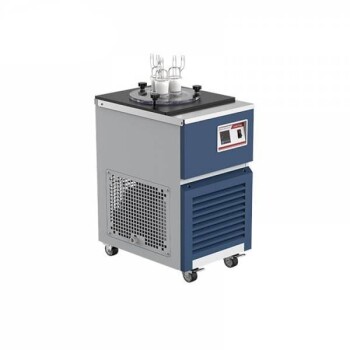
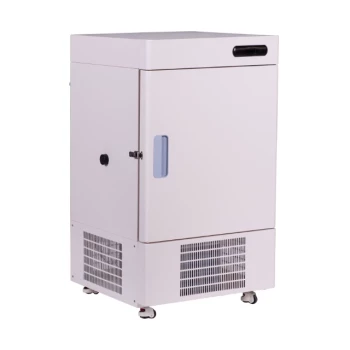
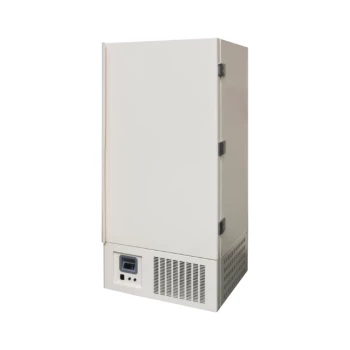
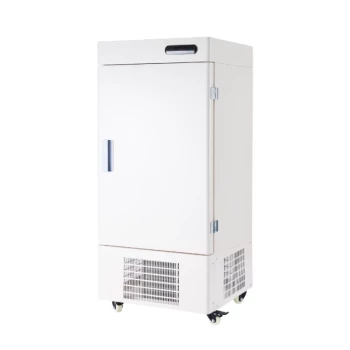
Don't let thermal degradation compromise your analytical accuracy. KINTEK specializes in high-performance laboratory solutions designed for the most demanding biological workflows. Whether you are performing PHB quantification, HPLC analysis, or complex chemical digestions, our advanced vacuum freeze dryers and cooling solutions (including ULT freezers and cold traps) ensure your microbial samples maintain their chemical fidelity.
From high-temperature furnaces and reactors to precision crushing and milling systems, KINTEK provides the comprehensive toolset researchers need to achieve reproducible results. Protect your data integrity today—Contact our specialists for a tailored equipment consultation!
References
- Byeong Cheul Moon, Dong Ki Lee. Biocompatible Cu/NiMo Composite Electrocatalyst for Hydrogen Evolution Reaction in Microbial Electrosynthesis; Unveiling the Self‐Detoxification Effect of Cu. DOI: 10.1002/advs.202309775
This article is also based on technical information from Kintek Solution Knowledge Base .
Related Products
- Benchtop Laboratory Vacuum Freeze Dryer
- High Performance Laboratory Freeze Dryer
- High Performance Laboratory Freeze Dryer for Research and Development
- Benchtop Laboratory Freeze Dryer for Lab Use
- Vacuum Cold Mounting Machine for Sample Preparation
People Also Ask
- What are the technical advantages of using a laboratory freeze dryer for porous carbon precursors? Preserve 3D Networks
- How do laboratory freeze dryers support scientific research? Preserve Sample Integrity for Reproducible Results
- Why is a laboratory freeze dryer preferred over traditional heating? Preserve Biochar Structure & Maximize Porosity
- What types of liquid samples can be processed using a laboratory freeze dryer? Preserve Your Sensitive Materials
- What role do laboratory freeze dryers play in the food industry? Unlock Superior Food Preservation