Vacuum Induction Melting (VIM) plays the critical role of stabilizing the chemical composition and ensuring ultra-high purity in the production of complex 12% Cr martensitic steels. By melting the alloy in a controlled vacuum environment, the furnace prevents the oxidation of reactive elements and allows for the precise management of gases that would otherwise compromise the material's mechanical properties.
Core Takeaway The VIM furnace is not merely a melting tool but a purification system that enables the strict control of nitrogen (0.003%) and the preservation of expensive alloying elements like Cobalt, Tungsten, and Tantalum, resulting in high-purity ingots ready for thermomechanical processing.
Precise Compositional Control
The primary function of VIM for this specific alloy is to ensure that the complex recipe of elements remains intact during the melting phase.
Protecting Expensive Alloying Elements
The specific alloying elements required—Cobalt (Co), Tungsten (W), Molybdenum (Mo), and Tantalum (Ta)—are expensive and critical to the steel's final performance. The VIM furnace ensures these elements are fully retained in the melt rather than being lost to oxidation or slag reactions.
Preventing Oxidation
Standard melting processes expose molten metal to atmospheric oxygen, which reacts rapidly with elements like Chromium and Tantalum. The VIM furnace provides a controlled vacuum environment that effectively isolates the melt, preventing these oxidation reactions and ensuring the material meets its design specifications.
Achieving Ultra-High Purity
Beyond preserving the added elements, the VIM furnace is essential for removing unwanted atmospheric impurities that degrade steel quality.
Strict Management of Nitrogen
For 12% Cr martensitic steel, maintaining extremely low nitrogen content is vital. The VIM process is capable of reducing nitrogen levels to approximately 0.003%, a level of purity that prevents the degradation of the steel's microstructure.
Enabling Boron Effectiveness
High boron content is often required in these alloys, but boron reacts aggressively with nitrogen to form brittle boron nitride particles. By eliminating nitrogen from the environment, the VIM furnace allows boron to remain in solution where it is beneficial, rather than forming harmful inclusions that cause brittleness.
Operational Considerations
While VIM offers superior control, it involves specific operational characteristics that distinguish it from standard melting.
Batch Processing via Crucible
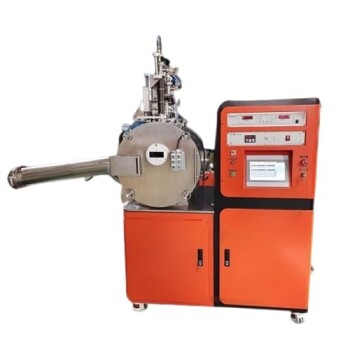
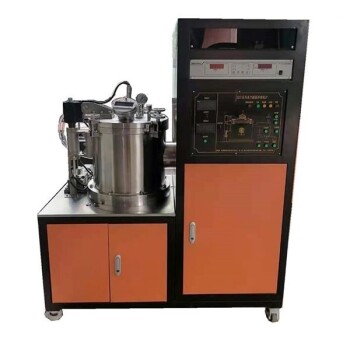
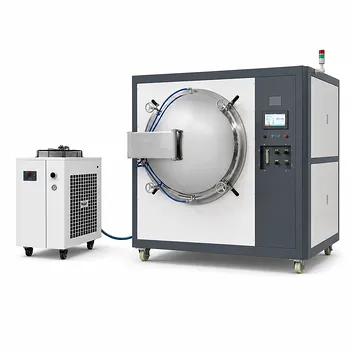
The melting takes place in a refractory-lined crucible housed within an airtight, water-cooled steel jacket. This design implies a batch-processing approach, where each ingot is produced in a distinct, isolated cycle to maintain the vacuum integrity.
High-Vacuum Environment
The equipment must maintain ultra-low pressures (often below 15 Pa) to be effective. This requires a robust high-speed vacuum system to continuously evacuate gases released during the melting of the raw materials.
Making the Right Choice for Your Goal
The use of a Vacuum Induction Melting furnace is a strategic choice driven by the need for material reliability and exactness.
- If your primary focus is Alloy Performance: VIM is mandatory to prevent the loss of reactive elements like Tantalum and to ensure Boron functions correctly without forming brittle phases.
- If your primary focus is Microstructural Integrity: The process is essential for achieving the ultra-low nitrogen levels (0.003%) required to prevent detrimental inclusions and ensure the steel can withstand thermomechanical processing.
By isolating the molten alloy from the atmosphere, VIM transforms a complex chemical recipe into a homogeneous, high-performance material.
Summary Table:
| Feature | VIM Function in 12% Cr Steel Production | Benefit to Material |
|---|---|---|
| Atmosphere Control | High-vacuum environment (<15 Pa) | Prevents oxidation of Cr, Ta, and Co |
| Gas Management | Reduces Nitrogen to ~0.003% | Prevents formation of brittle Boron Nitride |
| Alloy Retention | Isolates melt from slag and air | Ensures 100% recovery of expensive W, Mo, and Ta |
| Processing | Batch melting in refractory crucible | Produces homogeneous, high-purity ingots |
Elevate Your Material Purity with KINTEK’s Advanced VIM Technology
Precision is the foundation of high-performance metallurgy. KINTEK specializes in cutting-edge laboratory equipment, including high-temperature induction melting furnaces and vacuum systems designed to meet the rigorous demands of aerospace and energy sector alloy research.
Whether you are refining 12% Cr martensitic steels or developing next-generation superalloys, our technical experts are ready to provide the high-vacuum solutions and precision heating tools you need to ensure microstructural integrity.
Ready to optimize your alloying process? Contact us today to discuss your specific laboratory requirements!
References
- A. Fedoseeva, Rustam Kaibyshev. Effect of the Thermo-Mechanical Processing on the Impact Toughness of a 12% Cr Martensitic Steel with Co, Cu, W, Mo and Ta Doping. DOI: 10.3390/met12010003
This article is also based on technical information from Kintek Solution Knowledge Base .
Related Products
- Lab-Scale Vacuum Induction Melting Furnace
- Vacuum Induction Melting Spinning System Arc Melting Furnace
- Vacuum Heat Treat Furnace and Levitation Induction Melting Furnace
- Vacuum Arc Induction Melting Furnace
- Non Consumable Vacuum Arc Induction Melting Furnace
People Also Ask
- How do vacuum induction or arc melting furnaces facilitate the synthesis of U-Al-C MAX phases? Precision Heat & Purity
- What is the primary function of a vacuum induction melting furnace in Ni-Mo-Cr-Fe master alloy prep? Ensure High Purity
- What types of metals are typically processed in a vacuum induction melting furnace? High-Purity Alloys for Critical Applications
- Why use VIM for rare earth steel? Essential Precision for Melting Reactive Lanthanum and Cerium
- What are the key components inside the vacuum chamber of a vacuum induction melting furnace? A Guide to the Core Melting Assembly