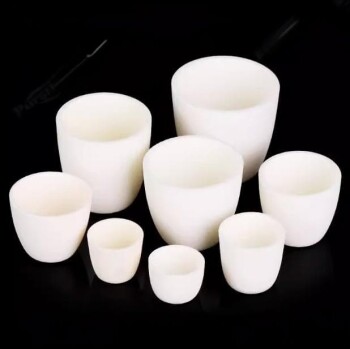
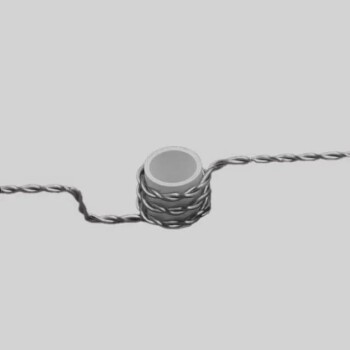
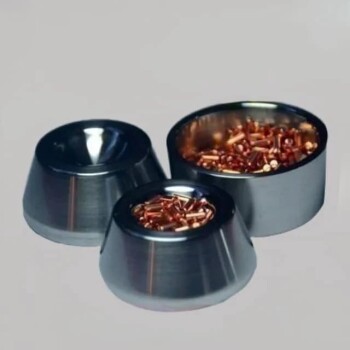
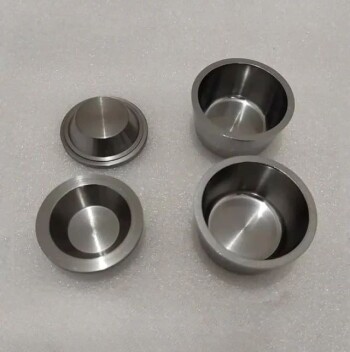
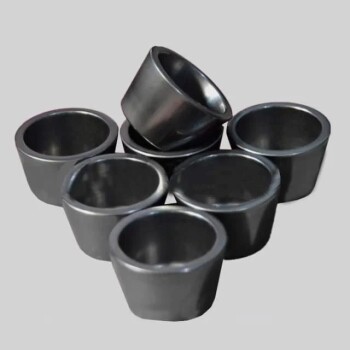
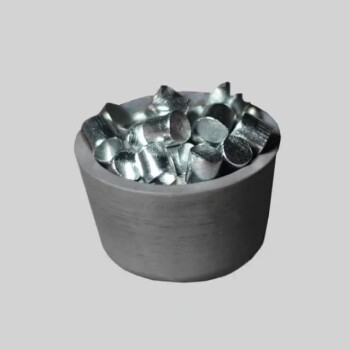
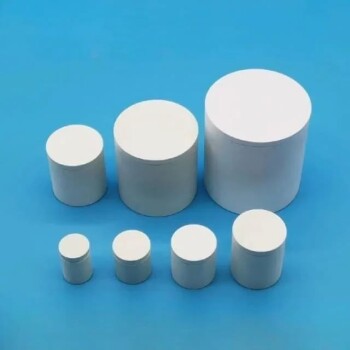
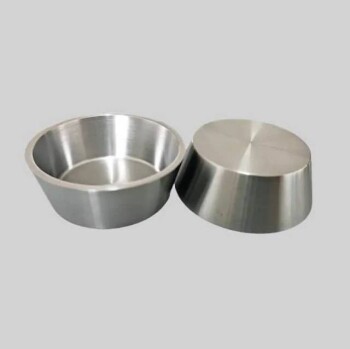
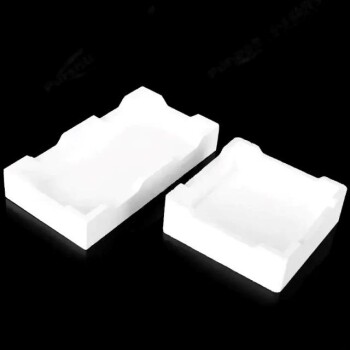
Crucible selection is a critical determinant of process purity. For the vacuum distillation of aluminum-magnesium alloys, the crucible requires exceptional thermal stability to withstand temperatures up to 1373 K and absolute chemical inertness under vacuum. Specifically, the material must resist reacting with active molten aluminum and magnesium to prevent the re-introduction of impurities into the refined metal.
The crucible acts as the primary barrier against contamination; if the material interacts chemically with the molten alloy, the goal of high-purity aluminum recovery is compromised regardless of furnace precision.
Critical Material Interactions
Resistance to Active Metals
The primary challenge in this distillation process is the high chemical activity of molten aluminum and magnesium. The crucible material must be non-reactive when in direct contact with these elements.
If the crucible reacts with the melt, it introduces new foreign impurities. This defeats the purpose of the distillation, which is to isolate pure aluminum residue.
Stability Under Vacuum
Standard refractory materials may behave differently under vacuum compared to atmospheric pressure. The selected crucible must retain its chemical bond integrity without outgassing or degrading in a vacuum environment.
Thermal Performance Requirements
High-Temperature Structural Integrity
The distillation process operates at high thermal plateaus, specifically requiring stability up to 1373 K. The crucible must maintain its physical shape and strength at this temperature to contain the melt safely.
Compatibility with Thermal Cycling
The process involves specific heating rates, such as 13 K/min. The crucible material must possess sufficient thermal shock resistance to handle these ramp-up periods without cracking.
Sustaining Isothermal Periods
Effective distillation requires maintaining stable temperatures for extended durations, often around 120 minutes. The crucible must be thermally conductive enough to allow precise temperature regulation of the melt, ensuring the evaporation kinetics remain constant.
Common Pitfalls to Avoid
Overlooking the "Active" Nature of the Melt
A common error is selecting a generic high-temperature crucible that is not specifically inert to aluminum or magnesium. Even slight reactivity can lead to the erosion of the crucible walls and the contamination of the final product.
Ignoring Process Variables
Focusing solely on the maximum temperature (1373 K) is insufficient. You must also consider the duration of exposure. A material that survives a brief spike may fail during a 120-minute isothermal hold, leading to catastrophic failure or purity loss.
Making the Right Choice for Your Goal
To ensure the success of your vacuum distillation project, align your crucible selection with your specific operational targets:
- If your primary focus is maximum purity: Prioritize materials with proven chemical inertness to active molten aluminum to prevent new impurity introduction.
- If your primary focus is process repeatability: Select materials that exhibit high thermal stability to ensure consistent performance during the 13 K/min heating rates and 120-minute holding times.
- If your primary focus is evaporation efficiency: Ensure the crucible allows for precise thermal transfer to achieve near-total magnesium removal rates (up to 99.98%).
The correct crucible is not just a container; it is a foundational component that enables the high-purity separation of aluminum and magnesium.
Summary Table:
| Property Requirement | Technical Specification | Importance in Distillation |
|---|---|---|
| Thermal Stability | Up to 1373 K | Prevents structural failure and melt containment issues. |
| Chemical Inertness | Non-reactive with Al & Mg | Ensures high-purity recovery by preventing contamination. |
| Vacuum Integrity | Zero outgassing/degradation | Maintains vacuum levels and prevents chemical bond breakdown. |
| Thermal Shock Resistance | Handles 13 K/min ramp rates | Prevents cracking during rapid heating and cooling cycles. |
| Thermal Conductivity | High & Consistent | Allows precise temperature control during 120-minute holds. |
Elevate Your Metal Refining Precision with KINTEK
Don't let crucible reactivity compromise your high-purity aluminum recovery. At KINTEK, we specialize in advanced laboratory equipment and consumables designed for the most demanding thermal processes. From specialized ceramics and crucibles that remain inert under vacuum to high-performance high-temperature furnaces (muffle, vacuum, and atmosphere), we provide the tools necessary to achieve 99.98% evaporation efficiency.
Whether you are refining aluminum-magnesium alloys or conducting advanced materials research, our expert team is ready to supply the crushing systems, hydraulic presses, and high-temperature reactors tailored to your specific lab requirements.
Ready to optimize your distillation process? Contact KINTEK today for a consultation!
Related Products
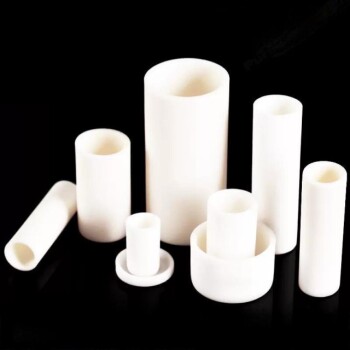
- Engineering Advanced Fine Ceramics Alumina Al2O3 Crucible With Lid Cylindrical Laboratory Crucible
- Engineering Advanced Fine Ceramics Alumina Crucibles (Al2O3) for Thermal Analysis TGA DTA
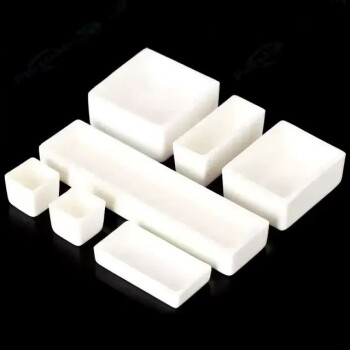
- Engineering Advanced Fine Alumina Al2O3 Ceramic Crucible for Laboratory Muffle Furnace
- Alumina Al2O3 Ceramic Crucible Semicircle Boat with Lid for Engineering Advanced Fine Ceramics
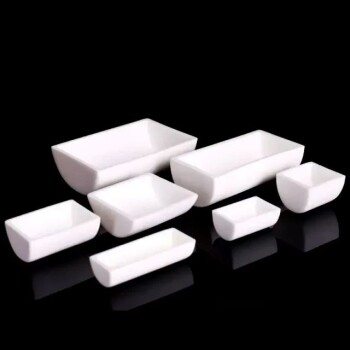
- Arc-Shaped Alumina Ceramic Crucible High Temperature Resistant for Engineering Advanced Fine Ceramics
People Also Ask
- Why are high-purity alumina crucibles used for liquid lead corrosion experiments? Ensure Data Accuracy at 550°C
- Why are alumina crucibles and mother powder essential for LATP sintering? Optimize Your Solid Electrolyte Performance
- What is the primary purpose of using alumina crucibles for LLTO ceramics? Optimize Your High-Temperature Sintering
- Why Use Alumina Crucibles & Powder Burial for NaSICON? Ensure Phase Purity and Prevent Elemental Volatilization
- Why are alumina crucibles used as containers during the tungsten diffusion coating process on diamond surfaces?