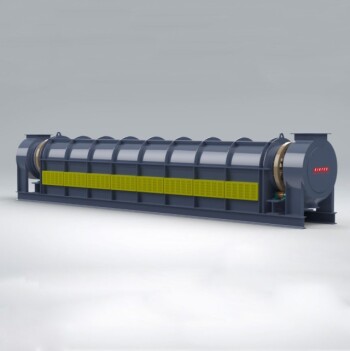
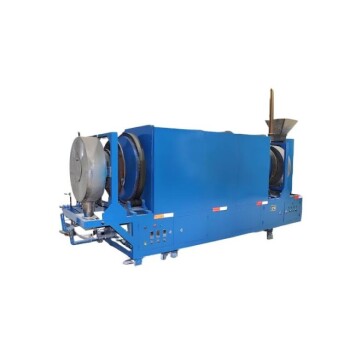
High-temperature industrial kilns designed for chlorination roasting must meet three strictly defined technical criteria: they must maintain a stable thermal environment of approximately 1000°C, provide absolute hermetic sealing, and possess high-grade corrosion resistance. These specifications are critical because the process involves subjecting quartz sand to aggressive chlorine (Cl2) or hydrogen chloride (HCl) gases to strip away deep-seated impurities.
The primary function of the kiln is to facilitate a chemical reaction where internal lattice impurities convert into volatile chlorides. The equipment must be designed to not only induce this reaction but also effectively remove the resulting vapors via gas flow, ensuring deep de-ashing of the quartz.
The Thermal Requirement
Stability at 1000°C
The chemical kinetics required for chlorination roasting demand a high-energy environment. The kiln acts as a reactor that must sustain a temperature of approximately 1000°C.
Uniform Heat Distribution
Achieving this temperature is not enough; stability is key. Fluctuations in temperature can stall the reaction between the gas and the impurities, leading to inconsistent purification results.
Handling Aggressive Atmospheres
Resistance to Chemical Attack
The roasting agents used—chlorine (Cl2) and hydrogen chloride (HCl)—are highly corrosive, particularly at elevated temperatures. The internal components and lining of the kiln must be constructed from materials capable of withstanding this aggressive chemical environment without degrading.
Critical Sealing Mechanisms
Due to the toxicity and corrosive nature of the gases, excellent sealing is a non-negotiable requirement. The kiln must effectively contain the reaction atmosphere to prevent hazardous leaks and maintain the necessary partial pressure of the gas for the reaction to occur.
The Purification Mechanism
Targeting Lattice Impurities
The technical design of the kiln is focused on removing specific impurities located within the crystal lattice of the quartz. These primarily include aluminum, boron, and alkali metals, which are difficult to remove via standard physical methods.
Volatilization and Removal
The kiln facilitates a reaction that transforms these solid impurities into volatile chlorides. The system must be engineered to support a gas flow that physically carries these vaporized chlorides out of the chamber, leaving the purified sand behind.
Understanding the Trade-offs
Material Durability vs. Thermal Performance
A common engineering challenge is selecting materials that handle both extreme heat and chemical corrosion simultaneously. Materials that excel at thermal insulation at 1000°C may react poorly to chlorine gas, necessitating specialized, often expensive, liners or alloys.
Sealing Integrity vs. Thermal Expansion
Maintaing a perfect seal at 1000°C is technically difficult due to thermal expansion. If the kiln design does not account for the expansion of differing materials, gaps may form, leading to gas leakage and a drop in purification efficiency.
Making the Right Choice for Your Goal
To ensure the success of your quartz purification project, align your equipment selection with your specific operational priorities:
- If your primary focus is Maximum Purity: Prioritize kilns with precise temperature control and optimized gas flow dynamics to ensure complete volatilization of lattice impurities.
- If your primary focus is Safety and Longevity: Prioritize kilns with advanced sealing technologies and premium corrosion-resistant internal materials to handle Cl2 and HCl exposure.
The effectiveness of your purification process depends entirely on the kiln's ability to balance high thermal energy with secure chemical containment.
Summary Table:
| Technical Criterion | Requirement Detail | Impact on Purification |
|---|---|---|
| Temperature | Stable ~1000°C | Facilitates chemical kinetics & lattice impurity removal |
| Sealing | Absolute Hermetic Seal | Prevents toxic gas leaks & maintains reaction pressure |
| Corrosion Resistance | Acid/Gas Resistant Liners | Withstands aggressive Cl2/HCl at high temperatures |
| Purification Target | Volatilization | Converts Al, B, and alkali metals into volatile chlorides |
Elevate Your Quartz Purification with KINTEK Technology
Achieving high-purity quartz requires equipment that can withstand the harshest chemical environments without compromising performance. KINTEK specializes in advanced laboratory and industrial solutions, offering high-performance tube furnaces, vacuum furnaces, and atmosphere-controlled kilns specifically engineered for chlorination roasting and chemical vapor processes.
Our equipment provides the precise thermal stability and superior corrosion resistance needed to remove lattice-bound impurities effectively. Whether you are focusing on battery research, semiconductor-grade materials, or advanced ceramics, our team delivers the specialized tools—from corrosion-resistant crucibles to high-temperature reactors—that ensure your success.
Ready to optimize your purification process? Contact KINTEK today to discuss your technical requirements and discover how our high-temperature solutions can enhance your laboratory efficiency.
References
- Hailin Long, Zhengqi Guo. Advanced Processing Techniques and Impurity Management for High-Purity Quartz in Diverse Industrial Applications. DOI: 10.3390/min14060571
This article is also based on technical information from Kintek Solution Knowledge Base .
Related Products
- 1200℃ Split Tube Furnace with Quartz Tube Laboratory Tubular Furnace
- High Temperature Muffle Oven Furnace for Laboratory Debinding and Pre Sintering
- Electric Rotary Kiln Pyrolysis Furnace Plant Machine Calciner Small Rotary Kiln Rotating Furnace
- 1400℃ Laboratory High Temperature Tube Furnace with Alumina Tube
- Vertical High Temperature Graphite Vacuum Graphitization Furnace
People Also Ask
- What functions does a laboratory high-temperature tube furnace perform? Master Catalyst Synthesis & Carbonization
- What roles does a high-temperature tube furnace play in the synthesis of N/O co-doped carbon? Master Precise Doping
- What are the primary applications of muffle and tube furnaces in photocatalysts? Optimize Metal Loading & Support Synthesis
- Why is a high-temperature tube furnace required for the production of biochar from tobacco straw? Expert Pyrolysis Guide
- How does a high-temperature tube furnace influence 253MA steel? Master Microstructure & High-Temp Creep Resistance