Improving the quality of CVD graphene hinges primarily on the condition of the substrate and the precision of the growth environment. The most effective technique is to chemically pre-treat the copper substrate to modify its surface properties, while simultaneously exercising rigorous control over temperature and gas purity during the deposition process.
Core Takeaway The final quality of a graphene film is dictated by its foundation. By chemically pre-treating the substrate to reduce oxidation and catalytic activity, and utilizing a cold wall CVD system for precise parameter control, you can transition from chaotic growth to the formation of high-quality, defect-free graphene flakes.
The Foundation: Substrate Pre-treatment
The state of the copper substrate is the most critical variable in minimizing imperfections. Treating the metal before the reaction occurs allows you to engineer the nucleation sites for the graphene.
Modifying Catalytic Activity
A primary objective of pre-treatment is to reduce the copper's catalytic activity. By controlling how reactive the surface is, you prevent the graphene from growing too rapidly or chaotically. This controlled pace is essential for forming high-quality crystalline structures rather than amorphous carbon.
Increasing Grain Size
Pre-treatment helps increase the size of the copper grains within the substrate. Larger copper grains provide a more continuous surface for the graphene to grow on. This reduces the number of grain boundaries in the metal, which often translate into defects in the graphene layer above.
Rearranging Surface Morphology
Chemical treatment rearranges the surface morphology of the copper. Smoothing the surface and optimizing its texture facilitates the growth of graphene flakes with significantly fewer imperfections. A consistent morphology ensures uniform growth across the entire sample.
Preventing Oxidation via Wet-Chemical Treatment
A specific, effective technique involves a wet-chemical treatment using acetic acid. Soaking the copper substrate in acetic acid removes impurities and prevents the oxidation of the copper surface. This is vital because surface oxidation creates poor conditions for growth and reduces nucleation density.
Process Control and Environmental Factors
Once the substrate is prepared, the quality of the graphene is determined by the strict management of the CVD environment.
Utilizing Cold Wall CVD
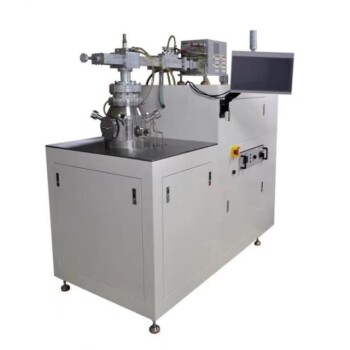
The cold wall CVD technique is highly recommended for optimizing quality. Unlike hot wall systems, cold wall systems allow for unprecedented control over process parameters. This precision enables you to fine-tune gas flow rates, temperature, and pressure to influence the underlying surface science of nucleation.
Temperature Regulation
Temperature management is a delicate balance. If the temperature inside the furnace becomes too high, the quality of the graphene will be compromised. Precise thermal control is required to maintain the sweet spot where crystallization occurs without degrading the material.
Gas Purity and Flow Rates
The chemical inputs must be pristine. Low gas purity introduces contaminants that become defects in the graphene lattice. Furthermore, the gas flow rate directly impacts the thickness of the graphene layer. Controlling the flow allows you to dictate whether you produce single-layer or multi-layer graphene.
Common Pitfalls to Avoid
Even with the right equipment, neglecting specific variables can ruin the final product. Understanding these trade-offs is essential for consistent results.
The Impact of Poor Substrate Quality
If the substrate is not pre-treated, you risk reduced nucleation density. Without the acetic acid treatment or similar conditioning, the copper surface may remain oxidized or rough. This leads to patchy growth where graphene fails to cover the substrate uniformly.
The Risk of Uncontrolled Parameters
Ignoring the interplay between temperature and gas flow leads to inconsistent results. A flow rate that is too aggressive can result in uneven thickness, rendering the graphene unsuitable for sensitive applications like optodevices or heterostructures.
Making the Right Choice for Your Goal
To apply these techniques effectively, align your process with your specific requirements.
- If your primary focus is reducing defects: Prioritize the wet-chemical pre-treatment of the copper substrate with acetic acid to minimize oxidation and surface imperfections.
- If your primary focus is controlling layer thickness: Focus on the gas flow rates and ensure you are using a cold wall CVD system for maximum stability.
- If your primary focus is maximizing crystal size: Concentrate on treatments that increase the copper grain size and reduce catalytic activity to slow down and organize the growth.
High-quality graphene is not an accident; it is the result of a chemically optimized substrate paired with a rigorously controlled environment.
Summary Table:
| Key Technique | Primary Benefit | Goal Achievement |
|---|---|---|
| Wet-Chemical Pre-treatment | Removes oxidation & impurities | Minimizes lattice defects |
| Catalytic Activity Control | Regulates growth speed | Prevents chaotic carbon formation |
| Cold Wall CVD System | Precise parameter management | Enhances reproducibility & stability |
| Gas Flow Optimization | Controls deposition rate | Uniform single-layer thickness |
| Substrate Grain Expansion | Reduces metal grain boundaries | Maximizes graphene crystal size |
Elevate Your Material Research with KINTEK Precision
Achieving defect-free CVD graphene requires more than just a process—it requires the right environment. KINTEK specializes in advanced laboratory equipment designed to meet the rigorous demands of material science.
Whether you are scaling up production or refining nucleation density, our comprehensive range of CVD and PECVD systems, high-temperature furnaces, and high-purity ceramics provides the stability and control your research deserves. From cooling solutions to high-pressure reactors, we empower laboratories to transition from chaotic growth to high-performance results.
Ready to optimize your graphene synthesis? Contact KINTEK today to discover how our high-performance systems can enhance your lab's efficiency and output.
Related Products
- Microwave Plasma Chemical Vapor Deposition MPCVD Machine System Reactor for Lab and Diamond Growth
- 915MHz MPCVD Diamond Machine Microwave Plasma Chemical Vapor Deposition System Reactor
- Cylindrical Resonator MPCVD Machine System Reactor for Microwave Plasma Chemical Vapor Deposition and Lab Diamond Growth
- HFCVD Machine System Equipment for Drawing Die Nano-Diamond Coating
- Customer Made Versatile CVD Tube Furnace Chemical Vapor Deposition Chamber System Equipment
People Also Ask
- How does a microwave plasma reactor facilitate the synthesis of diamond? Master MPCVD with Precision Technology
- What are the advantages of a Microwave Plasma CVD reactor for MCD/NCD coatings? Precision Multilayer Diamond Engineering
- How do vacuum pumps and valves collaborate in MPCVD? Achieve Precise Pressure Control for Superior CNT Synthesis
- How does MPCVD work? A Guide to Low-Temperature, High-Quality Film Deposition
- What is microwave plasma chemical vapor deposition? A Guide to High-Purity Diamond Film Growth