Chemical Vapor Deposition (CVD) creates a vast spectrum of high-purity metallic and non-metallic materials. While it is most famous for producing silicon-based compounds and synthetic diamonds, the process is equally capable of creating carbides, nitrides, oxides, and complex carbon structures.
The Core Insight: CVD is not limited by material class but by chemistry; it can synthesize almost any material where a solid can be derived from a gaseous precursor. This allows for the engineering of materials with specific microstructures—such as thin films, nanotubes, or monocrystalline layers—that possess superior hardness and purity compared to conventionally manufactured equivalents.
The Foundation: Semiconductor Materials
The most prevalent application of CVD lies in the semiconductor industry. The process is essential for fabricating the delicate layers required for modern electronics.
Silicon-Based Compounds
CVD is the standard for depositing silicon in various forms, including polysilicon and amorphous silicon. It is also used to create dielectric (insulating) layers such as silicon dioxide (SiO2) and silicon nitride (Si3N4), including low-stress variations used in complex device architectures.
Advanced Conductors and Insulators
Beyond basic silicon, CVD produces silicon germanium and tungsten, which are critical for conductive pathways in dry semiconductor devices. It also enables the creation of high-K dielectrics and silicon-oxynitride layers, where refractive indices can be tuned for specific optical or electrical properties.
Carbon Structures and Nanomaterials
CVD is uniquely capable of manipulating carbon atoms to create materials that range from industrial coatings to cutting-edge nanotechnology.
Synthetic Diamond
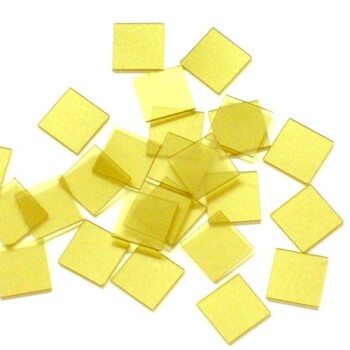
A standout capability of CVD is the production of synthetic diamonds. These are not just for jewelry; they are used in industrial cutting tools and electronics due to their extreme hardness and thermal conductivity.
Nanostructures and Fibers
The process drives the fabrication of advanced carbon forms, including carbon nanotubes (both single-walled and multi-walled), graphene, and carbon nanofibers. These materials are prized for their exceptional strength-to-weight ratios and electrical properties.
Ceramics and Hard Coatings
CVD allows for the deposition of ceramic materials that are chemically inert and mechanically robust.
Protective Compounds
The process extensively produces carbides, nitrides, and oxides. These materials are frequently applied as coatings because they are impervious, fine-grained, and often harder than similar materials produced through traditional ceramic sintering.
Intermetallics and Composites
CVD can synthesize intermetallic phases and composite materials. This versatility extends to creating multilayers (such as Oxide-Nitride-Oxide stacks) and fluorocarbon co-monomers, offering protection against wear, corrosion, and heat.
Understanding the Structural Trade-offs
While CVD is versatile chemically, it is important to understand the structural limitations relative to the application.
Thin Films vs. Bulk Materials
CVD is primarily a deposition process, meaning it excels at creating coatings, thin films, and powders rather than large, structural bulk objects (like a steel beam). While it can produce uniform components and fibers, its strength lies in modifying surfaces or building micro-structures.
Microstructural Differences
Materials produced via CVD often have a fine-grained structure different from their cast or sintered counterparts. While this usually results in higher purity and hardness, it can create stress within the material layers that must be managed (e.g., using low-stress nitrides) to prevent delamination or cracking.
Making the Right Choice for Your Goal
To determine if CVD is the right method for your material needs, consider your performance requirements:
- If your primary focus is Semiconductor Fabrication: Rely on CVD for depositing precise layers of tungsten, silicon germanium, and high-quality dielectrics like SiO2 and silicon nitride.
- If your primary focus is Wear Resistance: Utilize CVD to create synthetic diamond or carbide coatings, which offer superior hardness and longevity compared to standard ceramic production.
- If your primary focus is Nanotechnology: Choose CVD for synthesizing high-purity carbon nanotubes, nanowires, and quantum dots that require atomic-level structural control.
CVD transforms raw chemistry into precision performance, enabling the creation of materials that are otherwise impossible to manufacture with high purity.
Summary Table:
| Material Category | Key Examples Produced by CVD | Primary Applications |
|---|---|---|
| Semiconductors | Silicon (Poly/Amorphous), SiGe, Tungsten | Microelectronics, conductive pathways |
| Dielectrics | Silicon Dioxide (SiO2), Silicon Nitride (Si3N4) | Insulating layers, device architecture |
| Carbon Forms | Synthetic Diamond, Graphene, Carbon Nanotubes | Cutting tools, electronics, nanotechnology |
| Hard Coatings | Carbides, Nitrides, Oxides, Intermetallics | Wear resistance, corrosion protection |
| Nanostructures | Nanowires, Quantum Dots, Fibers | Advanced R&D, structural composites |
Elevate Your Material Research with KINTEK
Ready to push the boundaries of material synthesis? KINTEK specializes in advanced laboratory equipment designed for precision and durability. Whether you are developing next-generation semiconductors or high-performance coatings, our comprehensive range of CVD and PECVD systems, high-temperature furnaces, and vacuum equipment provides the control you need for atomic-level accuracy.
Why partner with KINTEK?
- Advanced CVD Solutions: High-purity synthesis for carbon nanotubes, graphene, and thin films.
- Full Lab Support: From high-pressure reactors to crushing and milling systems, we equip your entire workflow.
- Expertise in Innovation: Trusted by researchers for battery tools, cooling solutions, and specialized ceramics.
Contact KINTEK Today to Optimize Your Lab!
Related Products
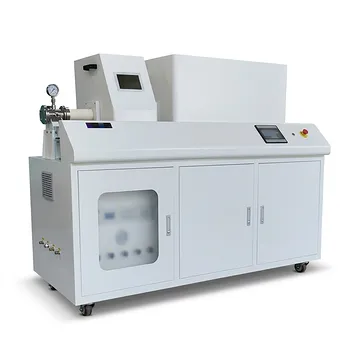
- Chemical Vapor Deposition CVD Equipment System Chamber Slide PECVD Tube Furnace with Liquid Gasifier PECVD Machine
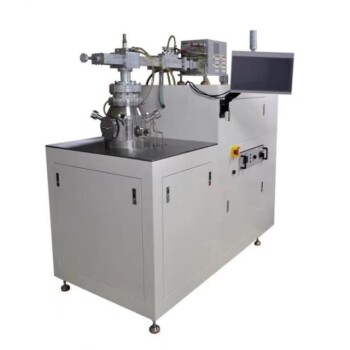
- Microwave Plasma Chemical Vapor Deposition MPCVD Machine System Reactor for Lab and Diamond Growth
- 915MHz MPCVD Diamond Machine Microwave Plasma Chemical Vapor Deposition System Reactor
- Customer Made Versatile CVD Tube Furnace Chemical Vapor Deposition Chamber System Equipment
- HFCVD Machine System Equipment for Drawing Die Nano-Diamond Coating
People Also Ask
- What are the advantages of chemical vapor deposition? Achieve Superior Thin Films for Your Lab
- What types of substrates are used in CVD to facilitate graphene films? Optimize Graphene Growth with the Right Catalyst
- What is the chemical vapor deposition growth process? Build Superior Thin Films from the Atom Up
- How expensive is chemical vapor deposition? Understanding the True Cost of High-Performance Coating
- Why is Chemical Vapor Deposition (CVD) equipment uniquely suited for constructing hierarchical superhydrophobic structures?