Knowledge Why are alumina crucibles selected for LTPO synthesis? Ensure Chemical Purity in High-Temperature Calcination
Author avatar

Tech Team · Kintek Solution

Updated 1 day ago

Why are alumina crucibles selected for LTPO synthesis? Ensure Chemical Purity in High-Temperature Calcination


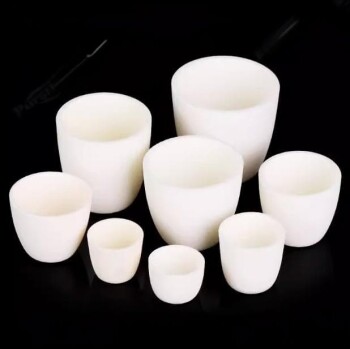
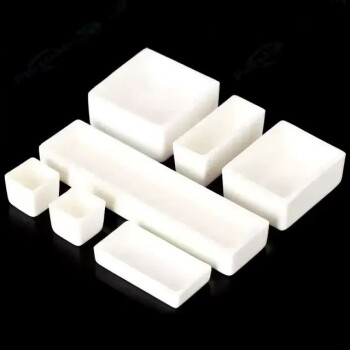
Alumina crucibles are the definitive choice for the synthesis of LiTa2PO8 (LTPO) electrolyte powders because they provide a chemically neutral environment capable of withstanding rigorous thermal demands. Specifically, they endure the required multi-step calcination temperatures between 650°C and 950°C without structurally failing or chemically interacting with the precursors.

Core Takeaway The synthesis of high-performance solid electrolytes like LTPO demands a vessel that acts as an inert bystander rather than a participant. Alumina crucibles are selected not just for their ability to survive high heat, but for their refusal to contaminate the reactive mixture, ensuring the final product maintains absolute chemical purity.

The Critical Role of Chemical Inertness

Preserving Stoichiometric Accuracy

In the synthesis of LTPO, maintaining the exact ratio of Lithium, Tantalum, and Phosphate is essential for ionic conductivity. At high temperatures, many container materials become reactive and can leach elements into the powder.

Alumina crucibles effectively prevent these chemical reactions. By remaining inert, they ensure that the stoichiometry of the synthesized powder is dictated solely by your precursor mixture, not by foreign elements introduced by the container walls.

Eliminating Impurity Introduction

Impurities are the enemy of solid-state electrolyte performance. Even trace amounts of foreign material can impede lithium-ion migration pathways.

Alumina serves as a barrier against contamination. Because it does not react with the LTPO materials even at elevated temperatures, it avoids the introduction of structural impurities that would otherwise degrade the quality and performance of the final synthesized powder.

Thermal Durability in Multi-Step Processes

Withstanding the 650°C to 950°C Range

LTPO synthesis is rarely a single-step event; it often involves a multi-step calcination process.

Alumina crucibles are engineered to possess excellent high-temperature resistance. They maintain their physical integrity throughout the entire thermal processing window, specifically covering the critical 650°C to 950°C range used in box resistance furnaces for this material.

Maintaining Structural Stability

During prolonged heat treatments, inferior materials may soften, warp, or collapse under the weight of the precursor powder.

Alumina offers exceptional structural strength. It supports the powder load without physical deformation, ensuring that the heating profile remains consistent across the sample volume and preventing mechanical failure of the containment vessel.

Understanding the Trade-offs

While alumina is the superior choice for this specific application, it is important to understand its physical limitations to avoid processing errors.

Thermal Shock Sensitivity

Alumina ceramics are hard and chemically robust, but they can be brittle under rapid temperature changes. While they withstand high steady-state temperatures (like 950°C), rapid cooling or heating rates can cause cracking.

Atmosphere Management

While the crucible itself is inert, it is an open container. In similar lithium-based syntheses (such as LATP), lithium volatilization can occur at high temperatures. While the alumina will not react, it does not inherently seal the atmosphere unless specific measures (like using a lid or mother powder) are taken to maintain a local lithium-rich environment.

Making the Right Choice for Your Goal

To maximize the quality of your LTPO synthesis using alumina crucibles, consider the following approach:

  • If your primary focus is chemical purity: Rely on high-purity alumina to ensure zero reactivity with precursors, preventing phase transitions caused by foreign element contamination.
  • If your primary focus is process longevity: Ensure your heating and cooling ramp rates are controlled to prevent thermal shock, thereby extending the service life of the crucible.

The selection of alumina is a strategic decision to prioritize the chemical integrity of the electrolyte over the convenience of less stable container materials.

Summary Table:

Feature Advantage for LTPO Synthesis
Chemical Inertness Prevents contamination and preserves stoichiometric accuracy of Li, Ta, and P.
Temperature Range Excellent resistance within the critical 650°C to 950°C calcination window.
Structural Strength Maintains physical integrity and shape under high-temperature powder loads.
Impurity Control Acts as a barrier against foreign element leaching to ensure high ionic conductivity.

Elevate Your Solid-State Electrolyte Research with KINTEK

Precision in material synthesis starts with the right containment. KINTEK specializes in high-performance laboratory equipment and consumables designed for rigorous battery research. Whether you are performing multi-step calcination of LTPO or scaling up your production, our premium alumina crucibles, high-temperature furnaces, and crushing/milling systems provide the reliability you need.

From high-purity ceramics to advanced vacuum and atmosphere furnaces, we deliver the tools that ensure your results remain pure and reproducible. Partner with KINTEK today for expert solutions tailored to your laboratory's needs.

Contact Our Specialists Now

Related Products

People Also Ask

Related Products

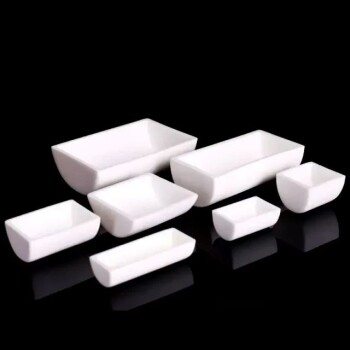
Alumina Al2O3 Ceramic Crucible Semicircle Boat with Lid for Engineering Advanced Fine Ceramics

Alumina Al2O3 Ceramic Crucible Semicircle Boat with Lid for Engineering Advanced Fine Ceramics

Crucibles are containers widely used for melting and processing various materials, and semicircular boat-shaped crucibles are suitable for special smelting and processing requirements. Their types and uses vary by material and shape.

Arc-Shaped Alumina Ceramic Crucible High Temperature Resistant for Engineering Advanced Fine Ceramics

Arc-Shaped Alumina Ceramic Crucible High Temperature Resistant for Engineering Advanced Fine Ceramics

In the journey of scientific exploration and industrial production, every detail is crucial. Our arc-shaped alumina ceramic crucibles, with their excellent high temperature resistance and stable chemical properties, have become a powerful assistant in laboratories and industrial fields. They are made of high-purity alumina materials and manufactured through precision processes to ensure excellent performance in extreme environments.

Engineering Advanced Fine Ceramics Alumina Crucibles (Al2O3) for Thermal Analysis TGA DTA

Engineering Advanced Fine Ceramics Alumina Crucibles (Al2O3) for Thermal Analysis TGA DTA

TGA/DTA thermal analysis vessels are made of aluminum oxide (corundum or aluminum oxide). It can withstand high temperature and is suitable for analyzing materials that require high temperature testing.

Engineering Advanced Fine Alumina Al2O3 Ceramic Crucible for Laboratory Muffle Furnace

Engineering Advanced Fine Alumina Al2O3 Ceramic Crucible for Laboratory Muffle Furnace

Alumina ceramic crucibles are used in some materials and metal melting tools, and flat-bottomed crucibles are suitable for melting and processing larger batches of materials with better stability and uniformity.

Electron Beam Evaporation Coating Tungsten Crucible and Molybdenum Crucible for High Temperature Applications

Electron Beam Evaporation Coating Tungsten Crucible and Molybdenum Crucible for High Temperature Applications

Tungsten and molybdenum crucibles are commonly used in electron beam evaporation processes due to their excellent thermal and mechanical properties.

Carbon Graphite Boat -Laboratory Tube Furnace with Cover

Carbon Graphite Boat -Laboratory Tube Furnace with Cover

Covered Carbon Graphite Boat Laboratory Tube Furnaces are specialized vessels or vessels made of graphite material designed to withstand extreme high temperatures and chemically aggressive environments.

Evaporation Crucible for Organic Matter

Evaporation Crucible for Organic Matter

An evaporation crucible for organic matter, referred to as an evaporation crucible, is a container for evaporating organic solvents in a laboratory environment.

Electron Beam Evaporation Coating Gold Plating Tungsten Molybdenum Crucible for Evaporation

Electron Beam Evaporation Coating Gold Plating Tungsten Molybdenum Crucible for Evaporation

These crucibles act as containers for the gold material evaporated by the electron evaporation beam while precisely directing the electron beam for precise deposition.

Electron Beam Evaporation Coating Oxygen-Free Copper Crucible and Evaporation Boat

Electron Beam Evaporation Coating Oxygen-Free Copper Crucible and Evaporation Boat

Electron Beam Evaporation Coating Oxygen-Free Copper Crucible enables precise co-deposition of various materials. Its controlled temperature and water-cooled design ensure pure and efficient thin film deposition.

Boron Nitride (BN) Crucible for Phosphorous Powder Sintered

Boron Nitride (BN) Crucible for Phosphorous Powder Sintered

Phosphorus powder sintered boron nitride (BN) crucible has a smooth surface, dense, pollution-free and long service life.

Electron Beam Evaporation Coating Conductive Boron Nitride Crucible BN Crucible

Electron Beam Evaporation Coating Conductive Boron Nitride Crucible BN Crucible

High-purity and smooth conductive boron nitride crucible for electron beam evaporation coating, with high temperature and thermal cycling performance.

Desktop Fast Laboratory Autoclave Sterilizer 35L 50L 90L for Lab Use

Desktop Fast Laboratory Autoclave Sterilizer 35L 50L 90L for Lab Use

The desktop fast steam sterilizer is a compact and reliable device used for rapid sterilization of medical, pharmaceutical, and research items. It efficiently sterilizes surgical instruments, glassware, medicines, and resistant materials, making it suitable for various applications.

Laboratory Jaw Crusher

Laboratory Jaw Crusher

Discover the small jaw crusher for efficient, flexible, and affordable crushing in labs and small mines. Ideal for coal, ores, and rocks. Learn more now!

PTFE Electrolytic Cell Electrochemical Cell Corrosion-Resistant Sealed and Non-Sealed

PTFE Electrolytic Cell Electrochemical Cell Corrosion-Resistant Sealed and Non-Sealed

Choose our PTFE Electrolytic Cell for reliable, corrosion-resistant performance. Customize specifications with optional sealing. Explore now.

Metal Disc Electrode Electrochemical Electrode

Metal Disc Electrode Electrochemical Electrode

Elevate your experiments with our Metal Disk Electrode. High-quality, acid and alkali resistant, and customizable to fit your specific needs. Discover our complete models today.

Silicon Carbide (SIC) Ceramic Sheet Wear-Resistant Engineering Advanced Fine Ceramics

Silicon Carbide (SIC) Ceramic Sheet Wear-Resistant Engineering Advanced Fine Ceramics

Silicon carbide (sic) ceramic sheet is composed of high-purity silicon carbide and ultra-fine powder, which is formed by vibration molding and high-temperature sintering.

Twin Screw Extruder Plastic Granulation Machine

Twin Screw Extruder Plastic Granulation Machine

Twin screw extruder plastic granulation machine is designed for the mixing and processing experiments of engineering plastics, modified plastics, waste plastics and masterbatches.

Small Vacuum Heat Treat and Tungsten Wire Sintering Furnace

Small Vacuum Heat Treat and Tungsten Wire Sintering Furnace

The small vacuum tungsten wire sintering furnace is a compact experimental vacuum furnace specially designed for universities and scientific research institutes. The furnace features a CNC welded shell and vacuum piping to ensure leak-free operation. Quick-connect electrical connections facilitate relocation and debugging, and the standard electrical control cabinet is safe and convenient to operate.

Custom PTFE Teflon Parts Manufacturer for PTFE Mesh F4 Sieve

Custom PTFE Teflon Parts Manufacturer for PTFE Mesh F4 Sieve

PTFE mesh sieve is a specialized test sieve designed for particle analysis in various industries, featuring a non-metallic mesh woven from PTFE filament. This synthetic mesh is ideal for applications where metal contamination is a concern . PTFE sieves are crucial for maintaining the integrity of samples in sensitive environments, ensuring accurate and reliable results in particle size distribution analysis.

Laboratory Oscillating Orbital Shaker

Laboratory Oscillating Orbital Shaker

Mixer-OT orbital shaker uses brushless motor, which can run for a long time. It is suitable for vibration tasks of culture dishes, flasks and beakers.


Leave Your Message