Graphite molds are essential in the vacuum hot pressing of austenitic stainless steel composites because they uniquely withstand the extreme processing environment while actively aiding the densification process. Specifically, they maintain structural integrity at temperatures of 1100°C and pressures of 35 MPa, ensuring the composite material is sintered to precise dimensions.
The Core Utility Graphite serves as more than just a container; it acts as a high-performance medium that transfers both heat and pressure uniformly to the powder body. Its self-lubricating nature and thermal conductivity allow for the production of high-density, defect-free composites that would be impossible to achieve with standard metal molds.
The Mechanical and Thermal Rationale
Withstanding Extreme Processing Conditions
The primary reason for selecting graphite is its exceptional high-temperature strength. Austenitic stainless steel composites require sintering temperatures around 1100°C to achieve proper bonding.
Unlike metal molds that might soften or deform at these temperatures, graphite retains its mechanical rigidity. It effectively acts as a load-bearing vessel, withstanding axial pressures of 35 MPa without buckling or losing its shape.
Ensuring Uniform Heat Distribution
Graphite possesses excellent thermal conductivity, which is critical for the quality of the final composite.
During the heating cycle, the mold ensures that thermal energy is transferred efficienty from the heating elements to the stainless steel powder. This prevents "thermal gradients"—hot or cold spots within the powder—which effectively promotes uniform sintering and structural homogeneity throughout the sample.
The Role of Self-Lubrication
Graphite is naturally self-lubricating. This physical property is vital during the compression phase of hot pressing.
As the hydraulic rams apply pressure, friction between the powder and the mold walls can lead to density variations (where the edges are dense but the center is porous). The lubricity of graphite minimizes this friction, ensuring that the applied pressure is transmitted effectively into the interior of the powder body rather than being lost at the mold interface.
Functionality as a Process Enabler
Precision Containment
The mold acts as a precise positioning container. Whether processing loose powders or multi-layer metal foil stacks, the graphite mold maintains the alignment of the material.
This "net-shape" capability ensures that the final sintered sample emerges with precise dimensions, reducing the need for extensive post-process machining.
Uniform Pressure Transmission
The mold is the medium through which the hydraulic force is delivered. Because graphite is rigid yet low-friction, it distributes the load uniformly across the sample surface.
This uniform distribution is the key factor in achieving high density. It ensures the entire composite plate receives consistent force, preventing defects such as local non-bonding, uneven thickness, or warping.
Understanding the Trade-offs
The Necessity of a Vacuum Environment
While graphite is thermally and mechanically superior, it has poor oxidation resistance. At the temperatures required for stainless steel sintering (1100°C), graphite would burn away if exposed to air.
Therefore, graphite molds must be used within a vacuum or inert atmosphere. This adds complexity to the equipment but is a non-negotiable requirement to preserve the mold and prevent the contamination of the stainless steel composite.
Mechanical Limits
While graphite is strong in compression at high temperatures, it is brittle compared to metals. It handles the static load of hot pressing well (e.g., 35 MPa to 50 MPa), but it has low impact resistance. Care must be taken during handling and loading to prevent chipping or cracking the mold components.
Making the Right Choice for Your Goal
When designing a hot pressing protocol for stainless steel composites, consider how the mold properties align with your specific objectives:
- If your primary focus is Dimensional Precision: Rely on graphite's high-temperature rigidity to maintain strict tolerances, but ensure your vacuum system is robust to prevent mold degradation.
- If your primary focus is Material Density: Leverage graphite's self-lubricating properties to maximize pressure transmission, ensuring the center of your composite is as dense as the edges.
Graphite is the only material that offers the trifecta of thermal conductivity, high-temperature lubricity, and mechanical strength required to turn loose stainless steel powder into a solid, high-performance composite.
Summary Table:
| Property of Graphite | Benefit to Hot Pressing | Impact on Stainless Steel Composite |
|---|---|---|
| High-Temp Strength | Resists deformation at 1100°C | Ensures precise dimensional accuracy |
| Thermal Conductivity | Rapid, even heat transfer | Eliminates thermal gradients and defects |
| Self-Lubrication | Reduces wall-to-powder friction | Achieves uniform density and bonding |
| Structural Rigidity | Withstands 35-50 MPa pressure | Prevents warping or uneven thickness |
Maximize Your Material Density with KINTEK Precision Solutions
Unlock the full potential of your research and production with KINTEK, your trusted partner for high-performance laboratory equipment. Whether you are fabricating austenitic stainless steel composites or advanced ceramics, our vacuum hot pressing systems, high-temperature furnaces (CVD, PECVD, vacuum), and specialized graphite consumables provide the reliability and precision your lab demands.
From high-pressure reactors and hydraulic presses to ultra-low temperature freezers and ceramic crucibles, KINTEK offers a comprehensive portfolio designed to optimize your workflow and ensure defect-free results. Partner with us to enhance your material science capabilities.
Contact KINTEK Today for a Tailored Quote
Related Products
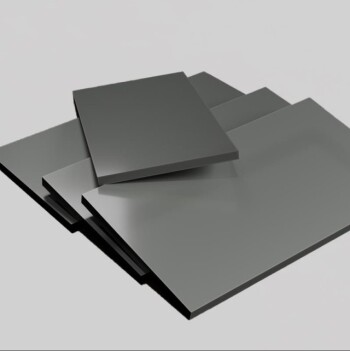
- Carbon Graphite Plate Manufactured by Isostatic Pressing Method
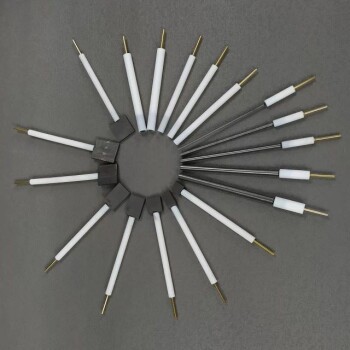
- Graphite Disc Rod and Sheet Electrode Electrochemical Graphite Electrode
- High Purity Pure Graphite Crucible for Evaporation
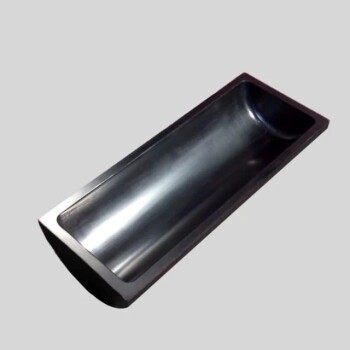
- Carbon Graphite Boat -Laboratory Tube Furnace with Cover
- High Purity Pure Graphite Crucible for Electron Beam Evaporation
People Also Ask
- What is the process of isostatic graphite manufacturing? Achieve Unmatched Material Uniformity and Performance
- What is isostatic graphite? The Ultimate Material for High-Tech and High-Temperature Applications
- What is the density of isostatic graphite? Unlock Superior Performance for Demanding Applications
- How big is the isostatic pressing market? A Deep Dive into the $1.2B+ Advanced Manufacturing Enabler
- Why Use an Isostatic or High-Precision Hydraulic Press for Li/LLZO/Li Batteries? Master Solid-State Interfaces