Active thermal management is critical for system survival. In large-scale water electrolysis, the internal resistance of the system causes overvoltage, which converts electrical energy directly into heat. Heat exchangers and cooling circulation loops are integrated to dissipate this thermal load, ensuring the electrolysis stack remains within a safe operating temperature range to prevent catastrophic failure.
The integration of cooling loops serves a dual purpose: it protects sensitive electrolytic membranes and seals from thermal degradation while enabling the recovery of waste heat to boost overall plant efficiency.
The Physics of Heat Generation
Internal Resistance and Overvoltage
Electrolysis is not a perfectly efficient process. Overvoltage, caused by the internal resistance of the cell components, inevitably results in energy loss.
Conversion to Thermal Energy
This lost energy does not disappear; it is converted into heat. Without intervention, this heat rapidly increases the temperature of the electrolysis stack to dangerous levels.
Protecting Critical Infrastructure
Preserving Sealing Integrity
The most immediate risk of overheating is the degradation of sealing materials. High temperatures can cause gaskets and seals to warp or become brittle, leading to leaks that compromise system safety.
Preventing Membrane Failure
Electrolytic membranes are the heart of the stack and are highly sensitive to thermal stress. A cooling circulation loop provides precise temperature control, preventing the membranes from overheating and degrading.
Ensuring Component Longevity
By maintaining a stable thermal environment, the cooling system extends the operational lifespan of the entire stack. This reduces the frequency of expensive component replacements and downtime.
Enhancing System Efficiency
Recovering Waste Heat
The heat removed by the exchanger represents potential energy. Instead of venting this heat into the atmosphere, large-scale systems often capture it.
Industrial Applications
This recovered thermal energy can be redirected for preheating feed water or utilized in other industrial thermal applications. This integration transforms a waste product into a resource, significantly improving the facility's integrated energy efficiency.
Understanding the Trade-offs
System Complexity
Adding heat exchangers, pumps, and fluid loops increases the mechanical complexity of the facility. These components require their own maintenance schedules and monitoring systems to ensure reliability.
Parasitic Load
Circulating cooling fluid requires energy. The power consumed by cooling pumps creates a parasitic load that must be factored into the net efficiency calculations of the hydrogen production plant.
Optimizing Your Thermal Strategy
To maximize the value of your electrolysis installation, you must balance protection with utilization.
- If your primary focus is asset protection: Prioritize the precision of the cooling loop to maintain temperatures strictly within the manufacturer's limits for membranes and seals.
- If your primary focus is economic efficiency: Invest in high-efficiency heat exchangers capable of capturing high-grade heat for immediate reuse in preheating or district heating.
Thermal management is not just a safety feature; it is a tool for maximizing the lifecycle value of your energy investment.
Summary Table:
| Feature | Primary Function | Impact on System |
|---|---|---|
| Thermal Management | Dissipates heat from overvoltage | Prevents catastrophic stack failure |
| Sealing Protection | Regulates temperature of gaskets | Maintains system integrity and prevents leaks |
| Membrane Safety | Minimizes thermal stress | Extends the lifespan of electrolytic membranes |
| Heat Recovery | Captures waste thermal energy | Boosts integrated energy efficiency via preheating |
Optimize Your Green Hydrogen Production with KINTEK Precision Solutions
Don't let thermal stress compromise your green hydrogen investment. KINTEK specializes in advanced laboratory and industrial infrastructure, offering high-performance cooling solutions, ULT freezers, and electrolytic cells designed to withstand the rigors of large-scale electrolysis. Whether you are scaling up hydrogen production or conducting specialized battery research, our comprehensive range of high-temperature furnaces, hydraulic presses, and precision consumables like PTFE and ceramics ensures your system operates at peak efficiency.
Ready to enhance your system’s thermal stability and lifecycle value? Contact our engineering experts today to discover how KINTEK can tailor a thermal management strategy for your specific industrial needs.
References
- Alessandro Franco, C Giovannini. Recent and Future Advances in Water Electrolysis for Green Hydrogen Generation: Critical Analysis and Perspectives. DOI: 10.3390/su152416917
This article is also based on technical information from Kintek Solution Knowledge Base .
Related Products
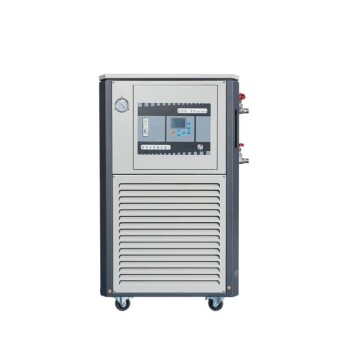
- 10L Heating Chilling Circulator Cooling Water Bath Circulator for High and Low Temperature Constant Temperature Reaction
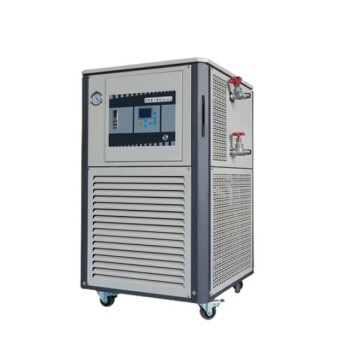
- High Temperature Constant Temperature Heating Circulator Water Bath Chiller Circulator for Reaction Bath
- 100L Heating Chilling Circulator Cooling Water Bath Circulator for High and Low Temperature Constant Temperature Reaction
- 5L Heating Chilling Circulator Cooling Water Bath Circulator for High and Low Temperature Constant Temperature Reaction
- 50L Heating Chilling Circulator Cooling Water Bath Circulator for High and Low Temperature Constant Temperature Reaction
People Also Ask
- What is the necessity of a circulating water bath in chlorate production? Optimize Yield & Purity with Precision
- Why is a circulating water chiller required for Prussian Blue nanoparticles? Ensure Stability & Batch Reproducibility
- What is the purpose of a cooling circulation water bath system in electrochemical experiments? Enhance Lab Precision
- What function does a circulating cooling chiller perform during the gas adsorption isotherm testing of nanoporous carbon?
- How does a constant temperature circulator support the leaching reaction of gold scrap? Optimize Gold Recovery Results