Knowledge Why are high-chemical-stability ceramic crucibles essential for molten carbonate impregnation? Secure Pure Membranes
Author avatar

Tech Team · Kintek Solution

Updated 1 day ago

Why are high-chemical-stability ceramic crucibles essential for molten carbonate impregnation? Secure Pure Membranes


High-chemical-stability ceramic crucibles are essential because the molten carbonate impregnation process involves highly corrosive alkali salts at extreme temperatures. Using standard containers in this environment leads to rapid vessel erosion and the introduction of impurities, which compromises the chemical purity required for high-performance membrane fabrication.

In the fabrication of inorganic-carbonate dual-phase membranes, material purity is paramount. High-stability crucibles serve as a critical barrier, preventing chemical reactions between the vessel and the molten salt to ensure the infiltration process remains uncontaminated.

The Challenge of Molten Carbonate Environments

Extreme Thermal Demands

The impregnation process requires heating alkali metal carbonates—specifically lithium (Li), sodium (Na), or potassium (K) salts—to a liquid state. This occurs at temperatures ranging from 500°C to 900°C.

Aggressive Corrosivity

At these elevated temperatures, molten carbonates become highly corrosive. They aggressively attack standard container materials, threatening both the physical integrity of the vessel and the chemical composition of the melt.

The Role of Material Inertness

Preventing Cross-Contamination

The primary function of a high-stability crucible is to remain chemically inert. By resisting reaction with the molten salts, the crucible prevents foreign elements from leaching into the carbonate mixture.

Preserving Membrane Quality

The goal of the process is to infiltrate a membrane skeleton with pure carbonate components. If the crucible degrades, impurities enter the melt, altering the properties of the final membrane and potentially causing fabrication failure.

Recommended Materials and Trade-offs

Preferred Ceramic Compositions

To withstand these harsh conditions, experts select high-purity ceramic crucibles. High-alumina and zirconia are the standard choices due to their ability to endure extreme heat without reacting chemically.

The Consequence of Compromise

Using lower-grade or "standard" containers is a significant process risk. These vessels are easily eroded by the molten salts, leading to inevitable contamination and the need for frequent, costly equipment replacement.

Ensuring Process Integrity for Your Project

Selecting the correct crucible is not just about holding liquid; it is about maintaining the chemical baseline of your entire experiment.

  • If your primary focus is absolute purity: Prioritize zirconia or high-alumina crucibles to eliminate the risk of leaching impurities into the membrane skeleton.
  • If your primary focus is process longevity: Ensure your chosen ceramic is rated to withstand long-duration exposure to temperatures up to 900°C without physical degradation.

By matching the chemical stability of your equipment to the aggressiveness of the molten salts, you safeguard the quality of your dual-phase membranes.

Summary Table:

Feature Requirement Benefit
Temperature Range 500°C to 900°C Ensures structural integrity during salt melting
Chemical Inertness Resistance to Li, Na, K salts Prevents leaching and cross-contamination
Recommended Materials High-Alumina or Zirconia Maximizes crucible lifespan and material purity
Process Goal Pure Carbonate Infiltration High-performance dual-phase membrane fabrication

Elevate Your Membrane Research with KINTEK Precision

Don't let vessel erosion compromise your material purity. KINTEK specializes in providing high-performance laboratory equipment designed for the most demanding thermal environments. Whether you require high-purity ceramics and crucibles (alumina, zirconia), specialized high-temperature furnaces, or advanced high-temperature high-pressure reactors, our solutions ensure process integrity from start to finish.

Our extensive portfolio supports global researchers in battery development, chemical synthesis, and material science with premium consumables like PTFE products, crushing systems, and vacuum furnaces.

Ready to safeguard your fabrication process? Contact our technical experts today to find the perfect equipment for your lab's unique requirements.

Related Products

People Also Ask

Related Products

Alumina Al2O3 Ceramic Crucible Semicircle Boat with Lid for Engineering Advanced Fine Ceramics

Alumina Al2O3 Ceramic Crucible Semicircle Boat with Lid for Engineering Advanced Fine Ceramics

Crucibles are containers widely used for melting and processing various materials, and semicircular boat-shaped crucibles are suitable for special smelting and processing requirements. Their types and uses vary by material and shape.

Arc-Shaped Alumina Ceramic Crucible High Temperature Resistant for Engineering Advanced Fine Ceramics

Arc-Shaped Alumina Ceramic Crucible High Temperature Resistant for Engineering Advanced Fine Ceramics

In the journey of scientific exploration and industrial production, every detail is crucial. Our arc-shaped alumina ceramic crucibles, with their excellent high temperature resistance and stable chemical properties, have become a powerful assistant in laboratories and industrial fields. They are made of high-purity alumina materials and manufactured through precision processes to ensure excellent performance in extreme environments.

Engineering Advanced Fine Ceramics Alumina Al2O3 Crucible With Lid Cylindrical Laboratory Crucible

Engineering Advanced Fine Ceramics Alumina Al2O3 Crucible With Lid Cylindrical Laboratory Crucible

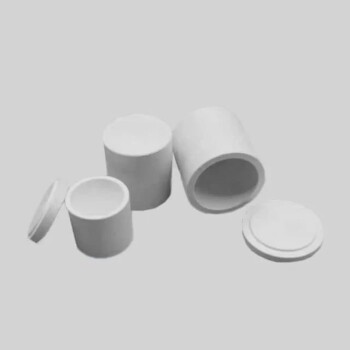
Cylindrical Crucibles Cylindrical crucibles are one of the most common crucible shapes, suitable for melting and processing a wide variety of materials, and are easy to handle and clean.

Engineering Advanced Fine Ceramics Alumina Crucibles (Al2O3) for Thermal Analysis TGA DTA

Engineering Advanced Fine Ceramics Alumina Crucibles (Al2O3) for Thermal Analysis TGA DTA

TGA/DTA thermal analysis vessels are made of aluminum oxide (corundum or aluminum oxide). It can withstand high temperature and is suitable for analyzing materials that require high temperature testing.

Electron Beam Evaporation Coating Tungsten Crucible and Molybdenum Crucible for High Temperature Applications

Electron Beam Evaporation Coating Tungsten Crucible and Molybdenum Crucible for High Temperature Applications

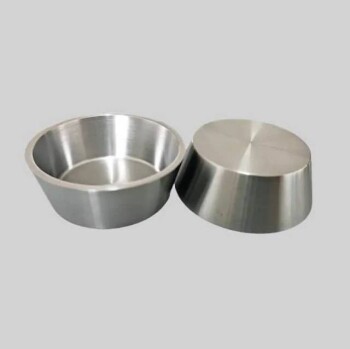
Tungsten and molybdenum crucibles are commonly used in electron beam evaporation processes due to their excellent thermal and mechanical properties.

Engineering Advanced Fine Alumina Al2O3 Ceramic Crucible for Laboratory Muffle Furnace

Engineering Advanced Fine Alumina Al2O3 Ceramic Crucible for Laboratory Muffle Furnace

Alumina ceramic crucibles are used in some materials and metal melting tools, and flat-bottomed crucibles are suitable for melting and processing larger batches of materials with better stability and uniformity.

Custom Machined and Molded PTFE Teflon Parts Manufacturer with PTFE Crucible and Lid

Custom Machined and Molded PTFE Teflon Parts Manufacturer with PTFE Crucible and Lid

PTFE crucibles, made from pure Teflon, offer chemical inertness and resistance from -196°C to 280°C, ensuring compatibility with a wide range of temperatures and chemicals. These crucibles feature machine-finished surfaces for easy cleaning and prevention of contamination, making them ideal for precise laboratory applications.

Boron Nitride (BN) Crucible for Phosphorous Powder Sintered

Boron Nitride (BN) Crucible for Phosphorous Powder Sintered

Phosphorus powder sintered boron nitride (BN) crucible has a smooth surface, dense, pollution-free and long service life.

Electron Beam Evaporation Coating Gold Plating Tungsten Molybdenum Crucible for Evaporation

Electron Beam Evaporation Coating Gold Plating Tungsten Molybdenum Crucible for Evaporation

These crucibles act as containers for the gold material evaporated by the electron evaporation beam while precisely directing the electron beam for precise deposition.

Evaporation Crucible for Organic Matter

Evaporation Crucible for Organic Matter

An evaporation crucible for organic matter, referred to as an evaporation crucible, is a container for evaporating organic solvents in a laboratory environment.

Molybdenum Disilicide (MoSi2) Thermal Elements Electric Furnace Heating Element

Molybdenum Disilicide (MoSi2) Thermal Elements Electric Furnace Heating Element

Discover the power of Molybdenum Disilicide (MoSi2) Heating Element for high-temperature resistance. Unique oxidation resistance with stable resistance value. Learn more about its benefits now!

Electron Beam Evaporation Coating Oxygen-Free Copper Crucible and Evaporation Boat

Electron Beam Evaporation Coating Oxygen-Free Copper Crucible and Evaporation Boat

Electron Beam Evaporation Coating Oxygen-Free Copper Crucible enables precise co-deposition of various materials. Its controlled temperature and water-cooled design ensure pure and efficient thin film deposition.

Electron Beam Evaporation Coating Conductive Boron Nitride Crucible BN Crucible

Electron Beam Evaporation Coating Conductive Boron Nitride Crucible BN Crucible

High-purity and smooth conductive boron nitride crucible for electron beam evaporation coating, with high temperature and thermal cycling performance.

Cylindrical Press Mold with Scale for Lab

Cylindrical Press Mold with Scale for Lab

Discover precision with our Cylindrical Press Mold. Ideal for high-pressure applications, it molds various shapes and sizes, ensuring stability and uniformity. Perfect for lab use.

Laboratory High Pressure Horizontal Autoclave Steam Sterilizer for Lab Use

Laboratory High Pressure Horizontal Autoclave Steam Sterilizer for Lab Use

The horizontal autoclave steam sterilizer adopts the gravity displacement method to remove the cold air in the inner chamber, so that the inner steam and cold air content is less, and the sterilization is more reliable.

Shaking Incubators for Diverse Laboratory Applications

Shaking Incubators for Diverse Laboratory Applications

Precision lab shaking incubators for cell culture & research. Quiet, reliable, customizable. Get expert advice today!

Custom PTFE Teflon Parts Manufacturer for PTFE Measuring Cylinder 10/50/100ml

Custom PTFE Teflon Parts Manufacturer for PTFE Measuring Cylinder 10/50/100ml

PTFE measuring cylinder are a rugged alternative to traditional glass cylinders. They are chemically inert over a wide temperature range (up to 260º C), have excellent corrosion resistance and maintain a low coefficient of friction, ensuring ease of use and cleaning.

Warm Isostatic Press WIP Workstation 300Mpa for High Pressure Applications

Warm Isostatic Press WIP Workstation 300Mpa for High Pressure Applications

Discover Warm Isostatic Pressing (WIP) - A cutting-edge technology that enables uniform pressure to shape and press powdered products at a precise temperature. Ideal for complex parts and components in manufacturing.

Glassy Carbon Sheet RVC for Electrochemical Experiments

Glassy Carbon Sheet RVC for Electrochemical Experiments

Discover our Glassy Carbon Sheet - RVC. Perfect for your experiments, this high-quality material will elevate your research to the next level.

Custom PTFE Teflon Parts Manufacturer for PTFE Mesh F4 Sieve

Custom PTFE Teflon Parts Manufacturer for PTFE Mesh F4 Sieve

PTFE mesh sieve is a specialized test sieve designed for particle analysis in various industries, featuring a non-metallic mesh woven from PTFE filament. This synthetic mesh is ideal for applications where metal contamination is a concern . PTFE sieves are crucial for maintaining the integrity of samples in sensitive environments, ensuring accurate and reliable results in particle size distribution analysis.


Leave Your Message