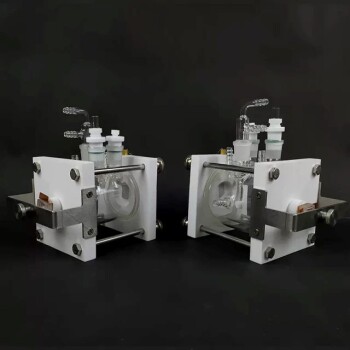
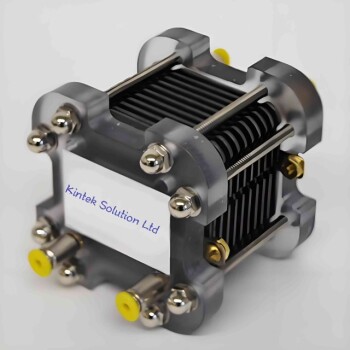
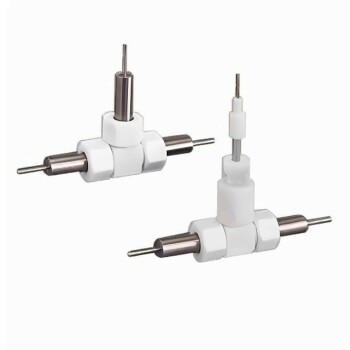
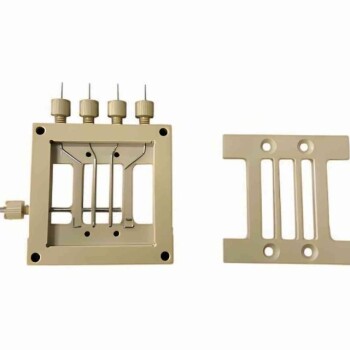
Precision is the prerequisite for accurate corrosion analysis. High-precision electrolytic cells and specific electrochemical consumables are necessary because they enable the real-time monitoring of minute changes in corrosion potential and current. Without this equipment, it is impossible to quantitatively assess the density of protective chemical conversion films or accurately measure how effectively an inhibitor blocks anodic and cathodic reactions in aggressive environments.
To truly validate a corrosion inhibitor, you must move beyond simple observation to quantitative measurement. High-precision electrochemical setups are the only way to accurately map the formation of chemical conversion films and rigorously test their stability against aggressive acidic or saline environments using advanced impedance and polarization techniques.
The Necessity of Real-Time Monitoring
Capturing Dynamic Changes
Corrosion is a dynamic process, not a static event. When metal samples are immersed in acidic or saline media, the electrochemical environment shifts rapidly.
High-precision electrolytic cells are equipped with specialized reference and counter electrodes. These components allow you to detect these shifts the moment they occur, providing a continuous data stream regarding the metal's stability.
The Role of Environmental Control
Standard containers cannot isolate external variables effectively. High-precision cells allow for controlled immersion where the interaction between the inhibitor and the metal surface is the only variable affecting the reading.
Quantitative Assessment via Advanced Techniques
Utilizing Polarization Curves
To understand how an inhibitor works, you must analyze the relationship between current and potential.
High-precision cells enable the generation of polarization curves. This data visualizes the rate of corrosion and identifies the specific conditions under which the inhibitor fails or succeeds.
Electrochemical Impedance Spectroscopy (EIS)
EIS is the gold standard for measuring the integrity of a coating or inhibitor layer.
This technique measures the system's resistance to alternating current. By doing so, it provides a quantitative assessment of the density of chemical conversion films, such as those formed by self-assembled monolayers (e.g., silane coupling agents).
Deciphering the Mechanism of Protection
Analyzing Film Density
The effectiveness of an inhibitor is directly related to the "tightness" or density of the film it forms on the metal.
High-precision equipment detects the minute electrical differences that distinguish a porous, ineffective layer from a dense, protective self-assembled monolayer.
Isolating Reaction Inhibition
Corrosion involves both anodic (oxidation) and cathodic (reduction) reactions.
Advanced electrochemical setups allow you to determine whether an inhibitor is primarily stopping the anodic reaction, the cathodic reaction, or both. This distinction is vital for tailoring inhibitors to specific corrosive environments.
Understanding the Trade-offs in High-Precision Testing
Sensitivity vs. Environmental Noise
The primary benefit of high-precision cells—extreme sensitivity—is also a potential liability.
Because these cells detect micro-changes in current, they are susceptible to electromagnetic interference and thermal fluctuations. Proper shielding and temperature control are not optional; they are required to prevent noise from drowning out the signal.
Complexity of Data Interpretation
Gathering data with techniques like EIS is only half the battle.
The data produced is complex and requires sophisticated modeling to interpret correctly. A high-precision cell gives you accurate raw data, but it demands a high level of expertise to translate that data into meaningful conclusions about film density and inhibition efficiency.
Making the Right Choice for Your Research
To select the right equipment for your corrosion study, focus on your specific analytical goals.
- If your primary focus is mechanism discovery: Prioritize cells that support EIS capabilities to accurately model the density and structure of self-assembled monolayers.
- If your primary focus is performance benchmarking: Ensure your setup includes robust reference electrodes capable of withstanding prolonged exposure to acidic or saline media for reliable polarization curve generation.
True insight into corrosion inhibition comes not just from applying a chemical, but from precisely measuring the electrical reality of the metal surface.
Summary Table:
| Method/Component | Application in Research | Key Insight Provided |
|---|---|---|
| EIS (Impedance) | Film Stability Testing | Measures density and integrity of chemical conversion films. |
| Polarization Curves | Reaction Kinetics | Identifies whether inhibitors block anodic or cathodic reactions. |
| High-Precision Cells | Environment Control | Enables real-time monitoring in aggressive acidic or saline media. |
| Specific Electrodes | Data Accuracy | Provides stable reference points for detecting minute potential shifts. |
Enhance Your Electrochemical Research with KINTEK
Precision is the foundation of scientific breakthrough. KINTEK provides a comprehensive suite of high-performance tools tailored for advanced corrosion studies and material science. From high-precision electrolytic cells and electrodes for monitoring inhibitors to high-temperature furnaces (vacuum, CVD, tube, dental) and high-pressure autoclaves for aggressive environment testing, we ensure your data is accurate and reproducible.
Our expertise extends to a complete range of laboratory solutions:
- Advanced Electrochemistry: Specialized cells, electrodes, and battery research tools.
- Material Processing: Crushing and milling systems, sieving equipment, and hydraulic presses (pellet, isostatic).
- Lab Infrastructure: ULT freezers, cold traps, homogenizers, and essential consumables like PTFE and ceramics.
Ready to achieve quantitative excellence in your lab? Contact KINTEK today to discuss how our specialized equipment can empower your research and development.
References
- Ya. G. Avdeev, A Frumkin. Chemical transformation of corrosion inhibitors in the aggressive environment/metal system. Review. DOI: 10.17675/2305-6894-2023-12-4-19
This article is also based on technical information from Kintek Solution Knowledge Base .
Related Products
- PTFE Electrolytic Cell Electrochemical Cell Corrosion-Resistant Sealed and Non-Sealed
- Customizable PEM Electrolysis Cells for Diverse Research Applications
- Super Sealed Electrolytic Electrochemical Cell
- H Type Electrolytic Cell Triple Electrochemical Cell
- H-Type Double-Layer Optical Electrolytic Electrochemical Cell with Water Bath
People Also Ask
- What is the necessity of selecting a PTFE electrolytic cell? Ensure Precise Graphene Corrosion Testing Accuracy
- What is the proper method for cleaning the surface of an all-PTFE electrolytic cell? Ensure Accurate Results with a Pristine Surface
- How should an all-PTFE electrolytic cell be stored after use? Expert Maintenance Tips for Long-Lasting Performance
- What is the proper cleaning method for an all-PTFE electrolytic cell? Essential Tips for Surface Integrity
- What are the standard opening specifications for all-PTFE electrolytic cells? A Guide to Sealed vs. Non-Sealed Ports