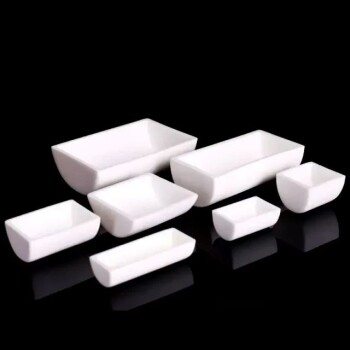
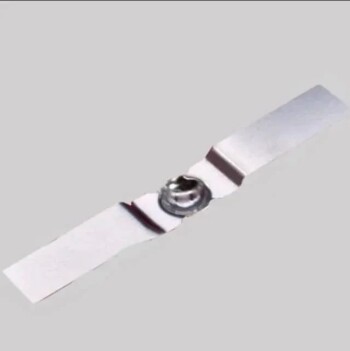
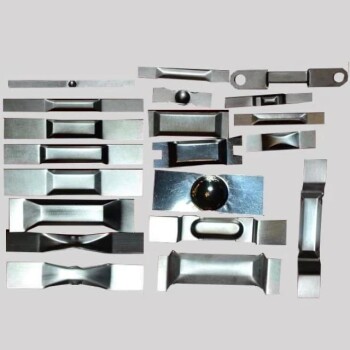
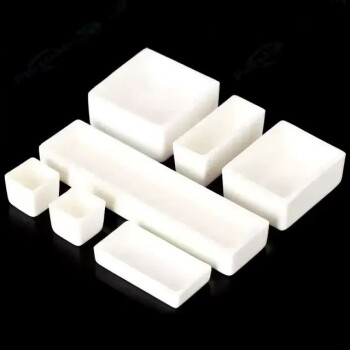
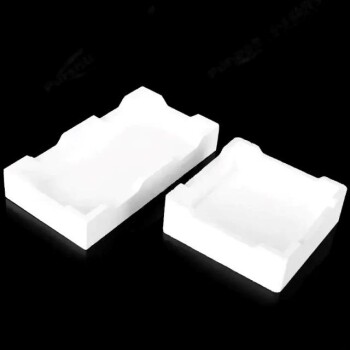
High-purity alumina boats are the preferred choice for high-temperature annealing because they provide a chemically inert and thermally stable environment that prevents sample contamination. At temperatures reaching 1273 K and beyond, these boats maintain their structural integrity without reacting with the samples or releasing trace impurities into the furnace atmosphere. This ensures that thin films and crystals retain atomic-level cleanliness and precise chemical compositions during processing.
High-purity alumina boats serve as a "neutral" stage for high-temperature reactions, offering a unique combination of chemical inertness and thermal resilience. Their primary value lies in their ability to endure extreme heat and corrosive environments without leaching elements into the processed material.
The Foundation of Chemical Purity
High-purity alumina (Al₂O₃) is fundamentally selected for its lack of reactivity across a wide range of chemical environments.
Prevention of Elemental Leaching
At temperatures exceeding 1000°C, many materials begin to degrade or release volatile components. High-purity alumina remains stable, ensuring that no unintended metallic impurities or sacrificial elements migrate into the thin film or powder being annealed.
Stability in Diverse Atmospheres
Alumina boats demonstrate exceptional performance in both oxidizing atmospheres, such as pure oxygen, and strongly reducing environments, such as ammonia. This versatility allows researchers to use the same carrier for various processes without risking side reactions between the boat and the reaction gases.
Maintaining Atomic-Level Cleanliness
For semiconductor thin films and 2D crystals, even trace amounts of foreign atoms can disrupt electronic properties. The use of high-purity alumina ensures a clean heat treatment environment, which is critical for maintaining the integrity of the substrate surface.
Exceptional Thermal and Structural Resilience
Beyond chemical purity, the physical properties of alumina are essential for the mechanical demands of a tube furnace.
Superior Thermal Shock Resistance
Annealing processes often involve rapid heating and cooling cycles that can cause inferior materials to crack. High-purity alumina possesses excellent thermal shock resistance, allowing it to withstand temperature fluctuations without structural failure.
Structural Integrity at Extreme Heat
Many carriers soften or sag when exposed to temperatures near 1373 K. Alumina boats maintain their shape and prevent structural collapse, even when holding heavy loads of reactants like metal oxide powders or flux materials.
Resistance to Corrosive Agents
In specialized synthesis, such as sulfur-doped carbon production, carriers must face highly corrosive substances like potassium hydroxide (KOH). Alumina effectively resists this chemical erosion at high temperatures, protecting the purity of the final synthesized material.
Understanding the Trade-offs
While high-purity alumina is a standard, it is not a "universal" material for every possible application.
Sensitivity to Specific Fluxes
Despite its general inertness, alumina can be vulnerable to certain molten salts and strong bases if temperatures exceed its specific tolerance limits. In these rare cases, the boat may slowly etch, potentially introducing aluminum into the sample.
Thermal Gradient Limitations
While alumina handles thermal shock well, it is still a ceramic and can crack if subjected to extreme, instantaneous localized heating. Users must still observe recommended ramp rates to ensure the longevity of the boat over multiple continuous cycles.
Cost vs. Purity Grade
There is a significant difference between standard alumina and high-purity (99.9%+) alumina. For high-precision semiconductor work, standard grades may still contain trace silica or iron, making the selection of the correct purity level a critical financial and technical decision.
How to Apply This to Your Project
Choosing the right carrier depends on your specific temperature range and the sensitivity of your materials.
- If your primary focus is semiconductor thin films: Use the highest purity (99.9% or higher) alumina boats to ensure no metallic ions migrate into your electronic layers.
- If your primary focus is high-volume powder synthesis: Standard high-purity alumina boats offer the best balance of cost and durability for repeated cycles in oxidizing or reducing atmospheres.
- If your primary focus is working with highly corrosive fluxes: Verify the specific chemical compatibility of Al₂O₃ with your flux at your peak temperature to prevent etching of the carrier.
By selecting high-purity alumina, you ensure that your experimental results are a reflection of your chemistry, rather than contamination from your equipment.
Summary Table:
| Key Property | Benefit for Annealing | Ideal Application |
|---|---|---|
| Chemical Inertness | Prevents elemental leaching and sample contamination | Semiconductor thin films & 2D crystals |
| Thermal Resilience | Maintains structural integrity at temperatures >1273 K | High-volume powder synthesis |
| Atmosphere Stability | Stable in both oxidizing and strongly reducing environments | Diverse gas-phase reactions |
| Corrosion Resistance | Resists erosion from agents like KOH at high heat | Specialized material synthesis |
| Thermal Shock Resistance | Withstands rapid heating and cooling cycles | Continuous laboratory testing |
Elevate Your Material Research with KINTEK
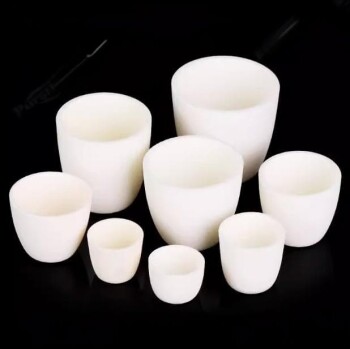
Precision in high-temperature annealing starts with the right equipment. KINTEK specializes in high-performance laboratory solutions, offering a comprehensive range of high-temperature furnaces (tube, muffle, vacuum, CVD, and PECVD) and essential ceramic consumables like high-purity alumina boats, crucibles, and PTFE products.
Whether you are developing semiconductor thin films or conducting complex powder synthesis, our products ensure atomic-level cleanliness and thermal resilience. Beyond furnaces, our portfolio includes high-temperature high-pressure reactors, electrolytic cells, and advanced battery research tools designed for demanding scientific environments.
Contact KINTEK today to discuss your specific application and discover how our expertise in thermal equipment and lab consumables can optimize your experimental results.
References
- M. De Santis, X. Torrelles. X-ray diffraction study of epitaxial CuO nanostructures obtained through post-deposition annealing of Cu on SrTiO3(001). DOI: 10.1016/j.tsf.2023.139965
This article is also based on technical information from Kintek Solution Knowledge Base .
Related Products
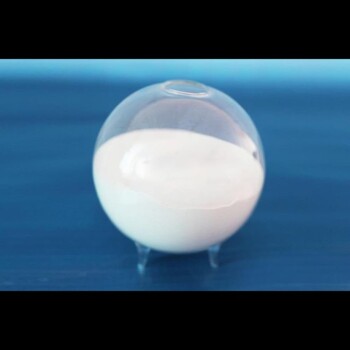
- High Purity Alumina Granulated Powder for Engineering Advanced Fine Ceramics
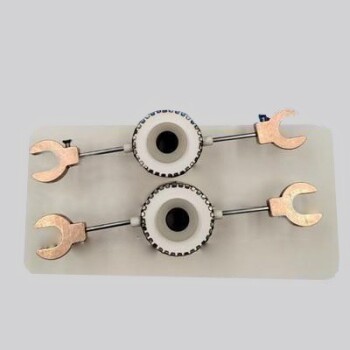
- Aluminized Ceramic Evaporation Boat for Thin Film Deposition
- Alumina Al2O3 Ceramic Crucible Semicircle Boat with Lid for Engineering Advanced Fine Ceramics
- High Purity Pure Graphite Crucible for Evaporation
- Ceramic Evaporation Boat Set Alumina Crucible for Laboratory Use
People Also Ask
- What is the function of high-purity alumina powder in pack cementation? Ensure Uniform Aerospace Blade Coatings
- How should alumina powder be selected for polishing a disc electrode, and what is the procedure for removing scratches? Achieve a Perfect Mirror Finish
- What are the properties and handling precautions for alumina powder as a polishing material? Achieve a Flawless Finish with Precision
- Why is it necessary to apply alumina powder to graphite molds for TiC10/Cu-Al2O3? Ensure Smooth Release.
- What measures should be taken to prevent cross-contamination when using different sizes of alumina powder?