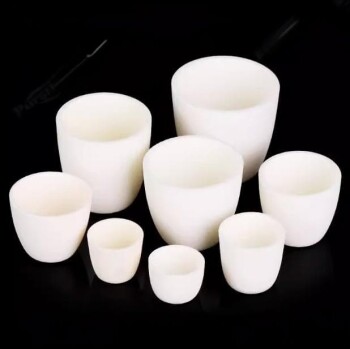
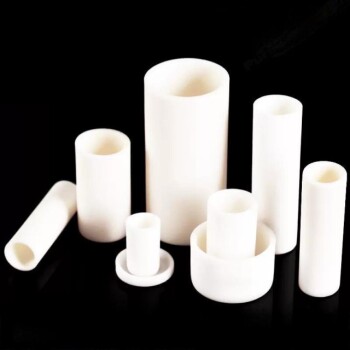
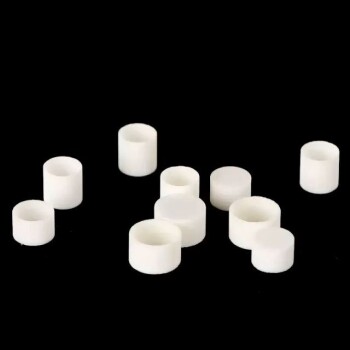
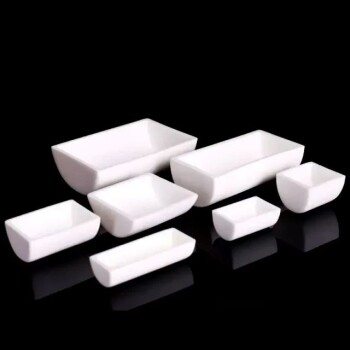
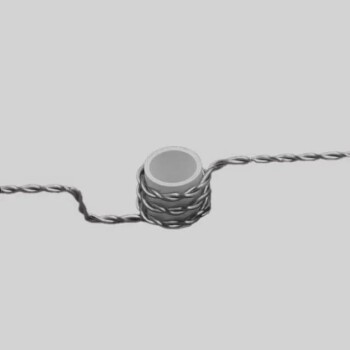
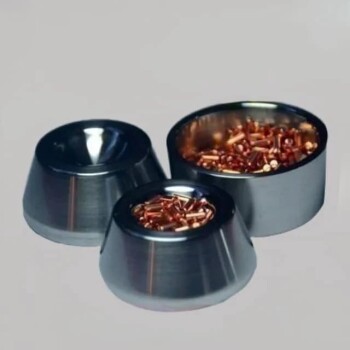
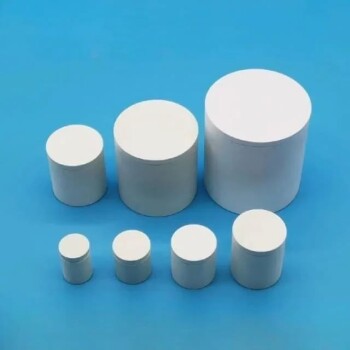
High-purity alumina crucibles are the preferred choice for Thermogravimetric Analysis (TGA) because they ensure the absolute integrity of mass-change data through extreme thermal and chemical stability. They provide a high-temperature resistant, chemically inert environment that prevents unwanted reactions between the sample and the container. This allows researchers to isolate and measure mass loss derived exclusively from the sample’s own thermal behavior.
High-purity alumina crucibles serve as the technical gold standard in TGA because they combine exceptional thermal conductivity with chemical inertness. This ensures that heat transfer is instantaneous and uniform, while the crucible itself remains a mass-stable constant throughout the heating cycle.
The Role of Chemical Inertness in Data Accuracy
Preventing Unwanted Chemical Reactions
High-purity alumina (corundum) is highly non-reactive, even at extreme temperatures. It prevents interactions between the crucible wall and complex analytes such as coal char, biomass residues, or metal-organic frameworks (ZIFs).
Isolating Sample Mass Loss
Because the crucible does not react with decomposition products or ambient oxygen, any recorded mass change is attributed solely to the sample. This isolation is critical for calculating precise kinetic data and determining accurate pyrolysis reaction patterns.
Stability Across Atmospheric Conditions
These crucibles maintain their mass stability in both inert and oxidative environments up to 1000°C and beyond. This allows for the precise analysis of volatile release and final residual carbon yields without interference from the vessel material.
Superior Thermal Conductivity and Synchronization
Rapid and Uniform Heat Transfer
Alumina’s excellent thermal conductivity ensures that heat from the furnace is transferred rapidly to the interior of the sample. This uniform heating is essential for maintaining the accuracy of kinetic data during programmed temperature increases.
Maintaining Temperature Synchronization
High thermal conductivity minimizes the "lag" between the furnace's temperature recording and the sample's actual temperature. This ensures that the mass loss curve is perfectly synchronized with the temperature data, providing a true reflection of thermal stability.
Supporting High Heating Rates
In experiments involving rapid heating or cyclic testing, alumina’s ability to distribute heat quickly prevents internal temperature gradients. This leads to more reproducible results across different TGA protocols and sample types.
Resilience Under Extreme Thermal Loads
Refractoriness and Structural Integrity
High-purity alumina can withstand temperatures reaching 1223 K (approx. 950°C) or higher without structural failure. It maintains its shape and density, ensuring the crucible does not undergo phase changes that could affect the sensitive TGA balance.
Thermal Shock Resistance
The material is designed to handle the stresses of rapid heating and cooling cycles. This thermal shock resistance makes high-purity alumina crucibles durable enough for repeated use in demanding laboratory environments.
Understanding the Trade-offs and Limitations
Potential for Sample Adhesion
While chemically inert, certain molten samples or glass-forming residues can adhere strongly to the alumina surface. This can make cleaning difficult and may require specialized acid baths to avoid damaging the crucible.
Risk of Physical Contamination
Over many cycles, alumina crucibles can develop microscopic cracks or surface porosity. If not monitored, these imperfections can trap residues from previous experiments, leading to cross-contamination and ghost mass signatures in subsequent tests.
Cost vs. Purity Requirements
High-purity alumina is more expensive than standard ceramic or lower-grade alumina options. However, using lower-grade materials can introduce impurities that catalyze reactions or cause baseline drift, compromising the validity of the TGA results.
Making the Right Choice for Your Goal
How to Apply This to Your Project
- If your primary focus is kinetic accuracy: Utilize high-purity alumina to ensure that heat transfer is uniform and mass loss data is not skewed by vessel reactions.
- If your primary focus is high-temperature oxidation: Rely on alumina’s stability in oxygen-rich environments up to 1273 K to prevent crucible oxidation from interfering with your baseline.
- If your primary focus is carbonization and residue yield: Leverage the inertness of alumina to ensure that the final residual mass is an accurate reflection of the sample’s carbon content.
Choosing high-purity alumina is a fundamental step in ensuring that your thermal analysis results are both precise and scientifically defensible.
Summary Table:
| Feature | Benefit | Impact on TGA Results |
|---|---|---|
| Chemical Inertness | Prevents reactions between sample and vessel | Ensures mass loss is strictly from the analyte |
| High Thermal Conductivity | Rapid and uniform heat distribution | Synchronizes temperature data with mass curves |
| Mass Stability | Constant mass throughout heating cycles | Prevents baseline drift and kinetic inaccuracies |
| High Refractoriness | Withstands temperatures >1000°C | Reliable performance under extreme thermal loads |
| Oxidation Resistance | Stable in oxidative/inert atmospheres | Accurate analysis of carbon yield and volatiles |
Elevate Your Research Precision with KINTEK
Maximize the accuracy of your thermal analysis and material testing with KINTEK’s high-purity alumina crucibles and specialized consumables. Designed to meet the rigorous demands of modern laboratories, our products ensure the chemical integrity and thermal stability required for defensible scientific data.
At KINTEK, we provide a comprehensive suite of laboratory solutions, including:
- High-Temperature Furnaces: Muffle, tube, vacuum, CVD, and PECVD systems.
- Sample Preparation: Precision crushing, milling, sieving, and hydraulic presses.
- Advanced Reactors: High-temperature high-pressure reactors and autoclaves.
- Specialized Consumables: Premium PTFE products, high-grade ceramics, and high-purity crucibles.
Whether you are conducting complex kinetic studies or routine quality control, KINTEK offers the reliability and technical support your facility needs. Ready to optimize your experimental outcomes? Contact us today to explore our full range of laboratory equipment and consumables tailored to your specific research goals.
References
- R. Lemaire, Sébastien Menanteau. Kinetic Modeling of the Devolatilization of Pulverized Coal, Poplar Wood, and Their Blends in a Thermogravimetric Analyzer and a Flat Flame Reactor. DOI: 10.1021/acsomega.3c03110
This article is also based on technical information from Kintek Solution Knowledge Base .
Related Products
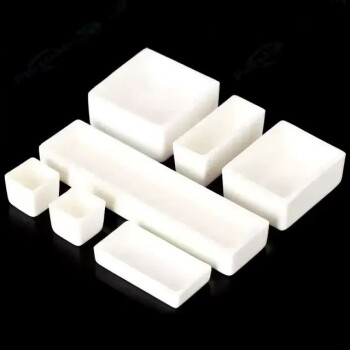
- Arc-Shaped Alumina Ceramic Crucible High Temperature Resistant for Engineering Advanced Fine Ceramics
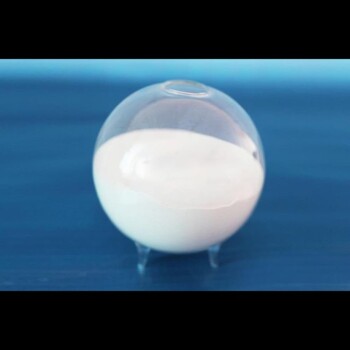
- High Purity Alumina Granulated Powder for Engineering Advanced Fine Ceramics
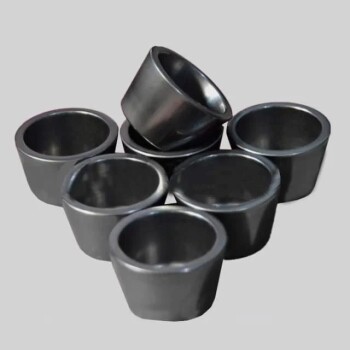
- High Purity Pure Graphite Crucible for Evaporation
- Engineering Advanced Fine Alumina Al2O3 Ceramic Crucible for Laboratory Muffle Furnace
- High Purity Pure Graphite Crucible for Electron Beam Evaporation
People Also Ask
- Why Use Alumina Crucibles & Powder Burial for NaSICON? Ensure Phase Purity and Prevent Elemental Volatilization
- What is the primary purpose of using alumina crucibles for LLTO ceramics? Optimize Your High-Temperature Sintering
- Why are alumina crucibles and mother powder essential for LATP sintering? Optimize Your Solid Electrolyte Performance
- Why are high-purity alumina crucibles used for liquid lead corrosion experiments? Ensure Data Accuracy at 550°C
- Primary considerations for choosing alumina crucibles and quartz tubes in indium intercalation: Ensure Material Purity