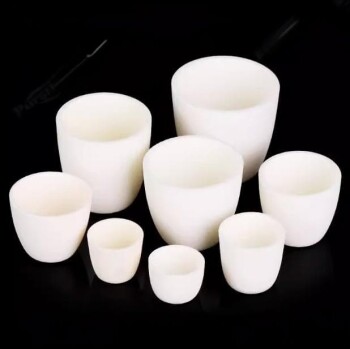
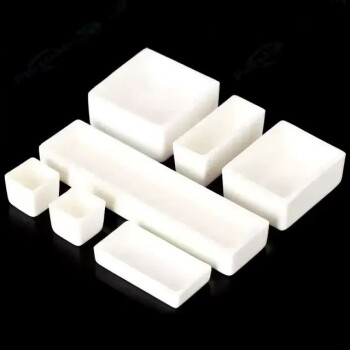
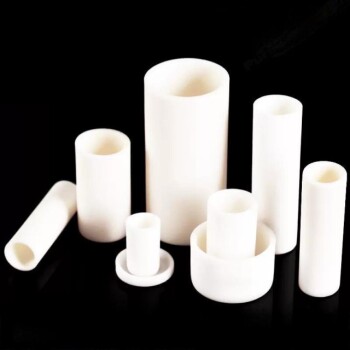
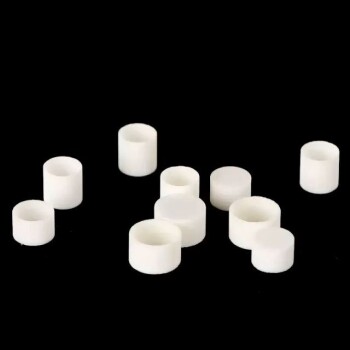
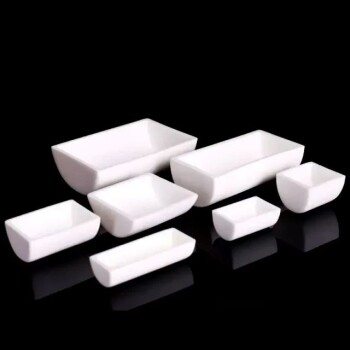
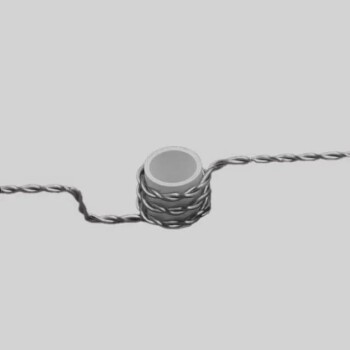
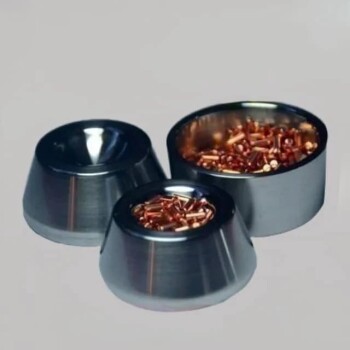
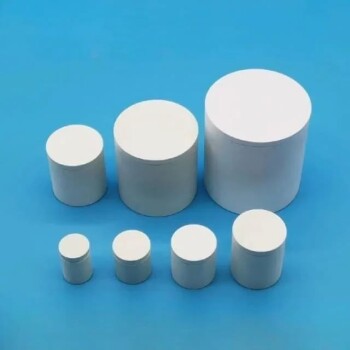
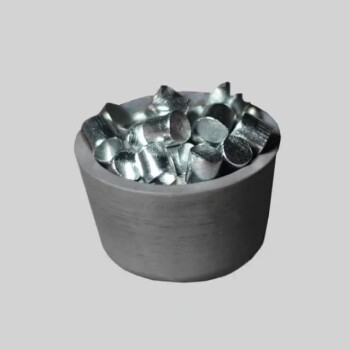
The selection of crucible materials is the single most important factor in ensuring the integrity of thermal analysis. High-purity alumina (Al₂O₃) crucibles are preferred for Differential Scanning Calorimetry (DSC) because they provide a chemically inert environment and exceptional thermal stability. This ensures that the recorded heat flow signals accurately reflect the internal phase transitions of the alloy rather than parasitic reactions between the sample and its container.
Core Takeaway: High-purity alumina serves as a neutral stage for thermal analysis, eliminating chemical interference and structural failure at extreme temperatures. This guarantees that DSC data represents the true thermodynamic properties of the alloy being tested.
The Role of Chemical Inertness in Data Precision
Eliminating Sample-Container Reactions
Alumina is fundamentally non-reactive with a vast array of alloy systems, including iron, tin, niobium, and boron. This chemical neutrality prevents the formation of unintended intermetallic compounds that would otherwise distort the thermal curve.
Protecting Phase Transition Accuracy
By remaining neutral, alumina ensures that recorded exothermic peaks correspond strictly to internal phase transitions, such as the primary crystallization temperature (Tx₁). This clarity allows researchers to distinguish between true material changes and container-induced artifacts.
Maintaining Compositional Purity
Contamination from crucible materials can lead to significant fluctuations in alloy composition during a melt. Alumina acts as a stable barrier, preserving the chemical identity of the sample throughout multiple heating and cooling cycles.
Thermal Stability and High-Temperature Performance
Superior Refractory Properties
High-purity alumina crucibles maintain their structural integrity at temperatures exceeding 1500°C. This makes them indispensable for analyzing high-melting-point materials like nickel-based superalloys and titanium alloys.
Resistance to Oxidative Conditions
Unlike metallic crucibles, alumina does not react with oxygen or aggressive salts under high-temperature oxidative conditions. This stability ensures that signals captured during DSC experiments originate solely from the catalyst or alloy itself.
Durability Under Thermal Cycling
High-quality alumina can withstand intense high-temperature cycling without undergoing physical degradation. This prevents sample leakage or chemical erosion that could permanently damage the delicate sensors within the DSC equipment.
Understanding the Trade-offs
Thermal Lag Considerations
While alumina is exceptionally stable, it possesses lower thermal conductivity than metallic crucibles (like pure aluminum). This can result in a slight thermal lag, requiring meticulous baseline calibration to ensure the timing of heat flow signals is accurate.
Vulnerability to Thermal Shock
As a ceramic material, alumina can be susceptible to cracking if subjected to extreme, near-instantaneous temperature changes. Users must manage heating and cooling rates to avoid structural failure while maintaining the pace of the experiment.
Specific Chemical Sensitivities
While inert to most alloys, alumina can still react with certain highly aggressive fluxing agents at extreme temperatures. It is vital to verify that the specific mineral components of a sample do not have a known affinity for aluminum oxide.
How to Apply This to Your Thermal Analysis
Successful DSC analysis requires matching the crucible to the specific thermal demands of your alloy.
- If your primary focus is analyzing iron or tin-based alloys: Use high-purity alumina to ensure precise measurement of crystallization temperatures without the risk of alloying with the container.
- If your primary focus is high-melting-point superalloys: Leverage the refractory properties of alumina to maintain crucible shape and stability at temperatures exceeding 1200°C.
- If your primary focus is sensitive phase transitions like the Beta transus in Titanium: Utilize high-purity alumina to prevent false signals and ensure the heat flow data is clean and reproducible.
Choosing high-purity alumina crucibles is a foundational step in transforming raw thermal data into reliable material science insights.
Summary Table:
| Feature | Advantage for DSC Analysis | Considerations |
|---|---|---|
| Chemical Inertness | Prevents parasitic reactions with iron, tin, and nickel alloys. | Slight thermal lag compared to metals. |
| High-Temp Stability | Maintains structural integrity at temperatures exceeding 1500°C. | Susceptible to extreme thermal shock. |
| Oxidation Resistance | Ensures heat flow signals originate solely from the sample. | Avoid use with specific aggressive fluxing agents. |
| Material Purity | Preserves alloy composition through multiple heating cycles. | Requires meticulous baseline calibration. |
Elevate Your Material Science Precision with KINTEK
Achieving accurate thermodynamic data starts with the right environment. KINTEK specializes in high-performance laboratory equipment and consumables, offering premium high-purity alumina crucibles and ceramics designed to withstand the rigors of alloy analysis.
Beyond consumables, our comprehensive portfolio includes:
- High-Temperature Furnaces: Muffle, tube, vacuum, and atmosphere furnaces for every application.
- Material Processing: Advanced crushing, milling systems, and hydraulic presses (pellet, hot, and isostatic).
- Specialized Reactors: High-temperature high-pressure reactors, autoclaves, and PECVD systems.
- Lab Essentials: Cooling solutions, homogenizers, and precision sieving equipment.
Don't let crucible interference compromise your research. Partner with KINTEK for reliable, high-quality tools that ensure your results are clean and reproducible.
Contact our experts today to find the perfect solution for your lab!
References
- Peitian Wang, Matthew A. Willard. Development of an (Fe, Sn)-Based Nanocrystalline Soft Magnetic Alloy. DOI: 10.2139/ssrn.4340790
This article is also based on technical information from Kintek Solution Knowledge Base .
Related Products
- Arc-Shaped Alumina Ceramic Crucible High Temperature Resistant for Engineering Advanced Fine Ceramics
- High Purity Alumina Granulated Powder for Engineering Advanced Fine Ceramics
- Engineering Advanced Fine Alumina Al2O3 Ceramic Crucible for Laboratory Muffle Furnace
- High Purity Pure Graphite Crucible for Evaporation
- High Purity Pure Graphite Crucible for Electron Beam Evaporation
People Also Ask
- Why Use Alumina Crucibles & Powder Burial for NaSICON? Ensure Phase Purity and Prevent Elemental Volatilization
- What is the primary purpose of using alumina crucibles for LLTO ceramics? Optimize Your High-Temperature Sintering
- Why are alumina crucibles and mother powder essential for LATP sintering? Optimize Your Solid Electrolyte Performance
- Why are high-purity alumina crucibles used for liquid lead corrosion experiments? Ensure Data Accuracy at 550°C
- Primary considerations for choosing alumina crucibles and quartz tubes in indium intercalation: Ensure Material Purity