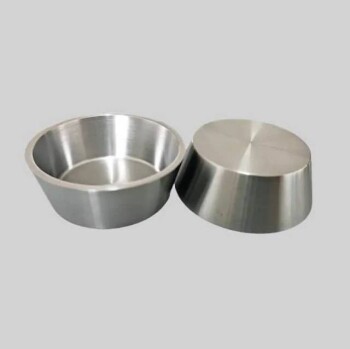
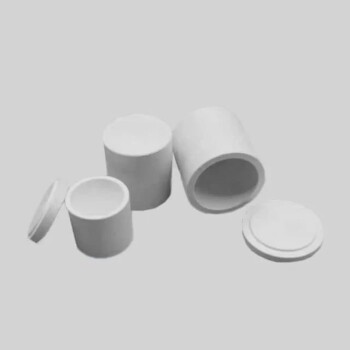
In the high-temperature sintering of Li7La3Zr2O12 (LLZO), the alumina crucible functions as a robust physical containment vessel, while the mother powder burial method acts as a chemical safeguard. Together, they create a controlled environment at 1200°C that prevents the critical loss of lithium, ensuring the material retains its correct chemical composition and crystal structure.
Core Takeaway The combination of an alumina crucible and mother powder generates a localized, lithium-rich atmosphere. This setup is essential for suppressing lithium volatilization, preserving the correct stoichiometry, and stabilizing the cubic phase structure necessary for high-performance solid electrolytes.
The Physical Role of the Alumina Crucible
Withstanding Extreme Thermal Stress
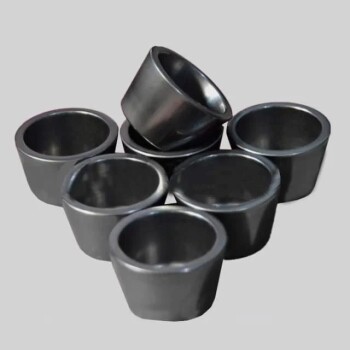
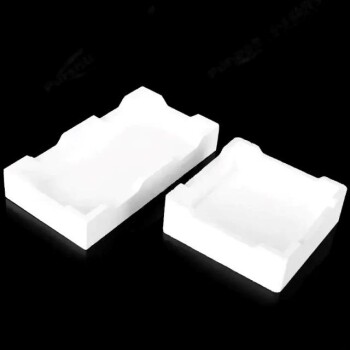
The primary function of the alumina crucible is to serve as a durable physical container.
Sintering LLZO requires temperatures reaching 1200°C. The crucible provides the necessary structural integrity to hold the sample safely for extended periods under these extreme thermal conditions.
The Chemical Role of the Mother Powder Burial Method
Creating a Protective Microclimate
The mother powder burial method involves surrounding the sample with powder of the same composition.
This technique is not merely for support; it fundamentally alters the atmosphere immediately surrounding the sample. It generates a lithium-rich environment within the confines of the crucible.
Suppressing Volatilization
At 1200°C, lithium is highly prone to volatilization (turning into vapor and escaping).
The lithium-rich atmosphere created by the mother powder acts as a buffer. It effectively suppresses the evaporation of lithium from the actual sample, mitigating the risk of material degradation.
Why This Synergy is Critical for Material Quality
Maintaining Accurate Stoichiometry
The specific ratio of elements (stoichiometry) in LLZO dictates its performance.
By preventing lithium loss, this method ensures the chemical formula remains consistent throughout the sintering process.
Stabilizing the Cubic Phase
LLZO performance relies heavily on achieving the correct crystal structure.
The preservation of lithium content is directly linked to stabilizing the cubic phase structure. Without this protection, the material creates impurity phases that degrade performance.
The Risks of Inadequate Atmosphere Control
The Danger of Lithium Depletion
If the mother powder is omitted or the crucible is not utilized correctly, the protective lithium atmosphere fails to form.
This leads to significant lithium volatilization. The immediate result is a deviation from the target stoichiometry.
Formation of Impurity Phases
When lithium is lost to the open furnace atmosphere, the cubic phase becomes unstable.
This instability triggers the formation of impurity phases. These impurities are detrimental to the material's properties, rendering the sintering process unsuccessful.
Making the Right Choice for Your Goal
To ensure high-quality LLZO synthesis, apply the following principles:
- If your primary focus is Physical Containment: Rely on the alumina crucible for its ability to withstand 1200°C temperatures over long durations.
- If your primary focus is Phase Purity: You must employ the mother powder burial method to maintain the specific lithium concentration required for a stable cubic structure.
Ultimately, succesful LLZO sintering is not just about temperature; it is about managing the chemical atmosphere to prevent lithium loss.
Summary Table:
| Component | Primary Function | Impact on LLZO Quality |
|---|---|---|
| Alumina Crucible | Physical containment & thermal stability | Withstands 1200°C stress; provides structural integrity |
| Mother Powder Burial | Creating a lithium-rich microclimate | Suppresses Li volatilization; maintains stoichiometry |
| Combined Synergy | Chemical atmosphere control | Stabilizes the cubic phase; prevents impurity formation |
Elevate Your Solid-State Battery Research with KINTEK
Precise atmospheric control is the difference between a high-performance electrolyte and a failed synthesis. At KINTEK, we specialize in the high-performance laboratory equipment and consumables required for advanced material science.
Whether you are sintering LLZO at 1200°C or developing next-generation energy storage, our range of high-purity alumina crucibles, high-temperature muffle and tube furnaces, and precision crushing systems ensures your research remains consistent and contamination-free. From PTFE products and ceramics to isostatic presses and battery research tools, we provide the comprehensive solutions your lab needs to achieve perfect stoichiometry and phase purity.
Ready to optimize your sintering results? Contact our technical experts today to find the ideal equipment for your high-temperature applications.
Related Products
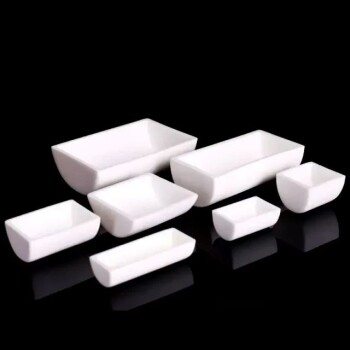
- Arc-Shaped Alumina Ceramic Crucible High Temperature Resistant for Engineering Advanced Fine Ceramics
- Alumina Al2O3 Ceramic Crucible Semicircle Boat with Lid for Engineering Advanced Fine Ceramics
- Engineering Advanced Fine Ceramics Alumina Crucibles (Al2O3) for Thermal Analysis TGA DTA
- Engineering Advanced Fine Ceramics Alumina Al2O3 Crucible With Lid Cylindrical Laboratory Crucible
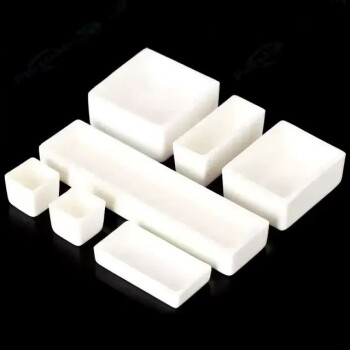
- Engineering Advanced Fine Alumina Al2O3 Ceramic Crucible for Laboratory Muffle Furnace
People Also Ask
- Why Use Alumina Crucibles & Powder Burial for NaSICON? Ensure Phase Purity and Prevent Elemental Volatilization
- What is the primary purpose of using alumina crucibles for LLTO ceramics? Optimize Your High-Temperature Sintering
- Why are alumina crucibles and mother powder essential for LATP sintering? Optimize Your Solid Electrolyte Performance
- Why are high-purity alumina crucibles used for liquid lead corrosion experiments? Ensure Data Accuracy at 550°C
- Primary considerations for choosing alumina crucibles and quartz tubes in indium intercalation: Ensure Material Purity