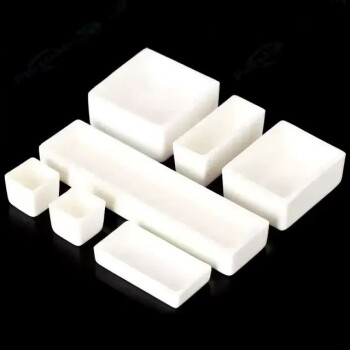
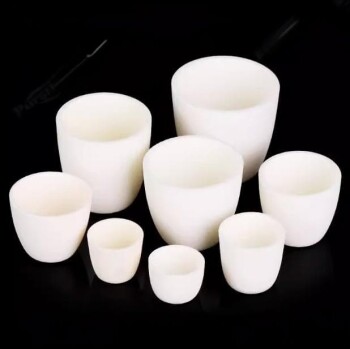
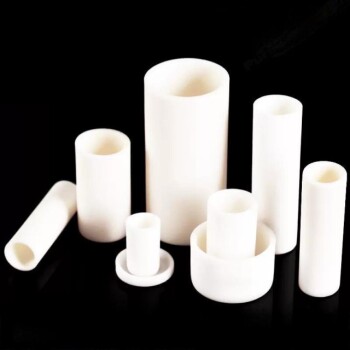
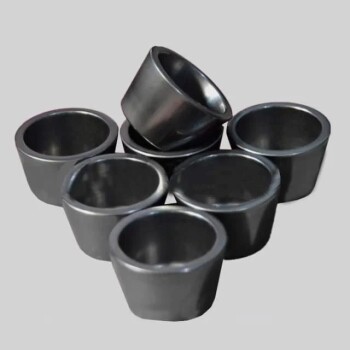
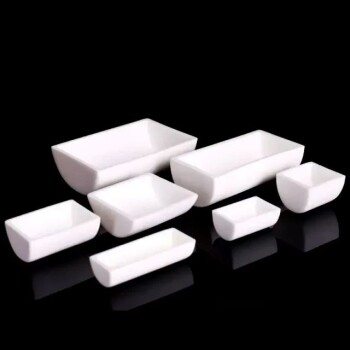
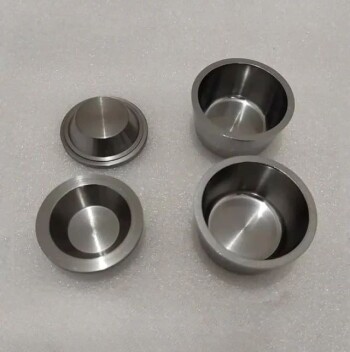
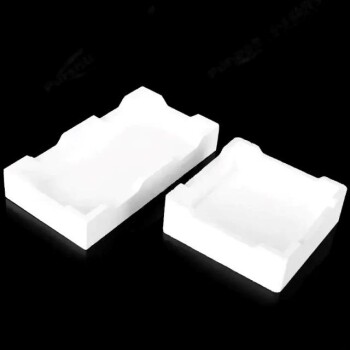
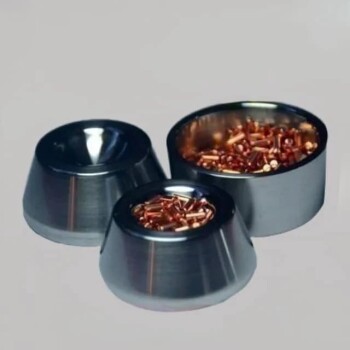
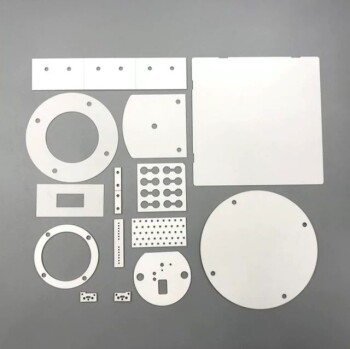
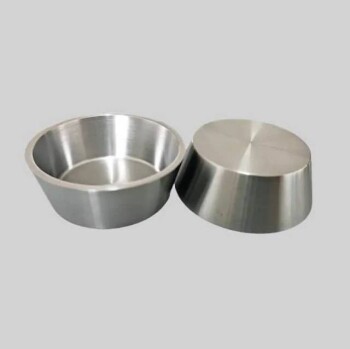
High-purity alumina crucibles are the industry standard for calcining NMA (Nickel Manganese Aluminum) cathode materials because they offer a unique combination of extreme chemical inertness and superior thermal stability. At the typical synthesis temperature of 750°C, these crucibles provide a non-reactive environment that prevents impurity contamination and ensures the material maintains its precise chemical stoichiometry and phase purity.
Core Takeaway: The selection of high-purity alumina is driven by the need to protect the sensitive chemical composition of cathode materials from container-induced contamination while ensuring uniform heat distribution for optimal crystal growth.
The Necessity of Chemical Inertness
Preventing Reaction with NMA Precursors
High-purity alumina is fundamentally chemically stable, meaning it does not react with NMA materials even at high calcination temperatures like 750°C. This inertness is critical because any reaction between the container and the cathode powder would introduce unwanted elements into the crystal lattice.
Maintaining Chemical Stoichiometry
Preserving the exact ratio of nickel, manganese, and aluminum is vital for the performance of the final battery cell. By providing a chemically inert environment, these crucibles ensure that the heat-treated powder maintains its intended stoichiometry and does not lose integrity due to side reactions with the container walls.
Eliminating External Impurities
In high-temperature processes, even trace amounts of impurities from a low-quality crucible can migrate into the sample. High-purity alumina acts as a barrier against contamination, which is essential for synthesizing cathode materials with high crystal structure integrity and superior electrochemical performance.
Thermal Performance and Process Integrity
Uniform Thermal Conductivity
Consistency is the most critical factor in material synthesis; high-purity alumina offers uniform thermal conductivity. This characteristic ensures that the NMA material inside the crucible is heated evenly, preventing localized temperature variances that could lead to inconsistent phase formation.
High-Temperature Structural Integrity
These crucibles are designed to withstand extreme environments, often rated for temperatures up to 1250°C to 1500°C. Because calcination for NMA typically occurs around 750°C, the crucible operates well within its safety margin, ensuring it does not warp, soften, or degrade during the process.
Durability Through Thermal Cycling
The synthesis of cathode materials often involves frequent heating and cooling cycles. High-purity alumina possesses excellent thermal shock resistance, allowing the crucibles to be reused multiple times without cracking, which maintains process reliability over long production runs.
Understanding the Trade-offs
The Risk of Lower Purity Grades
While lower-grade alumina crucibles are more cost-effective, they often contain higher levels of silica (SiO2) or iron (Fe2O3). At high temperatures, these impurities can leach into the NMA material, significantly degrading the battery's cycle life and safety profile.
Physical Fragility and Handling
Despite their thermal robustness, high-purity alumina is a ceramic and remains inherently brittle. They require careful handling and controlled ramp rates during heating and cooling to avoid mechanical failure, which can add time to the production cycle.
How to Apply This to Your Process
Making the Right Choice for Your Goal
When selecting a container for high-temperature material synthesis, your choice should align with your specific purity and throughput requirements.
- If your primary focus is Maximum Phase Purity: Always specify 99% or higher high-purity alumina to ensure zero chemical interference with the NMA lattice.
- If your primary focus is Consistent Batch Quality: Prioritize crucibles with documented uniform wall thickness to leverage the material's natural thermal conductivity.
- If your primary focus is Operational Longevity: Implement strict heating and cooling protocols (ramping) to maximize the lifespan of these crucibles across multiple calcination cycles.
Selecting high-purity alumina is not merely a preference, but a technical requirement for ensuring the electrochemical viability of advanced NMA cathode materials.
Summary Table:
| Key Feature | Benefit for NMA Calcination | Technical Value |
|---|---|---|
| Chemical Inertness | Prevents contamination & side reactions | Maintains precise stoichiometry |
| Thermal Stability | Resists warping or degradation at 750°C+ | Rated for service up to 1500°C |
| High Conductivity | Ensures uniform heating of cathode powders | Promotes consistent phase formation |
| Shock Resistance | Durable across frequent heating/cooling | Extended crucible operational life |
Optimize Your Cathode Synthesis with KINTEK Precision
Ensure the integrity of your NMA cathode materials with KINTEK’s premium high-purity alumina crucibles and high-temperature furnaces. We specialize in providing researchers and manufacturers with the high-performance tools necessary for advanced material science. From muffle, tube, and atmosphere furnaces to specialized battery research consumables and ceramics, our products are designed to prevent contamination and ensure uniform heat treatment.
Why partner with KINTEK?
- Unmatched Purity: 99%+ Alumina crucibles and ceramic components to protect your material stoichiometry.
- Precision Thermal Control: Advanced furnace systems (CVD, PECVD, Vacuum) for exact thermal profiling.
- Comprehensive Lab Support: A full range of equipment including hydraulic pellet presses, crushing and milling systems, and cooling solutions like ULT freezers.
Ready to achieve superior phase purity and electrochemical performance? Contact our technical experts today to find the perfect equipment and consumables for your laboratory!
References
- Lukman Noerochim, Nurul Hayati Idris. High-Rate Capability of LiNi0.9Mn0.1−xAlxO2 (NMA) (x = 0.01, 0.03, 0.05) as Cathode for Lithium-Ion Batteries. DOI: 10.3390/batteries9080420
This article is also based on technical information from Kintek Solution Knowledge Base .
Related Products
- Engineering Advanced Fine Alumina Al2O3 Ceramic Crucible for Laboratory Muffle Furnace
- Arc-Shaped Alumina Ceramic Crucible High Temperature Resistant for Engineering Advanced Fine Ceramics
- Engineering Advanced Fine Ceramics Alumina Al2O3 Crucible With Lid Cylindrical Laboratory Crucible
- High Purity Alumina Granulated Powder for Engineering Advanced Fine Ceramics
- Engineering Advanced Fine Ceramics Alumina Crucibles (Al2O3) for Thermal Analysis TGA DTA
People Also Ask
- What crucible is used in muffle furnace? Select the Right Material for Your Application
- Why are alumina crucibles and mother powder essential for LATP sintering? Optimize Your Solid Electrolyte Performance
- Why are high-purity alumina crucibles used for liquid lead corrosion experiments? Ensure Data Accuracy at 550°C
- Why Use Alumina Crucibles & Powder Burial for NaSICON? Ensure Phase Purity and Prevent Elemental Volatilization
- What is the primary purpose of using alumina crucibles for LLTO ceramics? Optimize Your High-Temperature Sintering