Knowledge lab crucible Why are high-purity alumina rods and crucibles selected for MAR-M-509 testing? Ensure Chemical Integrity
Author avatar

Tech Team · Kintek Solution

Updated 1 week ago

Why are high-purity alumina rods and crucibles selected for MAR-M-509 testing? Ensure Chemical Integrity


High-purity alumina is the industry standard for MAR-M-509 testing. These components are selected primarily for their exceptional chemical inertness and thermal stability at temperatures of 1000°C and above. By preventing unwanted reactions between the carrier and the cobalt-based alloy, alumina ensures that any recorded weight changes or oxidation data precisely reflect the specimen’s performance rather than contamination from the container itself.

The use of high-purity alumina eliminates experimental noise by providing a stable, non-reactive environment. This allows researchers to isolate the alloy's intrinsic oxidation and spallation behavior with absolute precision.

Ensuring Chemical Integrity and Data Accuracy

Prevention of Cross-Contamination

High-purity alumina acts as a neutral barrier between the MAR-M-509 alloy and the furnace environment. It does not introduce impurities that could catalyze or inhibit the alloy's natural oxidation process, even in aggressive steam or oxidizing atmospheres.

Precise Mass Change Tracking

In cyclic oxidation tests, alloys often shed surface scales, a process known as spallation. Alumina crucibles are used to catch these fragments, ensuring that calculations of mass loss per unit area remain complete and accurate.

Verification of Reaction Products

Because alumina is chemically stable, researchers can be certain that the oxidation products found on the specimen result solely from the alloy's surface reaction. This eliminates the risk of "false" oxide layers appearing due to interactions with the specimen holder.

Thermal and Structural Reliability

High-Temperature Structural Strength

MAR-M-509 experiments often reach or exceed 1000°C, a range where many support materials soften or lose their shape. High-purity alumina maintains its structural integrity and load-bearing capacity at temperatures up to 1600°C.

Resistance to Molten Interaction

While MAR-M-509 is typically tested in a solid state, alumina’s ability to resist reaction with molten metals provides a safety margin. This ensures that even if localized melting or aggressive phase changes occur, the crucible will not fail or fuse to the specimen.

Stability in Corrosive Media

During cyclic hot corrosion testing, alumina remains indifferent to the presence of molten salts or corrosive gases. This allows for the study of the alloy's kinetics without the carrier material contributing to the chemical complexity of the experiment.

Understanding the Trade-offs

Thermal Shock Sensitivity

While alumina is thermally stable, it is a ceramic and inherently brittle. It is susceptible to thermal shock if heated or cooled too rapidly, which can lead to cracking and potential loss of the specimen or captured spalled scales.

Purity Requirements

The term "high-purity" is critical; lower-grade alumina often contains silica or other binders. These impurities can migrate at high temperatures, potentially reacting with the cobalt-base of the MAR-M-509 and compromising the test results.

Best Practices for High-Temperature Testing

Selecting the right carrier configuration depends on the specific metrics you need to capture during your experiment.

  • If your primary focus is precise oxidation kinetics: Use high-purity alumina crucibles to ensure every milligram of spalled scale is retained for final mass balance calculations.
  • If your primary focus is surface morphology or coating integrity: Utilize alumina rods or holders to maximize air exposure around the specimen while preventing contact-induced contamination.

High-purity alumina provides the neutral baseline necessary for high-fidelity metallurgical research and reliable data analysis.

Summary Table:

Feature Advantage for High-Temp Experiments
Chemical Inertness Prevents cross-contamination and false oxide layers with MAR-M-509.
Thermal Stability Maintains structural integrity and load-bearing capacity up to 1600°C.
Spallation Capture Alumina crucibles retain shed scales for accurate mass change tracking.
Purity Grade High-purity alumina (silica-free) prevents migration of reactive impurities.

Elevate Your Materials Research with KINTEK

Achieving precise data in high-temperature experiments requires more than just high-quality alloys—it demands the right environment. KINTEK provides a comprehensive suite of laboratory equipment and premium consumables designed for the most rigorous testing standards.

From high-purity alumina crucibles, rods, and ceramic products that ensure chemical integrity to advanced high-temperature furnaces (muffle, vacuum, and atmosphere), we offer everything needed to isolate your research variables. Our specialized portfolio for metallurgy and material science includes:

  • Sample Preparation: Crushing and milling systems, sieving equipment, and hydraulic presses.
  • Advanced Reactors: High-temperature high-pressure reactors and autoclaves for aggressive environments.
  • Laboratory Infrastructure: Cooling solutions, homogenizers, and a wide range of PTFE and ceramic consumables.

Whether you are analyzing MAR-M-509 oxidation kinetics or developing next-generation superalloys, KINTEK delivers the reliability and precision your lab requires. Contact our technical experts today to discuss your specific requirements and receive a tailored quote!

References

  1. Timur Galiullin, D. Naumenko. Differences in Oxidation Behavior of Conventionally Cast and Additively Manufactured Co-Base Alloy MAR-M-509. DOI: 10.1007/s11085-023-10194-y

This article is also based on technical information from Kintek Solution Knowledge Base .

Related Products

People Also Ask

Related Products

Arc-Shaped Alumina Ceramic Crucible High Temperature Resistant for Engineering Advanced Fine Ceramics

Arc-Shaped Alumina Ceramic Crucible High Temperature Resistant for Engineering Advanced Fine Ceramics

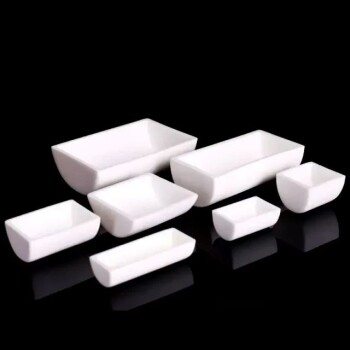
In the journey of scientific exploration and industrial production, every detail is crucial. Our arc-shaped alumina ceramic crucibles, with their excellent high temperature resistance and stable chemical properties, have become a powerful assistant in laboratories and industrial fields. They are made of high-purity alumina materials and manufactured through precision processes to ensure excellent performance in extreme environments.

Engineering Advanced Fine Alumina Al2O3 Ceramic Crucible for Laboratory Muffle Furnace

Engineering Advanced Fine Alumina Al2O3 Ceramic Crucible for Laboratory Muffle Furnace

Alumina ceramic crucibles are used in some materials and metal melting tools, and flat-bottomed crucibles are suitable for melting and processing larger batches of materials with better stability and uniformity.

Engineering Advanced Fine Ceramics Alumina Crucibles (Al2O3) for Thermal Analysis TGA DTA

Engineering Advanced Fine Ceramics Alumina Crucibles (Al2O3) for Thermal Analysis TGA DTA

TGA/DTA thermal analysis vessels are made of aluminum oxide (corundum or aluminum oxide). It can withstand high temperature and is suitable for analyzing materials that require high temperature testing.

Engineering Advanced Fine Ceramics Alumina Al2O3 Crucible With Lid Cylindrical Laboratory Crucible

Engineering Advanced Fine Ceramics Alumina Al2O3 Crucible With Lid Cylindrical Laboratory Crucible

Cylindrical Crucibles Cylindrical crucibles are one of the most common crucible shapes, suitable for melting and processing a wide variety of materials, and are easy to handle and clean.

High Purity Pure Graphite Crucible for Evaporation

High Purity Pure Graphite Crucible for Evaporation

Vessels for high temperature applications, where materials are kept at extremely high temperatures to evaporate, allowing thin films to be deposited on substrates.

High Purity Pure Graphite Crucible for Electron Beam Evaporation

High Purity Pure Graphite Crucible for Electron Beam Evaporation

A technology mainly used in the field of power electronics. It is a graphite film made of carbon source material by material deposition using electron beam technology.

High Purity Alumina Granulated Powder for Engineering Advanced Fine Ceramics

High Purity Alumina Granulated Powder for Engineering Advanced Fine Ceramics

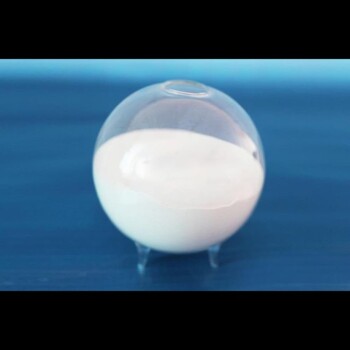
Ordinary alumina granulated powder is alumina particles prepared by traditional processes, with a wide range of applications and good market adaptability. This material is known for its high purity, excellent thermal stability and chemical stability, and is suitable for a variety of high-temperature and conventional applications.

Alumina Al2O3 Ceramic Crucible Semicircle Boat with Lid for Engineering Advanced Fine Ceramics

Alumina Al2O3 Ceramic Crucible Semicircle Boat with Lid for Engineering Advanced Fine Ceramics

Crucibles are containers widely used for melting and processing various materials, and semicircular boat-shaped crucibles are suitable for special smelting and processing requirements. Their types and uses vary by material and shape.

Engineering Advanced Fine Alumina Al2O3 Ceramic Rod Insulated for Industrial Applications

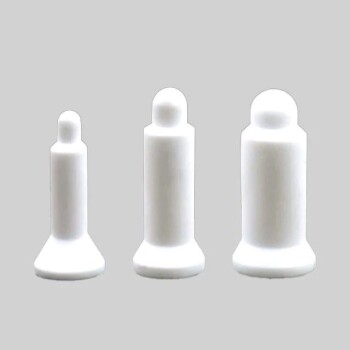
Engineering Advanced Fine Alumina Al2O3 Ceramic Rod Insulated for Industrial Applications

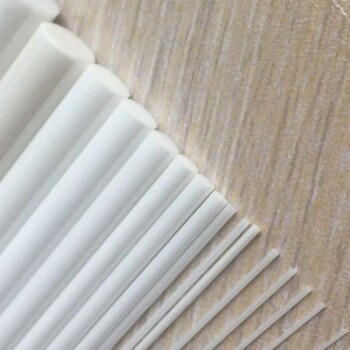
Insulated alumina rod is a fine ceramic material. Alumina rods have excellent electrical insulating properties, high chemical resistance and low thermal expansion.

Ceramic Evaporation Boat Set Alumina Crucible for Laboratory Use

Ceramic Evaporation Boat Set Alumina Crucible for Laboratory Use

It can be used for vapor deposition of various metals and alloys. Most metals can be evaporated completely without loss. Evaporation baskets are reusable.1

High Quality Alumina Ceramic Screw for Engineering Advanced Fine Ceramics with High Temperature Resistance and Insulation

High Quality Alumina Ceramic Screw for Engineering Advanced Fine Ceramics with High Temperature Resistance and Insulation

Alumina ceramic screws are fastening components made of 99.5% alumina, ideal for extreme applications requiring excellent thermal resistance, electrical insulation and chemical resistance.

High Temperature Wear-Resistant Alumina Al2O3 Plate for Engineering Advanced Fine Ceramics

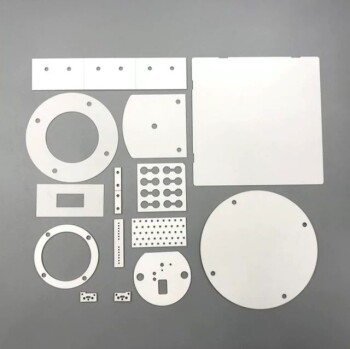
High Temperature Wear-Resistant Alumina Al2O3 Plate for Engineering Advanced Fine Ceramics

High temperature wear-resistant insulating alumina plate has excellent insulation performance and high temperature resistance.

High Temperature Alumina (Al2O3) Furnace Tube for Engineering Advanced Fine Ceramics

High Temperature Alumina (Al2O3) Furnace Tube for Engineering Advanced Fine Ceramics

High temperature alumina furnace tube combines the advantages of high hardness of alumina, good chemical inertness and steel, and has excellent wear resistance, thermal shock resistance and mechanical shock resistance.

Electron Beam Evaporation Coating Tungsten Crucible and Molybdenum Crucible for High Temperature Applications

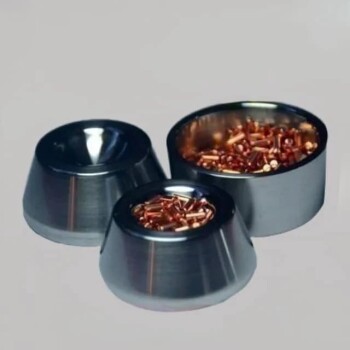
Electron Beam Evaporation Coating Tungsten Crucible and Molybdenum Crucible for High Temperature Applications

Tungsten and molybdenum crucibles are commonly used in electron beam evaporation processes due to their excellent thermal and mechanical properties.

Advanced Engineering Fine Ceramics Alumina Ceramic Saggar for Fine Corundum

Advanced Engineering Fine Ceramics Alumina Ceramic Saggar for Fine Corundum

Alumina sagger products have the characteristics of high temperature resistance, good thermal shock stability, small expansion coefficient, anti-stripping, and good anti-powdering performance.

Engineering Advanced Fine Alumina (Al₂O₃) Ceramic Positioning Pin Straight Bevel for Precision Applications

Engineering Advanced Fine Alumina (Al₂O₃) Ceramic Positioning Pin Straight Bevel for Precision Applications

Alumina ceramic positioning pin has the characteristics of high hardness, wear resistance and high temperature resistance.

Custom-Made Alumina Zirconia Special-Shaped Ceramic Plates for Engineering Advanced Fine Ceramics Processing

Custom-Made Alumina Zirconia Special-Shaped Ceramic Plates for Engineering Advanced Fine Ceramics Processing

Alumina ceramics have good electrical conductivity, mechanical strength and high temperature resistance, while zirconia ceramics are known for their high strength and high toughness and are widely used.

Electron Beam Evaporation Coating Gold Plating Tungsten Molybdenum Crucible for Evaporation

Electron Beam Evaporation Coating Gold Plating Tungsten Molybdenum Crucible for Evaporation

These crucibles act as containers for the gold material evaporated by the electron evaporation beam while precisely directing the electron beam for precise deposition.

Advanced Engineering Fine Ceramics Low Temperature Alumina Granulation Powder

Advanced Engineering Fine Ceramics Low Temperature Alumina Granulation Powder

Low temperature alumina granulation powder is a kind of alumina particles produced by a special low temperature process, designed to meet the needs of temperature sensitive applications. This material has excellent low temperature performance and good processing characteristics, suitable for a variety of industries that require low temperature processing and treatment.

1700℃ Laboratory High Temperature Tube Furnace with Alumina Tube

1700℃ Laboratory High Temperature Tube Furnace with Alumina Tube

Looking for a high-temperature tube furnace? Check out our 1700℃ Tube Furnace with Alumina Tube. Perfect for research and industrial applications up to 1700C.


Leave Your Message