Knowledge Why are high-purity tantalum crucibles preferred when evaporating dielectric targets? Ensure Film Purity & Performance
Author avatar

Tech Team · Kintek Solution

Updated 2 days ago

Why are high-purity tantalum crucibles preferred when evaporating dielectric targets? Ensure Film Purity & Performance


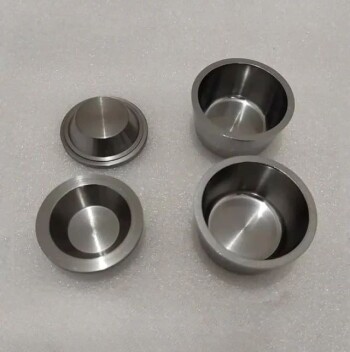
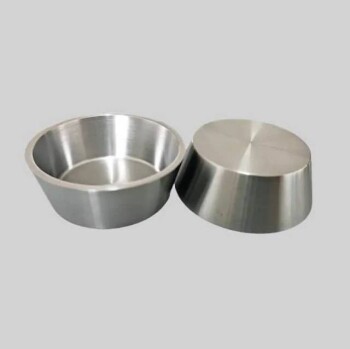
High-purity tantalum crucibles are preferred for evaporating dielectric targets like boron or silicon carbide because they combine an exceptionally high melting point with superior chemical stability.

They are capable of containing molten dielectric materials at temperatures exceeding 2000°C without triggering significant chemical reactions. This prevents the crucible from degrading and introducing contaminants into the evaporation atmosphere, ensuring the final coating retains its intended properties.

The integrity of a thin film is defined by the purity of its source environment; using high-purity tantalum eliminates the crucible as a source of contamination, directly safeguarding the electrical insulation and mechanical hardness of the final product.

The Critical Role of Thermal Stability

Withstanding Extreme Temperatures

Dielectric materials often require immense energy to evaporate effectively. Tantalum crucibles are engineered to operate reliably at temperatures exceeding 2000°C.

Maintaining Structural Integrity

At these extreme temperatures, lesser materials would soften, melt, or collapse. Tantalum retains its physical structure, securely holding the molten target material throughout the evaporation process.

Chemical Compatibility and Purity

Preventing Material Reaction

The defining advantage of high-purity tantalum is its chemical inertness. When aggressive materials like boron or silicon carbide are melted, they become highly reactive.

Preserving the Vacuum Atmosphere

Because the crucible does not react with the target, the evaporation atmosphere remains pure. There are no byproducts or outgassing from the crucible itself to pollute the vacuum chamber.

Impact on Final Film Quality

Ensuring Electrical Insulation

For dielectric coatings, electrical insulation is often the primary performance metric. By preventing metallic or oxide impurities from entering the vapor stream, tantalum crucibles ensure the film remains a high-quality insulator.

Maximizing Hardness

Impurities in a crystal lattice can weaken the mechanical structure of a thin film. High-purity processing ensures that hard coatings, such as those made from silicon carbide, retain their maximum theoretical hardness.

Understanding the Risks of Material Interaction

The "Contamination" Pitfall

If a crucible with lower chemical stability is used, the molten target material may attack the crucible walls. This "leaching" effect introduces foreign atoms into the coating, which is catastrophic for precision applications.

The Necessity of High Purity

It is not enough for the crucible to simply be made of tantalum; it must be high-purity tantalum. Impurities within the crucible alloy itself can migrate into the melt at 2000°C, undermining the benefits of using a refractory metal.

Making the Right Choice for Your Goal

When selecting evaporation consumables for dielectric processes, align your choice with your critical success factors:

  • If your primary focus is Electrical Performance: Prioritize high-purity tantalum to prevent conductive impurities from compromising the dielectric insulation of the layer.
  • If your primary focus is Mechanical Durability: Use tantalum to ensure the coating chemistry remains pure, thereby maintaining the structural hardness of materials like silicon carbide.

By selecting the correct containment material, you transform the crucible from a potential contaminant into a guarantee of quality.

Summary Table:

Feature High-Purity Tantalum Benefit
Melting Point Exceeds 2000°C for high-energy evaporation
Chemical Stability Inert to reactive molten boron and silicon carbide
Structural Integrity Resists softening or collapsing under extreme heat
Coating Quality Prevents metallic impurities for superior insulation
Vacuum Integrity Zero outgassing or chemical byproducts during heating

Elevate Your Thin-Film Precision with KINTEK

Don't let crucible contamination compromise your dielectric coating integrity. KINTEK specializes in high-purity laboratory solutions designed for the most demanding thermal processes.

Whether you are performing high-temperature evaporation or specialized research, our extensive portfolio—including high-purity tantalum crucibles, ceramics, high-temperature furnaces (vacuum, CVD, atmosphere), and specialized crushing systems—is engineered to guarantee the purity and performance your lab requires.

Ready to optimize your evaporation results? Contact our material experts today to find the perfect high-purity consumables for your specific application.

Related Products

People Also Ask

Related Products

Evaporation Crucible for Organic Matter

Evaporation Crucible for Organic Matter

An evaporation crucible for organic matter, referred to as an evaporation crucible, is a container for evaporating organic solvents in a laboratory environment.

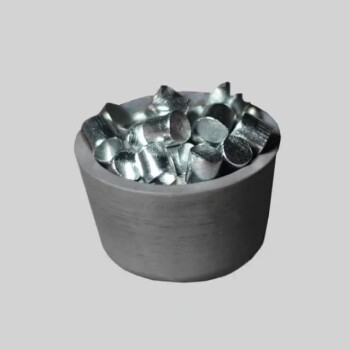
High Purity Pure Graphite Crucible for Electron Beam Evaporation

High Purity Pure Graphite Crucible for Electron Beam Evaporation

A technology mainly used in the field of power electronics. It is a graphite film made of carbon source material by material deposition using electron beam technology.

High Purity Pure Graphite Crucible for Evaporation

High Purity Pure Graphite Crucible for Evaporation

Vessels for high temperature applications, where materials are kept at extremely high temperatures to evaporate, allowing thin films to be deposited on substrates.

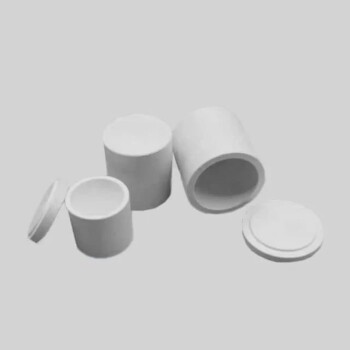
Engineering Advanced Fine Ceramics Alumina Crucibles (Al2O3) for Thermal Analysis TGA DTA

Engineering Advanced Fine Ceramics Alumina Crucibles (Al2O3) for Thermal Analysis TGA DTA

TGA/DTA thermal analysis vessels are made of aluminum oxide (corundum or aluminum oxide). It can withstand high temperature and is suitable for analyzing materials that require high temperature testing.

E Beam Crucibles Electron Gun Beam Crucible for Evaporation

E Beam Crucibles Electron Gun Beam Crucible for Evaporation

In the context of electron gun beam evaporation, a crucible is a container or source holder used to contain and evaporate the material to be deposited onto a substrate.

Ceramic Evaporation Boat Set Alumina Crucible for Laboratory Use

Ceramic Evaporation Boat Set Alumina Crucible for Laboratory Use

It can be used for vapor deposition of various metals and alloys. Most metals can be evaporated completely without loss. Evaporation baskets are reusable.1

Molybdenum Tungsten Tantalum Evaporation Boat for High Temperature Applications

Molybdenum Tungsten Tantalum Evaporation Boat for High Temperature Applications

Evaporation boat sources are used in thermal evaporation systems and are suitable for depositing various metals, alloys and materials. Evaporation boat sources are available in different thicknesses of tungsten, tantalum and molybdenum to ensure compatibility with a variety of power sources. As a container, it is used for vacuum evaporation of materials. They can be used for thin film deposition of various materials, or designed to be compatible with techniques such as electron beam fabrication.

Evaporation Boat for Organic Matter

Evaporation Boat for Organic Matter

The evaporation boat for organic matter is an important tool for precise and uniform heating during the deposition of organic materials.

Hemispherical Bottom Tungsten Molybdenum Evaporation Boat

Hemispherical Bottom Tungsten Molybdenum Evaporation Boat

Used for gold plating, silver plating, platinum, palladium, suitable for a small amount of thin film materials. Reduce the waste of film materials and reduce heat dissipation.

Aluminized Ceramic Evaporation Boat for Thin Film Deposition

Aluminized Ceramic Evaporation Boat for Thin Film Deposition

Vessel for depositing thin films; has an aluminum-coated ceramic body for improved thermal efficiency and chemical resistance. making it suitable for various applications.

Desktop Fast Laboratory Autoclave Sterilizer 35L 50L 90L for Lab Use

Desktop Fast Laboratory Autoclave Sterilizer 35L 50L 90L for Lab Use

The desktop fast steam sterilizer is a compact and reliable device used for rapid sterilization of medical, pharmaceutical, and research items. It efficiently sterilizes surgical instruments, glassware, medicines, and resistant materials, making it suitable for various applications.

Custom PTFE Teflon Parts Manufacturer for Culture Dish and Evaporation Dish

Custom PTFE Teflon Parts Manufacturer for Culture Dish and Evaporation Dish

The PTFE culture dish evaporating dish is a versatile laboratory tool known for its chemical resistance and high-temperature stability. PTFE, a fluoropolymer, offers exceptional non-stick properties and durability, making it ideal for various applications in research and industry, including filtration, pyrolysis, and membrane technology.

Custom PTFE Teflon Parts Manufacturer for Three-Necked Round Bottom Flask

Custom PTFE Teflon Parts Manufacturer for Three-Necked Round Bottom Flask

PTFE flask, is a versatile laboratory container made from PTFE, offering exceptional chemical resistance, temperature stability, and non-stick properties. Ideal for handling corrosive substances and high-temperature applications, these flasks are essential in various laboratory procedures, including heating, mixing, and storage of chemicals.

CVD Diamond Dressing Tools for Precision Applications

CVD Diamond Dressing Tools for Precision Applications

Experience the Unbeatable Performance of CVD Diamond Dresser Blanks: High Thermal Conductivity, Exceptional Wear Resistance, and Orientation Independence.

Vacuum Heat Treat Furnace and Levitation Induction Melting Furnace

Vacuum Heat Treat Furnace and Levitation Induction Melting Furnace

Experience precise melting with our Vacuum Levitation Melting Furnace. Ideal for high melting point metals or alloys, with advanced technology for effective smelting. Order now for high-quality results.

Graphite Vacuum Furnace Negative Material Graphitization Furnace

Graphite Vacuum Furnace Negative Material Graphitization Furnace

Graphitization furnace for battery production has uniform temperature and low energy consumption. Graphitization furnace for negative electrode materials: an efficient graphitization solution for battery production and advanced functions to enhance battery performance.

Graphite Vacuum Furnace Bottom Discharge Graphitization Furnace for Carbon Materials

Graphite Vacuum Furnace Bottom Discharge Graphitization Furnace for Carbon Materials

Bottom-out graphitization furnace for carbon materials, ultra-high temperature furnace up to 3100°C, suitable for graphitization and sintering of carbon rods and carbon blocks. Vertical design, bottom discharging, convenient feeding and discharging, high temperature uniformity, low energy consumption, good stability, hydraulic lifting system, convenient loading and unloading.

Glassy Carbon Sheet RVC for Electrochemical Experiments

Glassy Carbon Sheet RVC for Electrochemical Experiments

Discover our Glassy Carbon Sheet - RVC. Perfect for your experiments, this high-quality material will elevate your research to the next level.

Ultra-High Temperature Graphite Vacuum Graphitization Furnace

Ultra-High Temperature Graphite Vacuum Graphitization Furnace

The ultra-high temperature graphitization furnace utilizes medium frequency induction heating in a vacuum or inert gas environment. The induction coil generates an alternating magnetic field, inducing eddy currents in the graphite crucible, which heats up and radiates heat to the workpiece, bringing it to the desired temperature. This furnace is primarily used for graphitization and sintering of carbon materials, carbon fiber materials, and other composite materials.

Large Vertical Graphite Vacuum Graphitization Furnace

Large Vertical Graphite Vacuum Graphitization Furnace

A large vertical high-temperature graphitization furnace is a type of industrial furnace used for the graphitization of carbon materials, such as carbon fiber and carbon black. It is a high-temperature furnace that can reach temperatures of up to 3100°C.


Leave Your Message