High-strength graphite is indispensable for processing Silicon Carbide (SiC) because standard tooling cannot survive the aggressive environment required to sinter this ceramic. Specifically, the mold must maintain structural rigidity at temperatures around 1850°C while simultaneously transmitting axial mechanical pressures up to 30 MPa to the powder. Without these specific graphite properties, the ceramic would fail to achieve the necessary density and dimensional accuracy.
Core Takeaway The success of vacuum hot-pressing SiC relies on graphite’s unique ability to act as both a robust container and a pressure-transmission medium under extreme thermal stress. It ensures the powder is compacted into a dense, dimensionally accurate block without the mold deforming or melting.
The Dual Challenge of Heat and Pressure
To sinter Silicon Carbide effectively, you must subject the material to conditions that would destroy most metal alloys. High-strength graphite is the engineering solution to this thermal and mechanical paradox.
Surviving Extreme Thermal Environments
Processing SiC requires temperatures often exceeding 1850°C. At this threshold, traditional superalloys used for lower-temperature powders lose their structural integrity or melt entirely. High-strength graphite retains its shape and actually becomes stronger as temperatures rise, ensuring the mold does not fail during the peak heating cycle.
Transmitting Mechanical Force
Temperature alone is insufficient for densification; the powder must be physically compressed to remove porosity. The mold acts as a piston, transmitting uniaxial pressures of up to 30 MPa directly to the SiC powder. If the mold material yields or deforms under this load, the pressure transfer becomes inefficient, resulting in a porous, low-quality ceramic.
Maintaining Dimensional Accuracy
The mold serves as the container that restricts the lateral movement of the powder. Because high-strength graphite resists deformation under the combined load of heat and pressure, it ensures the final sintered block matches the intended geometric specifications.
The Role of Graphite in Sintering Dynamics
Beyond simply "holding" the shape, the graphite mold plays an active role in the chemical and physical processing of the ceramic.
Acting as a Thermal Conductor
Graphite is an excellent thermal conductor and, in induction heating setups, acts as the susceptor that converts electromagnetic energy into heat. This allows for uniform heat transfer to the SiC powder, which is critical for homogenous sintering.
Creating a Protective Atmosphere
In a high-temperature vacuum environment, graphite creates a reducing atmosphere. This helps protect carbide ceramics from oxidation during the process, ensuring the chemical purity of the final component.
Understanding the Trade-offs
While high-strength graphite is the optimal choice for this application, it introduces specific operational constraints that must be managed.
The Requirement for Vacuum
Graphite oxidizes rapidly at high temperatures if exposed to air. The process must occur in a vacuum or inert gas environment to prevent the mold from burning away. This vacuum environment significantly extends the service life of the mold compared to conventional hot pressing.
Mechanical Wear and Life Cycle
Despite its strength, graphite is a consumable tool. Repeated exposure to cyclical heating (up to 2050°C in some extreme cases) and mechanical abrasion from ceramic powders will eventually degrade the mold's surface finish and tolerances.
Making the Right Choice for Your Goal
The selection of mold material and grade dictates the success of your sintering run.
- If your primary focus is Final Density: Ensure the graphite grade chosen has sufficient compressive strength to transfer the full 30 MPa load without absorbing energy through deformation.
- If your primary focus is Dimensional Precision: Prioritize high-strength graphite with low thermal expansion coefficients to minimize size variations during the cooling phase.
- If your primary focus is Purity: rely on the graphite mold's ability to generate a reducing atmosphere to scavenge oxygen and prevent favorable reactions with the SiC system.
Ultimate success in SiC sintering comes from treating the graphite mold not just as a container, but as an active, critical component of the thermal processing system.
Summary Table:
| Feature | Requirement for SiC Sintering | Role of High-Strength Graphite |
|---|---|---|
| Temperature Resistance | Operates at ≥1850°C | Maintains structural integrity and strength as heat increases |
| Pressure Transmission | Up to 30 MPa axial pressure | Acts as a rigid piston to ensure full powder densification |
| Atmospheric Control | Vacuum/Reducing environment | Prevents oxidation and maintains chemical purity of the SiC |
| Dimensional Stability | Low lateral deformation | Ensures precise geometric tolerances of the final ceramic block |
| Heating Efficiency | Uniform heat distribution | Acts as a susceptor for rapid and homogenous induction heating |
Elevate Your Advanced Ceramic Production with KINTEK
Precision in Silicon Carbide sintering demands equipment that can withstand the harshest thermal and mechanical stresses. KINTEK specializes in high-performance laboratory solutions, providing the robust vacuum hot-pressing furnaces and high-temperature systems needed to achieve theoretical material density.
Whether you are developing SiC components, researching battery technologies, or requiring precision crushing and milling systems, our expert team offers the technical support and high-quality consumables—from graphite molds to specialized ceramics—to ensure your project's success.
Ready to optimize your sintering workflow? Contact KINTEK today for a custom consultation and discover how our comprehensive range of furnace and press technology can benefit your laboratory.
Related Products
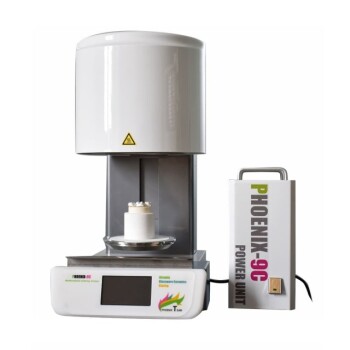
- Dental Porcelain Zirconia Sintering Ceramic Vacuum Press Furnace
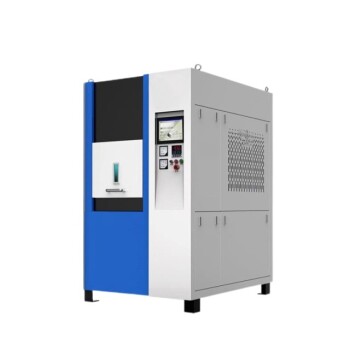
- 600T Vacuum Induction Hot Press Furnace for Heat Treat and Sintering
- Vacuum Heat Treat and Sintering Furnace with 9MPa Air Pressure
- Vacuum Heat Treat Furnace with Ceramic Fiber Liner
- Vacuum Heat Treat and Pressure Sintering Furnace for High Temperature Applications
People Also Ask
- What does sintering do to zirconia? Unlock Its Full Strength and Aesthetic Potential
- What is the shrinkage of zirconia during sintering? Mastering the 20-25% Dimensional Change
- What is the sintering temperature of zirconia ceramic? Mastering the 1400°C-1600°C Thermal Profile
- What is the price of zirconia sintering furnace? Invest in Precision, Not Just a Price Tag
- What factors are important to consider when choosing a dental sintering furnace? Match Your Workflow for Optimal Results