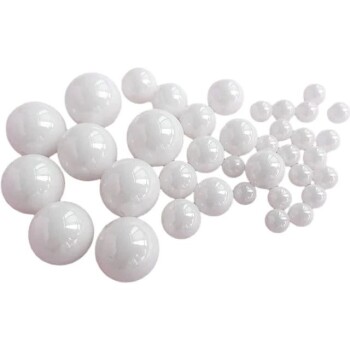
The selection of nylon jars and zirconia grinding balls is primarily driven by the need to maintain exceptional chemical purity. This specific equipment combination minimizes the introduction of metallic impurities—such as iron or chromium—during the mixing process, ensuring that the properties of the Zr3(Al1-xSix)C2 powder remain intrinsic to the material rather than artifacts of contamination.
By pairing the wear resistance of nylon with the high density and chemical stability of zirconia, researchers achieve the necessary kinetic energy for effective mixing while strictly preventing metallic contamination that would skew subsequent material evaluations.
The Critical Importance of Purity
Avoiding Metallic Contamination
The most significant risk in high-energy ball milling is the introduction of wear debris from the milling media into the sample.
Standard steel jars and balls inevitably shed microscopic amounts of iron and chromium during the milling process.
For complex ceramics like Zr3(Al1-xSix)C2, even trace metallic impurities can alter the material's phase formation and final performance metrics.
Ensuring Accurate Evaluation
The goal of synthesizing these precursors is often to study specific physical or chemical properties.
If the powder is contaminated by the equipment, the resulting data will reflect the impurities rather than the true characteristics of the Zr3(Al1-xSix)C2.
Using non-metallic equipment eliminates this variable, providing a clean baseline for scientific evaluation.
Why This Specific Material Combination?
Nylon Jars: The Containment Strategy
Nylon jars are utilized for their excellent wear resistance and chemical compatibility.
Unlike metal jars, nylon does not release conductive metallic particles if minor abrasion occurs.
This makes nylon an ideal containment vessel for precursors where maintaining the exact stoichiometric ratio without foreign metal inclusion is paramount.
Zirconia Balls: The Kinetic Engine
While the jar provides safe containment, the grinding media must provide the energy to mix the powder.
Zirconia balls are characterized by extremely high density and hardness.
This high density allows the balls to generate sufficient kinetic energy to grind and mix the precursors effectively, despite the softer nature of the nylon jar.
Chemical Stability and Low Wear
Zirconia is chemically stable and exhibits extremely low wear rates.
This ensures that the grinding balls themselves do not degrade significantly over time.
Because they are chemically inert, they do not react with the Zr3(Al1-xSix)C2 precursors, further safeguarding the chemical integrity of the final powder.
Understanding the Trade-offs
Impact Energy vs. Purity
While steel or tungsten carbide milling sets offer higher hardness, they come with the cost of contamination.
The Nylon/Zirconia setup prioritizes purity over the absolute maximum impact energy that metal-on-metal milling might provide.
Material Compatibility
This setup is highly effective for mixing and grinding, but users must ensure the solvents or precursors used do not chemically degrade the nylon jar.
However, for dry mixing or compatible slurry mixing of these specific precursors, this combination offers the optimal balance of efficiency and cleanliness.
Making the Right Choice for Your Goal
To determine if this setup matches your broader experimental needs, consider the following:
- If your primary focus is rigorous material characterization: Use nylon jars and zirconia balls to ensure the data reflects the material, not the machine.
- If your primary focus is avoiding side reactions in electrochemical applications: Stick to this setup, as metallic impurities are known to cause performance degradation and side reactions.
- If your primary focus is sheer pulverization speed without purity concerns: You might consider harder materials like tungsten carbide, but be prepared for sample contamination.
This equipment choice is a deliberate move to protect the chemical integrity of your precursors, ensuring your results are both accurate and reproducible.
Summary Table:
| Feature | Nylon Jars | Zirconia (ZrO2) Balls |
|---|---|---|
| Primary Role | Non-metallic containment vessel | High-energy grinding media |
| Key Benefit | Eliminates iron/chromium contamination | High density and chemical stability |
| Durability | High wear resistance | Extremely low wear rate |
| Material Impact | Protects chemical integrity | Provides kinetic energy for mixing |
| Best For | High-purity precursor synthesis | Contamination-free material processing |
Achieve Unmatched Purity in Your Advanced Material Research
Don't let metallic contamination compromise your material characterization. KINTEK specializes in high-performance laboratory solutions tailored for precision science. Whether you are synthesizing complex ceramics like Zr3(Al1-xSix)C2 or conducting battery research, our comprehensive range of crushing and milling systems, including premium nylon jars and zirconia grinding media, ensures your results remain intrinsic to your material.
From high-temperature furnaces and hydraulic presses to PTFE consumables and ceramics, KINTEK provides the tools needed for rigorous experimental standards.
Ready to elevate your lab's efficiency and accuracy?
Contact KINTEK Today for Expert Guidance and Custom Solutions
References
- Eugenio Zapata‐Solvas, William Lee. Experimental synthesis and density functional theory investigation of radiation tolerance of Zr <sub>3</sub> (Al <sub>1‐</sub> <scp> <sub>x</sub> S </scp> i <sub>x</sub> )C <sub>2</sub> <scp>MAX</scp> phases. DOI: 10.1111/jace.14742
This article is also based on technical information from Kintek Solution Knowledge Base .
Related Products
- Laboratory Jar Ball Mill with Alumina Zirconia Grinding Jar and Balls
- Laboratory Jar Mill with Agate Grinding Jar and Balls
- Precision Machined Zirconia Ceramic Ball for Engineering Advanced Fine Ceramics
- Laboratory Ball Mill Jar Mill with Metal Alloy Grinding Jar and Balls
People Also Ask
- What are the primary functions of using a ball mill for BZCY72 powder? Achieve High Purity and Enhanced Sintering
- In what way does a laboratory ball mill affect material properties when modifying PHBV/pulp fiber composites?
- Why is a laboratory ball mill required for ultra-fine fly ash? Unlock Nano-Scale Adsorption Power
- What is the function of a laboratory ball mill in the preparation of AMMCs? Optimize Dispersion & Grain Refinement
- What is the function of a laboratory ball mill in the pretreatment of waste tire char (WTC)? Optimize Material Reactivity