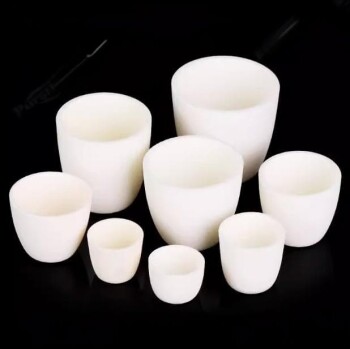
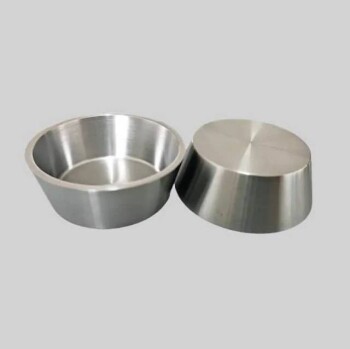
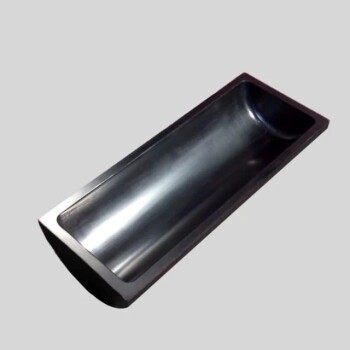
The use of open nickel crucibles in the synthesis of Li7Si2NO6 is primarily dictated by the need for precise nitrogen gas exchange and the chemical stability required for lithium-based reactions. This open configuration ensures that a flowing nitrogen stream can directly interact with the solid raw materials, maintaining the specific nitrogen partial pressure necessary to stabilize the desired crystal phase. Without this open interface, the reaction system cannot evolve into the specific oxonitridosilicate structure required for high-performance applications.
Core Takeaway: Open nickel crucibles are preferred because they enable essential gas-solid interactions that guide crystal growth while providing the high corrosion resistance necessary to prevent metallic contamination from aggressive lithium salts.
The Critical Role of Gas-Solid Interaction
Maintaining Nitrogen Partial Pressure
The formation of Li7Si2NO6 is highly sensitive to the surrounding atmosphere during high-temperature solid-state reactions. An open crucible allows for a constant nitrogen partial pressure, which acts as a thermodynamic guide for the crystal structure. This specific environment ensures the material evolves into the oxonitridosilicate phase rather than reverting to simpler oxide forms.
Facilitating Efficient Gas Exchange
Unlike sealed containers, open crucibles allow for a continuous gas exchange between the reaction system and the external environment. This process is vital for removing any gaseous byproducts that could otherwise stall the reaction or lead to secondary phase impurities. The flowing nitrogen gas stream remains in constant contact with the interface of the raw materials, driving the reaction to completion.
The Material Advantage of Nickel
Exceptional Corrosion Resistance
Lithium-based compounds are notoriously aggressive toward container materials at elevated temperatures. Nickel crucibles are selected for their superior chemical stability when in contact with molten lithium salts and precursors. This resistance prevents the crucible itself from breaking down or reacting with the electrolyte during the heating process.
Preservation of Chemical Purity
Because nickel does not readily react with the lithium reaction mixture, it prevents the introduction of metal impurities into the final product. Maintaining high purity is essential for the performance of Li7Si2NO6, as even trace amounts of external metals can degrade its electrochemical properties. This makes nickel a safer choice than other metallic or ceramic containers that might leach contaminants.
Understanding the Trade-offs
Risk of Atmospheric Contamination
While the open configuration is necessary for nitrogen exchange, it also makes the reaction vulnerable to external contaminants like oxygen or moisture. If the nitrogen gas stream is not strictly purified, the open interface can allow for the formation of undesired oxides or hydroxides. Precision control over the gas purity and flow rate is therefore non-negotiable.
Potential for Volatile Loss
In an open system, some components of the reaction mixture may reach their vapor pressure and escape the crucible at high temperatures. This can lead to a loss of stoichiometry, particularly with lithium, which is prone to volatilization. Researchers must often compensate for this by adding a slight excess of lithium precursors to the initial mix.
How to Apply This to Your Project
Recommendations for Material Synthesis
- If your primary focus is phase-pure Li7Si2NO6: Use an open nickel crucible within a tube furnace to ensure the flowing nitrogen can maintain the required partial pressure across the sample surface.
- If your primary focus is preventing metallic impurities: Select high-purity nickel crucibles over alumina or quartz to avoid the leaching of silicon or aluminum into your lithium-rich reaction.
- If your primary focus is maintaining stoichiometry: Carefully monitor the flow rate of the nitrogen gas to balance the need for gas exchange with the risk of losing volatile lithium components.
By prioritizing the synergy between gas-phase dynamics and material compatibility, you can consistently produce high-quality oxonitridosilicate materials for advanced technical applications.
Summary Table:
| Factor | Benefit of Open Nickel Crucible | Impact on Li7Si2NO6 Synthesis |
|---|---|---|
| Gas Dynamics | Enables constant nitrogen gas exchange | Stabilizes the oxonitridosilicate crystal phase |
| Chemical Stability | High resistance to aggressive lithium salts | Prevents metallic contamination and maintains purity |
| Byproduct Removal | Facilitates the escape of gaseous byproducts | Prevents secondary phase impurities and stalls |
| Atmosphere Control | Allows precise nitrogen partial pressure | Guides thermodynamic evolution of the material |
Optimize Your Advanced Material Synthesis with KINTEK
Achieving phase-pure Li7Si2NO6 requires the perfect balance of chemical resistance and precise atmosphere control. KINTEK specializes in providing high-performance laboratory equipment tailored for sensitive electrochemical research.
Our extensive portfolio includes:
- High-Purity Nickel & Ceramic Crucibles: Engineered to withstand aggressive lithium precursors without leaching contaminants.
- Advanced Furnace Systems: Precise tube, muffle, and CVD furnaces to maintain the strict nitrogen flow and temperature profiles your synthesis demands.
- Comprehensive Lab Solutions: From hydraulic pellet presses and milling systems to cooling solutions and essential consumables.
Don't let container degradation or poor gas exchange compromise your results. Contact KINTEK today to find the ideal equipment for your next breakthrough in battery research and solid-state chemistry!
References
- Kilian M. Rießbeck, Hubert Huppertz. An Unexpected New Member of the Family of Lithium Oxonitridosilicates – Li<sub>7</sub>Si<sub>2</sub>NO<sub>6</sub>. DOI: 10.1002/ejic.202300304
This article is also based on technical information from Kintek Solution Knowledge Base .
Related Products
- Electron Beam Evaporation Coating Conductive Boron Nitride Crucible BN Crucible
- Electron Beam Evaporation Coating Tungsten Crucible and Molybdenum Crucible for High Temperature Applications
- Electron Beam Evaporation Coating Gold Plating Tungsten Molybdenum Crucible for Evaporation
- Boron Nitride (BN) Crucible for Phosphorous Powder Sintered
- High Purity Pure Graphite Crucible for Electron Beam Evaporation
People Also Ask
- Why use Boron Nitride (BN) crucibles in metal infiltration? Ensure sample purity and non-wetting performance.
- Why are Boron Nitride (BN) or Alumina crucibles preferred for Na-flux GaN growth? Optimize Your Crystal Yield
- What is the container that holds the metal source material called in e-beam evaporation? Ensure Purity and Quality in Your Thin-Film Deposition
- What is the process of e-beam coating? Achieve High-Purity, Precise Thin Films for Your Lab
- What materials are used in electron beam evaporation? Master High-Purity Thin Film Deposition