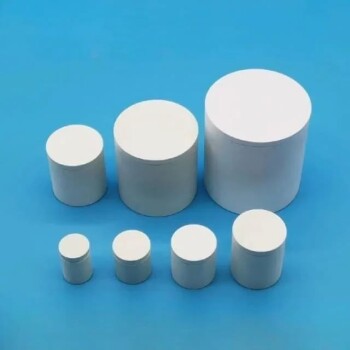
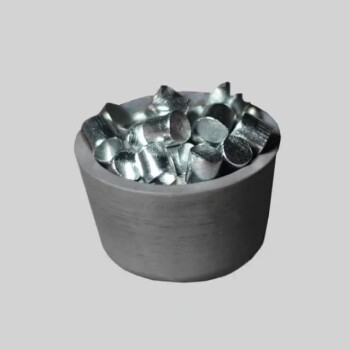
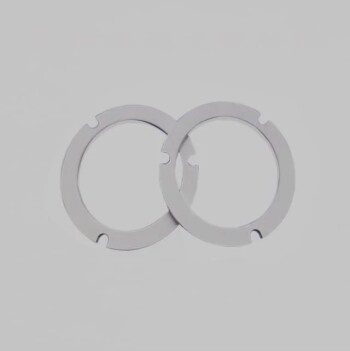
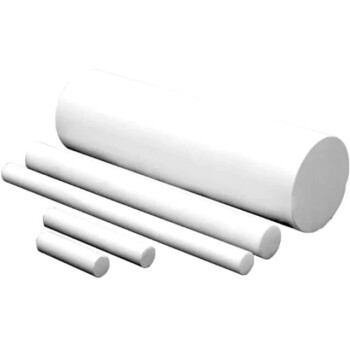
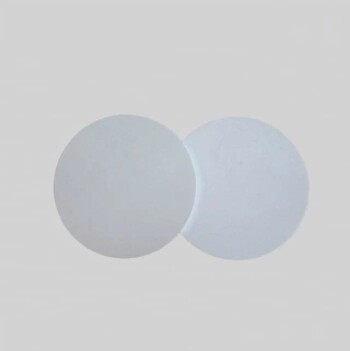
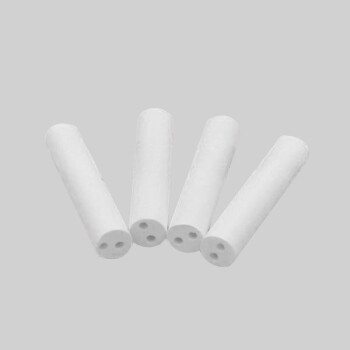
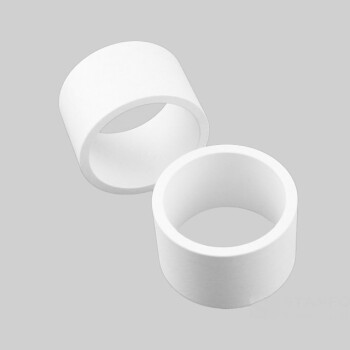
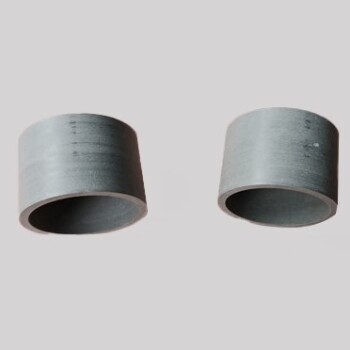
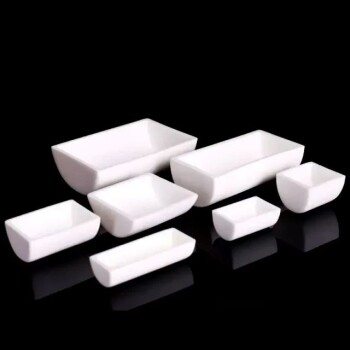
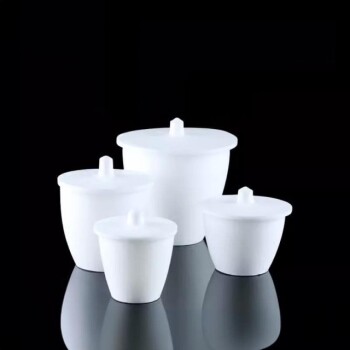
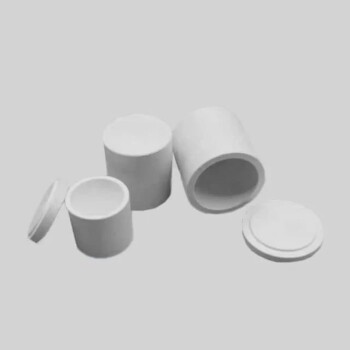
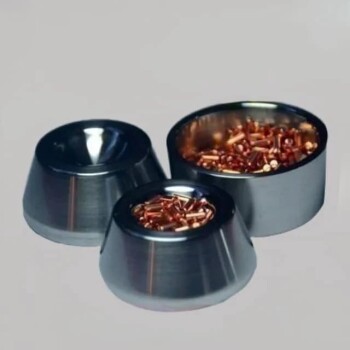
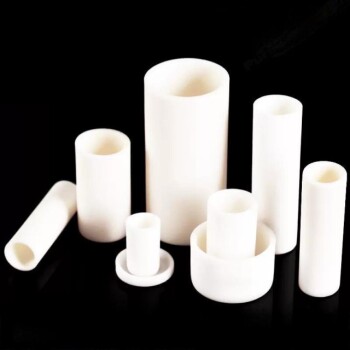
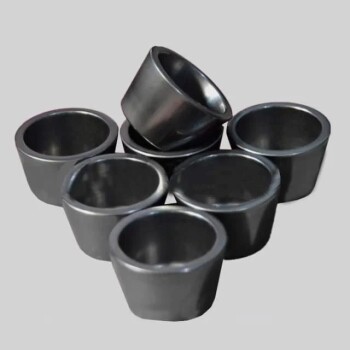
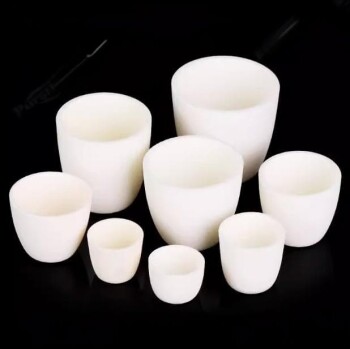
Boron Nitride (BN) is the industry standard for metal infiltration because it is "non-wetting" and chemically inert. It acts as a physical and chemical barrier that prevents molten metals, such as aluminum or silicon, from bonding with or eroding the container walls. This ensures that finished composite samples can be extracted cleanly without structural damage or chemical contamination.
Boron Nitride serves as both a structural container and a protective interface that prevents the "sticking" and chemical reactions common in high-temperature metallurgy. By leveraging its unique non-wetting properties, engineers can ensure sample purity and the integrity of the crucible itself.
The Science of Non-Wetting and Chemical Inertness
Preventing Adhesion and Sample Damage
The primary reason for using BN crucibles and release agents is their excellent non-wetting property. In processes like molten aluminum infiltration (e.g., 6061 alloy), the liquid metal does not spread across the BN surface; instead, it beads up, preventing it from adhering to the container.
This lack of adhesion is critical during the cooling phase. Because the metal does not stick, the infiltrated composite samples can be removed intact and undamaged once the process is complete.
Exceptional Chemical Stability
BN materials exhibit extreme chemical inertness, meaning they do not react with most molten metals or powders. For instance, BN does not react with silicon nitride or oxynitride liquid phases even at extreme temperatures ranging from 1750°C to 1950°C.
This stability extends to corrosive environments. BN crucibles remain structurally sound and non-reactive even when exposed to etching gases like SF6 or ammonia-reducing atmospheres at high temperatures.
Preserving Material Purity and Integrity
Eliminating Contamination
When working with high-purity materials like MXenes or advanced thermoelectrics, any reaction between the melt and the crucible introduces impurities. BN acts as a chemical barrier that prevents the migration of atoms from the container into the sample.
By preventing these reactions, BN ensures the reliability of experimental results and the high purity of the final synthesized product. This is particularly vital in the production of high-purity silicon nitride samples where chemical consistency is paramount.
Protecting Underlying Substrates
In many Liquid Silicon Infiltration (LSI) processes, BN is used as a release spray or coating on graphite or alumina crucibles. The coating prevents molten silicon or tin from wetting the substrate, which would otherwise lead to the chemical erosion of the more expensive crucible materials.
This dual-layer approach—using a BN coating on a secondary material—combines the structural strength of the substrate with the superior release properties of Boron Nitride.
Understanding the Trade-offs
Atmospheric Limitations
While BN is highly stable in vacuum or inert atmospheres (up to 1900°C+), it is susceptible to oxidation in air. If used in an oxygen-rich environment at temperatures above 800°C–900°C, the material can begin to degrade, forming boron oxide.
Physical Fragility
BN crucibles are typically produced from hot-pressed boron nitride blanks, making them relatively soft and easy to machine. However, this also means they are more fragile and prone to mechanical damage or thermal shock compared to some hard-oxide ceramics if not handled with care.
Cost Considerations
Pure BN components are generally more expensive than standard alumina or graphite. For large-scale industrial applications, engineers often use BN as a coating (spray) rather than a solid crucible to balance cost with performance.
Making the Right Choice for Your Process
Successful infiltration requires matching the form of Boron Nitride to your specific thermal and chemical requirements.
- If your primary focus is maximum sample purity: Use a solid, high-purity hot-pressed BN crucible to eliminate any chance of substrate interaction.
- If your primary focus is cost-effective production: Apply a BN release spray or coating to a graphite or alumina crucible to gain non-wetting benefits without the expense of a solid BN vessel.
- If your primary focus is extreme temperature (1700°C+): Ensure your process is conducted in a vacuum or inert gas (nitrogen or argon) to prevent the BN from oxidizing.
- If your primary focus is corrosive gas synthesis: Utilize BN for its unique ability to remain stable in SF6 or ammonia atmospheres where other ceramics might fail.
By correctly applying Boron Nitride as a barrier, you ensure that the complex chemistry of your melt remains focused on the sample, rather than the container.
Summary Table:
| Feature | Advantage in Metal Infiltration | Application Tip |
|---|---|---|
| Non-Wetting | Prevents molten metal from sticking; ensures clean sample extraction. | Ideal for molten aluminum (6061) and silicon. |
| Chemical Inertness | No reaction with melts or corrosive gases (SF6, NH3) at high temps. | Best for high-purity MXenes and thermoelectrics. |
| Thermal Stability | Stable up to 1900°C+ in vacuum or inert atmospheres. | Use in nitrogen or argon to prevent oxidation. |
| Machinability | Easy to machine into complex custom crucible shapes. | Handle with care due to physical fragility. |
| Versatility | Available as solid crucibles or cost-effective release sprays. | Use sprays on graphite to reduce costs. |
Elevate Your High-Temperature Research with KINTEK
Achieving precision in metal infiltration requires more than just the right process—it requires the right materials. KINTEK specializes in providing high-performance laboratory equipment and consumables tailored for advanced metallurgy and material science.
From high-purity Boron Nitride (BN) crucibles and ceramic consumables to our industry-leading high-temperature vacuum, muffle, and CVD furnaces, we offer the tools you need to prevent contamination and ensure structural integrity. Whether you are scaling industrial production or conducting delicate lab experiments, KINTEK provides the reliability and expertise your project deserves.
Ready to optimize your lab's efficiency and sample purity?
Contact KINTEK today for expert advice and a custom quote!
References
- Jesus Rivera, Joshua D. Kuntz. Mechanical responses of architected boron carbide-aluminum lattice composites fabricated via reactive metallic infiltration of hierarchical pore structures. DOI: 10.1016/j.mtcomm.2023.107550
This article is also based on technical information from Kintek Solution Knowledge Base .
Related Products
- Boron Nitride (BN) Crucible for Phosphorous Powder Sintered
- Electron Beam Evaporation Coating Conductive Boron Nitride Crucible BN Crucible
- Hexagonal Boron Nitride HBN Ceramic Ring
- Boron Nitride (BN) Ceramic Rod for High Temperature Applications
- Boron Nitride (BN) Ceramic Plate
People Also Ask
- Why are Boron Nitride (BN) or Alumina crucibles preferred for Na-flux GaN growth? Optimize Your Crystal Yield
- What is the necessity of using a ceramic crucible as a carrier during BN synthesis? Ensure High-Purity Results
- How much heat can a ceramic crucible take? Find the Right Crucible for Your High-Temp Process
- What is the necessity of using ceramic crucibles in TGA for TClPhMA? Ensure Accurate Thermal Data Integrity
- What protective role do ceramic crucibles play? Ensure Equipment Longevity and Catalyst Purity in Synthesis