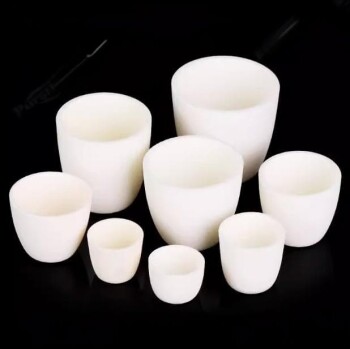
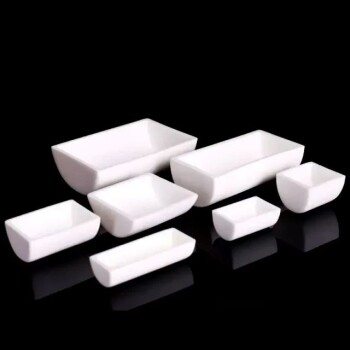
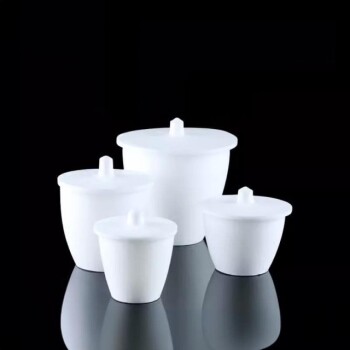
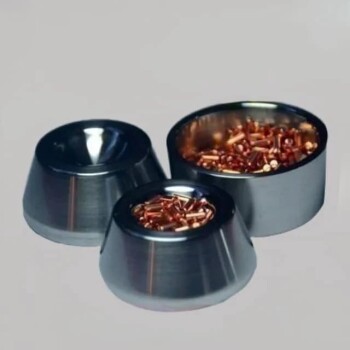
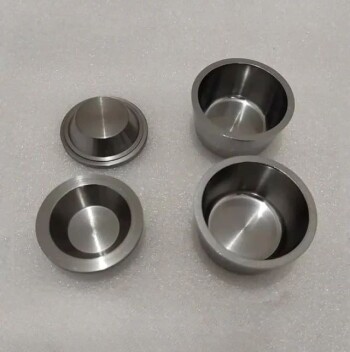
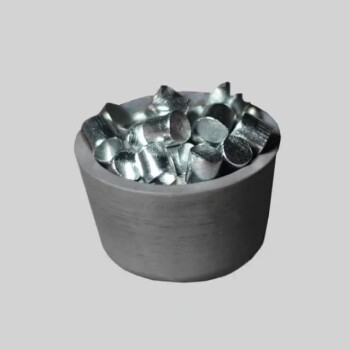
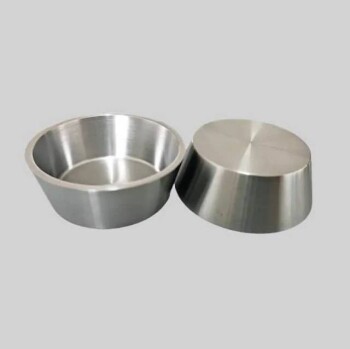
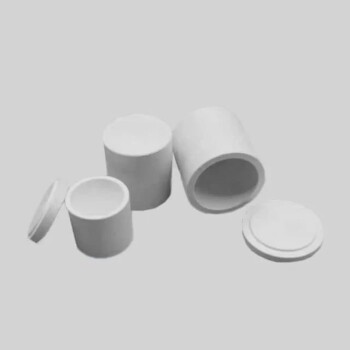
Ceramic crucibles are mandatory for the moisture determination of synthesized gypsum because they provide the necessary thermal and chemical stability to ensure analytical accuracy. Unlike other materials, ceramic withstands repeated heating cycles up to 210°C without deforming, losing mass, or reacting with the sample, ensuring that any measured weight loss is attributable solely to water evaporation.
The Core Insight The validity of a moisture analysis depends entirely on isolating the variable of weight loss. Ceramic crucibles are used because they are thermally static and chemically inert, eliminating the risk that the container itself will skew results through oxidation, warping, or mass fluctuation.
The Critical Role of Thermal Stability
To determine moisture content effectively, the testing environment must remain consistent despite extreme temperature changes.
Resisting High-Temperature Fatigue
Synthesized gypsum analysis requires subjecting the sample to temperatures up to 210°C.
Ceramic crucibles possess excellent resistance to high-temperature fatigue. They can endure the stress of repeated heating and cooling cycles without structural failure.
Preventing Physical Deformation
Materials with lower thermal stability may warp or expand when heated.
Ceramic ensures no deformation occurs during the dehydration process. This structural rigidity allows for consistent handling and precise weighing throughout the experiment.
Eliminating Mass Fluctuation
In gravimetric analysis, the weight of the container must remain constant.
Ceramic crucibles are resistant to mass fluctuation under heat. This guarantees that the crucible does not gain or lose weight itself, which would otherwise introduce significant errors into the quantitative moisture calculation.
Ensuring Chemical Integrity
Beyond temperature resistance, the container must be a neutral vessel for the chemical process of dehydration.
Chemical Inertness
Synthesized gypsum can be reactive, particularly as it releases water during heating.
Ceramic is chemically inert, meaning it will not interact with the gypsum sample. This prevents any secondary chemical reactions that could alter the composition of the sample or the weight of the residue.
Guaranteeing Quantitative Accuracy
The goal of this procedure is a precise quantitative analysis.
By preventing reaction between the sample and the container, ceramic crucibles ensure the final data reflects only the dehydration of the gypsum. This isolation of variables is the foundation of accurate laboratory reporting.
Common Pitfalls to Avoid
While ceramic is the standard, understanding the risks of material failure highlights why this choice is critical.
The Risk of Container Interference
If a crucible interacts with the sample or the heat source, it becomes a variable rather than a constant.
Any fluctuation in the container's mass—whether through oxidation of a metal or off-gassing of a polymer—will be falsely interpreted as moisture loss or gain.
Sensitivity to Thermal Cycling
Using materials susceptible to thermal fatigue can lead to micro-fractures or warping over time.
This degradation not only risks the physical loss of the sample but also compromises the repeatability of the test. Ceramic is specifically chosen to mitigate these risks over long-term use.
Making the Right Choice for Your Goal
Selecting the correct apparatus is the first step toward valid data.
- If your primary focus is analytical precision: Rely on ceramic crucibles to ensure that the container’s mass remains constant and does not skew the moisture calculation.
- If your primary focus is equipment longevity: Use ceramic to withstand the mechanical stress of repeated heating and cooling cycles up to 210°C without deformation.
By utilizing ceramic crucibles, you effectively eliminate the container as a source of error, ensuring your moisture determination results are both accurate and reproducible.
Summary Table:
| Feature | Ceramic Crucible Benefit | Impact on Moisture Analysis |
|---|---|---|
| Thermal Stability | Resists fatigue up to 210°C | No deformation or structural failure during heating |
| Mass Consistency | Zero fluctuation under heat | Ensures weight loss is solely from water evaporation |
| Chemical Inertness | Non-reactive material | Prevents sample contamination and secondary reactions |
| Durability | High thermal cycling resistance | Guarantees long-term repeatability and equipment longevity |
Elevate Your Laboratory Precision with KINTEK
Reliable results start with high-quality consumables. KINTEK specializes in premium laboratory equipment and high-performance consumables, including our chemically inert and thermally stable ceramic crucibles designed for rigorous applications like gypsum moisture determination.
Whether you need precision high-temperature furnaces, reliable crushing and milling systems, or essential PTFE and ceramic products, KINTEK provides the tools necessary to eliminate variables and ensure data integrity.
Ready to optimize your lab's accuracy? Contact us today to explore our comprehensive range of crucibles and high-temperature solutions!
References
- Md. Sahadat Hossain, Samina Ahmed. Synthesis of gypsum fertilizer from waste eggshells for a sustainable environment. DOI: 10.1039/d2ma00810f
This article is also based on technical information from Kintek Solution Knowledge Base .
Related Products
- Arc-Shaped Alumina Ceramic Crucible High Temperature Resistant for Engineering Advanced Fine Ceramics
- Alumina Al2O3 Ceramic Crucible Semicircle Boat with Lid for Engineering Advanced Fine Ceramics
- Engineering Advanced Fine Alumina Al2O3 Ceramic Crucible for Laboratory Muffle Furnace
- Boron Nitride (BN) Crucible for Phosphorous Powder Sintered
- Engineering Advanced Fine Ceramics Alumina Al2O3 Crucible With Lid Cylindrical Laboratory Crucible
People Also Ask
- Why Use Alumina Crucibles & Powder Burial for NaSICON? Ensure Phase Purity and Prevent Elemental Volatilization
- What is the primary purpose of using alumina crucibles for LLTO ceramics? Optimize Your High-Temperature Sintering
- Why are alumina crucibles and mother powder essential for LATP sintering? Optimize Your Solid Electrolyte Performance
- Why are high-purity alumina crucibles used for liquid lead corrosion experiments? Ensure Data Accuracy at 550°C
- Primary considerations for choosing alumina crucibles and quartz tubes in indium intercalation: Ensure Material Purity