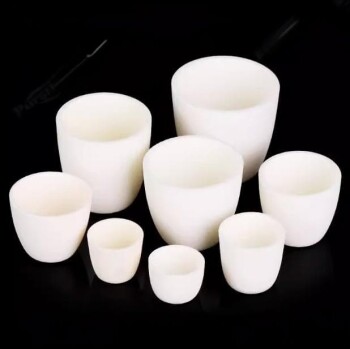
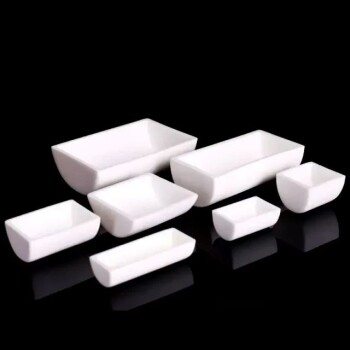
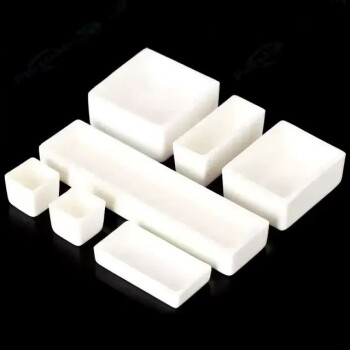
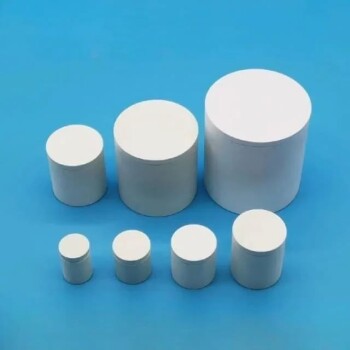
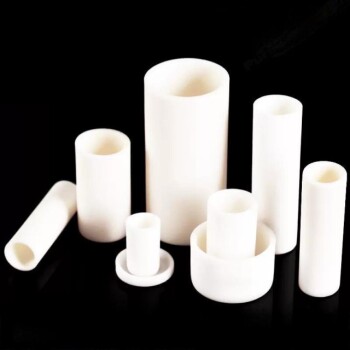
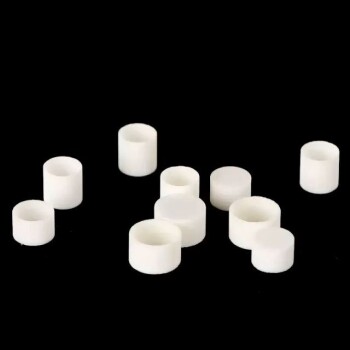
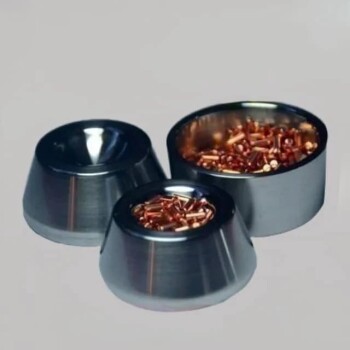
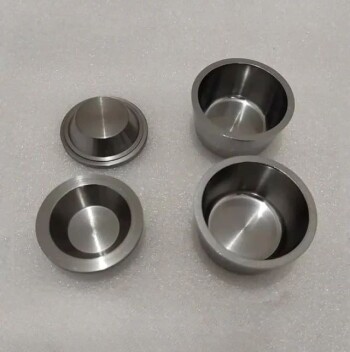
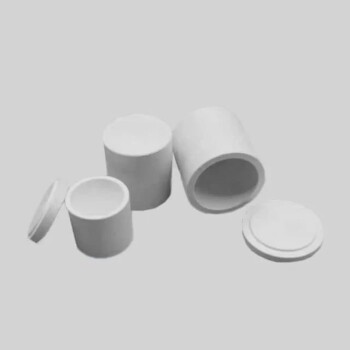
Ceramic crucibles serve as a critical dual-directional protective barrier during synthesis. Specifically, they function to shield furnace equipment from aggressive chemical byproducts while simultaneously isolating the catalyst material to prevent contamination, ensuring the high purity required for accurate scientific analysis.
Core Takeaway High-purity ceramic crucibles act as an inert containment system that handles the extreme conditions of solid-phase synthesis. They prevent acidic or oxidizing components from damaging furnace elements and utilize dense, non-porous surfaces to eliminate cross-contamination, thereby preserving the integrity of structure-performance studies.
Protecting the Processing Equipment
Containing Aggressive Chemical Agents
Solid-phase synthesis and modification often require reactants that are highly acidic or strongly oxidizing.
Ceramic crucibles safely contain these volatile components during calcination. By isolating these harsh chemicals, the crucible prevents corrosive vapors from attacking the heating elements and insulation lining of the furnace.
Ensuring Thermal Stability
High-temperature modification places immense stress on containment vessels.
Crucibles made of high-purity alumina offer exceptional thermal stability. They maintain their structural integrity without softening or deforming, preventing catastrophic leaks that could damage the furnace floor.
Safeguarding Catalyst Integrity
Preventing Cross-Contamination
The physical properties of the crucible are just as important as its thermal resistance.
The dense material structure of high-quality ceramics minimizes porosity. This prevents the catalyst material from penetrating the crucible walls and stops previous residues trapped in the container from leaching into the current batch.
Preserving Chemical Purity
To study a catalyst effectively, you must ensure the final product is free from synthesis artifacts.
Ceramic crucibles provide high chemical inertness. Because they do not react with the phase-transfer catalyst during heating, the final composition remains pure.
Enabling Accurate Research
The ultimate goal of synthesis is often to establish a clear structure-performance relationship.
By eliminating contamination variables, ceramic crucibles ensure that observed performance metrics are due to the catalyst's design, not impurities introduced by the container.
Understanding the Trade-offs
Thermal Shock Sensitivity
While ceramics possess high thermal stability, they generally lack thermal shock resistance compared to metals.
Rapid heating or cooling rates can cause the material to fracture. A cracked crucible compromises the protective barrier, potentially ruining the sample and damaging the furnace.
Specific Chemical Limitations
"Inert" does not mean universally non-reactive.
While excellent for acidic and oxidizing environments, high-purity alumina may react with certain highly alkaline materials or specific fluxing agents at extreme temperatures.
Making the Right Choice for Your Goal
To maximize the effectiveness of your synthesis process, select your containment based on your primary risk factors:
- If your primary focus is Equipment Longevity: Prioritize high-density crucibles to ensure aggressive acidic vapors are fully contained and cannot degrade furnace elements.
- If your primary focus is Data Accuracy: Rely on high-purity alumina to prevent chemical leaching, ensuring that your structure-performance data remains uncontaminated by container impurities.
Selecting the correct crucible is not merely about holding a sample; it is a fundamental step in ensuring the reproducibility and validity of your chemical research.
Summary Table:
| Feature | Protection for Equipment | Protection for Catalyst |
|---|---|---|
| Chemical Resistance | Contains aggressive acidic and oxidizing vapors | Prevents chemical leaching and unwanted reactions |
| Structural Density | Prevents leaks that damage furnace floors | Eliminates cross-contamination via non-porous surfaces |
| Thermal Stability | Maintains integrity under extreme heat stress | Ensures consistent, artifact-free synthesis environments |
| Inertness | Shields heating elements from corrosive byproducts | Preserves high purity for accurate performance studies |
Elevate Your Research Precision with KINTEK Quality
Don't let contamination or equipment corrosion compromise your synthesis results. KINTEK specializes in high-performance laboratory equipment and consumables, offering a premium range of high-purity ceramic crucibles, muffle furnaces, and high-temperature reactors designed for the most demanding chemical research.
Whether you are performing solid-phase synthesis or complex material modifications, our solutions ensure your data remains accurate and your laboratory assets stay protected.
Ready to optimize your synthesis workflow? Contact our technical experts today to find the perfect ceramic solutions and high-temperature systems for your specific application.
References
- Xun Zhang, Rui Wang. Phase-Transfer Catalysis for Fuel Desulfurization. DOI: 10.3390/catal15080724
This article is also based on technical information from Kintek Solution Knowledge Base .
Related Products
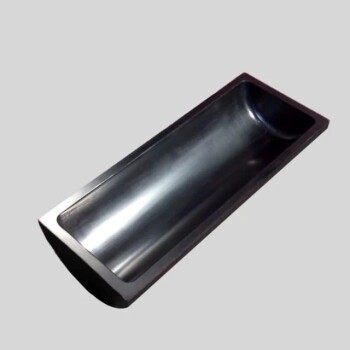
- Arc-Shaped Alumina Ceramic Crucible High Temperature Resistant for Engineering Advanced Fine Ceramics
- Alumina Al2O3 Ceramic Crucible Semicircle Boat with Lid for Engineering Advanced Fine Ceramics
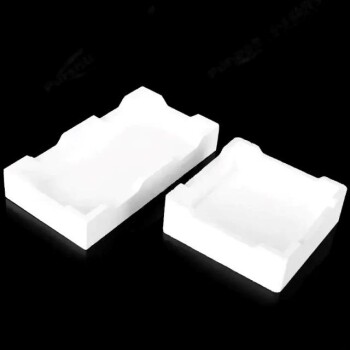
- Engineering Advanced Fine Alumina Al2O3 Ceramic Crucible for Laboratory Muffle Furnace
- Boron Nitride (BN) Crucible for Phosphorous Powder Sintered
- Engineering Advanced Fine Ceramics Alumina Al2O3 Crucible With Lid Cylindrical Laboratory Crucible
People Also Ask
- Why Use Alumina Crucibles & Powder Burial for NaSICON? Ensure Phase Purity and Prevent Elemental Volatilization
- What is the primary purpose of using alumina crucibles for LLTO ceramics? Optimize Your High-Temperature Sintering
- Why are alumina crucibles and mother powder essential for LATP sintering? Optimize Your Solid Electrolyte Performance
- Why are high-purity alumina crucibles used for liquid lead corrosion experiments? Ensure Data Accuracy at 550°C
- Primary considerations for choosing alumina crucibles and quartz tubes in indium intercalation: Ensure Material Purity