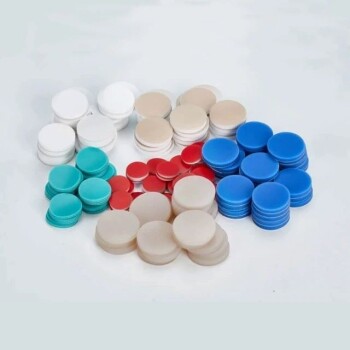
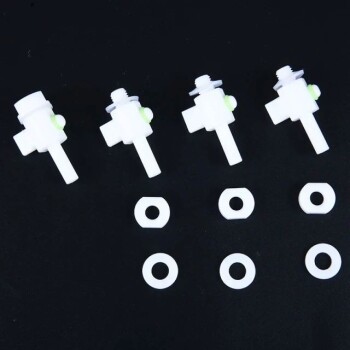
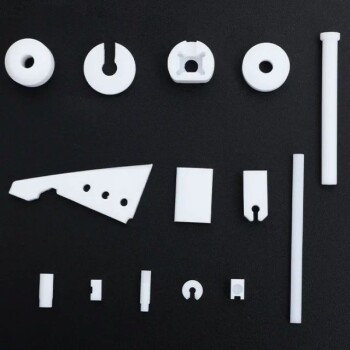
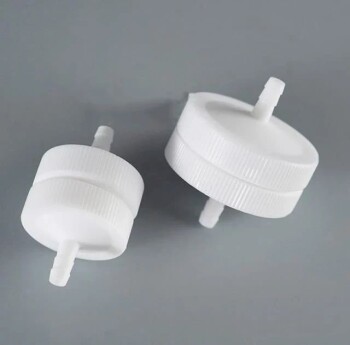
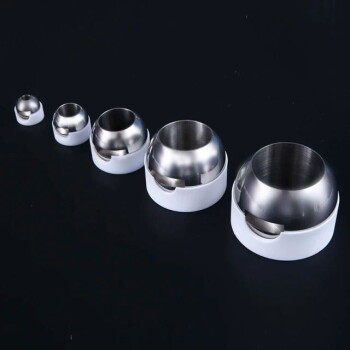
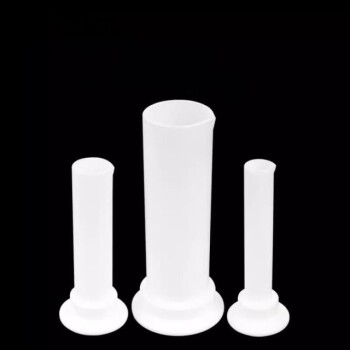
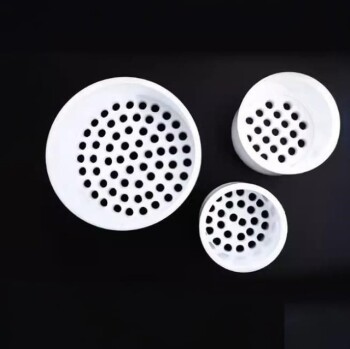
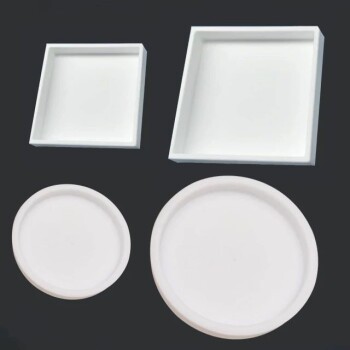
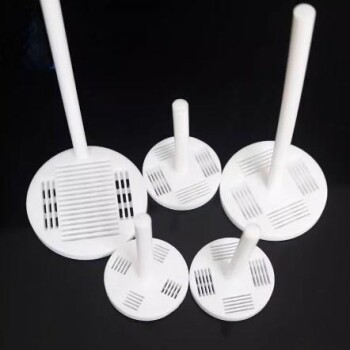
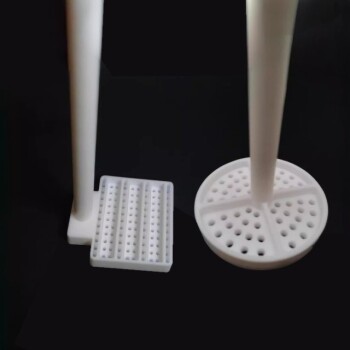
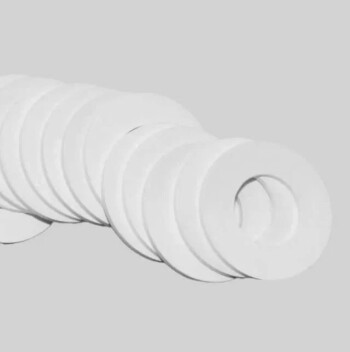
Precise area definition is the foundation of accurate electrochemical measurement. Polytetrafluoroethylene (PTFE) compression gaskets are essential in PD-GS-PD tests because they provide a fail-safe seal that strictly defines the specimen's exposed surface area. By relying on PTFE's superior elasticity and corrosion resistance, these gaskets prevent electrolyte leakage around the specimen edges, ensuring that the current measured corresponds exactly to the intended test area.
The integrity of your current density calculations relies entirely on the isolation of the specimen. PTFE gaskets guarantee this by preventing "crevice corrosion" and edge leaks, ensuring that electrochemical data is derived solely from the predetermined surface area.
The Critical Role of Surface Area Definition
Guaranteeing Mathematical Accuracy
Electrochemical tests like PD-GS-PD rely on calculating current density ($A/cm^2$). This calculation requires a precisely known surface area (e.g., exactly 8 $cm^2$).
If the gasket fails to seal completely, the corrosive medium leaks onto the sides or back of the specimen. This increases the actual surface area participating in the reaction without your knowledge, rendering your current density calculations mathematically incorrect.
Eliminating Edge Effects
Corrosion behavior at sharp edges often differs from flat surfaces due to stress concentrations or coating defects.
PTFE gaskets mask these edges, exposing only the uniform, planar surface of the alloy. This ensures the data reflects the material's intrinsic corrosion resistance rather than physical artifacts of the specimen preparation.
Why PTFE is the Material of Choice
Superior Elasticity for Sealing
To function as a compression gasket, the material must deform under pressure to fill microscopic gaps between the cell and the specimen.
PTFE possesses the necessary elasticity to form a liquid-tight barrier when compressed. A rigid material would leave gaps, while a material that is too soft might deform permanently or flow into the test area, obscuring the surface.
Unwavering Chemical Inertness
In electrochemical testing, the test equipment must never interact with the electrolyte.
PTFE is chemically inert and exhibits superior corrosion resistance. It will not degrade, swell, or release contaminants into the corrosive media, even during long-duration tests (immersion periods often lasting thousands of hours). This ensures that the chemical environment remains stable and pure.
Electrical Isolation
While the primary function is sealing, the material properties of PTFE also provide electrical insulation.
This prevents any electrical continuity between the specimen and the test cell body (if metallic). This isolation is critical for preventing short circuits or signal interference that could distort weak electrochemical signals.
Understanding the Trade-offs
The Risk of Crevice Corrosion
If a gasket is not tightened correctly or if the material lacks sufficient rebound resilience, a "crevice" can form between the gasket and the specimen.
This stagnant micro-environment can accelerate corrosion (crevice corrosion) locally. While PTFE minimizes this risk due to its material properties, improper assembly can still lead to localized attacks that skew results.
Physical Stability Under Load
While PTFE is excellent for sealing, it is susceptible to "creep" or cold flow under extreme, sustained pressure over very long periods.
In standard electrochemical setups, this is rarely an issue. However, for extreme high-temperature or high-pressure applications, the compression force may need to be monitored to maintain the integrity of the seal over time.
Ensuring Test Validity
To maximize the reliability of your PD-GS-PD electrochemical tests, apply the following principles:
- If your primary focus is Data Accuracy: Ensure the PTFE gasket is compressed uniformly to define the exact surface area required for current density calculations.
- If your primary focus is Chemical Purity: Rely on PTFE’s inertness to prevent contamination of the electrolyte, particularly in sensitive or long-duration immersion tests.
Ultimately, the PTFE gasket is not merely a seal; it is a precision control instrument that defines the physical boundaries of your electrochemical experiment.
Summary Table:
| Feature | Benefit for PD-GS-PD Tests |
|---|---|
| Precise Area Definition | Guarantees accurate current density ($A/cm^2$) calculations by preventing edge leaks. |
| Chemical Inertness | Prevents electrolyte contamination and remains stable during long-term immersion. |
| Elasticity | Forms a liquid-tight seal under compression to eliminate microscopic gaps. |
| Electrical Isolation | Prevents short circuits and signal interference between the specimen and cell body. |
| Edge Masking | Eliminates edge effects, ensuring data reflects intrinsic material properties. |
Elevate Your Electrochemical Research Precision with KINTEK
Don't let edge leaks or chemical contamination compromise your data integrity. KINTEK specializes in high-performance laboratory equipment and consumables, providing the precision-engineered PTFE products, electrolytic cells, and high-temperature high-pressure reactors your research demands.
Whether you are performing complex PD-GS-PD tests or optimizing battery research, our comprehensive portfolio—from advanced ceramics and crucibles to hydraulic presses and cooling solutions—is designed to meet the rigorous standards of modern material science.
Ready to ensure the accuracy of your next experiment? Contact KINTEK experts today to find the perfect fit for your lab!
References
- Edgar C. Hornus, Martín A. Rodríguez. Effect of environmental variables and main alloying elements on the repassivation potential of Ni–Cr–Mo–(W) alloys 59 and 686. DOI: 10.1515/corrrev-2022-0071
This article is also based on technical information from Kintek Solution Knowledge Base .
Related Products
- Custom PTFE Teflon Parts Manufacturer for Gaskets and More
- Custom PTFE Teflon Parts Manufacturer for Air Valve Applications
- Custom PTFE Teflon Parts Manufacturer for Non-Standard Insulator Customization
- Custom PTFE Teflon Parts Manufacturer for Sampling Filters
- Custom PTFE Teflon Parts Manufacturer for PTFE Ball Valve Seat
People Also Ask
- What technical advantages do PTFE seals provide in high-pressure CO2? Optimize Your Seal Integrity
- What are the critical functions of Polytetrafluoroethylene (PTFE) gaskets within a glow discharge unit? Enhance Precision
- How are PTFE gaskets utilized for POEGMA electrolyte conductivity? Ensure Precision in Electrochemical Measurements
- What is the purpose of using PTFE gaskets in fuel cell test fixtures? Ensure Seal Purity and Data Integrity
- What protective roles do Sealing Gaskets and Support Grids play in oil-water separation? Ensure High-Pressure Integrity