Precision thermal management is the deciding factor in the structural and chemical quality of Au/CeO2 catalysts. Program-controlled ovens are essential for removing solvents without inducing physical fractures, while calcination furnaces drive the chemical transformation of precursors into active nanoparticles. Without this specific hardware, you cannot maintain the strict temperature profiles required to generate stable, 4–20 nm gold particles.
Core Takeaway: The preparation of Au/CeO2 catalysts requires a strict two-stage thermal process to balance physical integrity with chemical activation. Precision equipment is strictly necessary to control evaporation rates—preventing coating cracks—and to regulate precursor decomposition, which ensures optimal particle size and interfacial bonding.
The Role of the Precision Oven: Protecting Structure
Controlled Moisture Evaporation
The initial stage of preparation involves drying the coated catalyst. A precision oven is required to maintain temperatures strictly between 60°C and 120°C.
This specific range allows for the slow, controlled removal of moisture from the coating.
Preventing Physical Defects
If the solvent is evaporated too quickly, the stress on the material increases significantly.
Rapid evaporation leads to cracking or peeling of the coating. The program-controlled oven prevents this by ensuring the temperature rise is gradual enough to preserve the physical structure of the oxide film.
The Role of the Calcination Furnace: Defining Activity
Regulating Chemical Decomposition
Once dried, the material must be calcined to convert precursors into active catalysts. This requires a furnace capable of raising the temperature to 300°C.
Crucially, this ramp-up must happen at a precise rate of 2°C/min. This slow rate is necessary to ensure the gold precursors decompose uniformly rather than chaotically.
Controlling Particle Size
The catalytic performance of gold is heavily dependent on its particle size.
By adhering to the strict heating profile, the furnace facilitates the formation of stable active particles ranging from 4 to 20 nm. Without this control, particles may grow too large, reducing efficiency.
Stabilizing the Interface
The calcination process does more than just decompose precursors; it fixes the metal to the support.
Controlled heating achieves chemical stability at the interface between the active components (Au) and the support (CeO2). This ensures the catalyst remains robust during operation without compromising the underlying oxide structure.
Understanding the Trade-offs
The Risk of Accelerated Heating
It is often tempting to increase heating rates to speed up production.
However, deviating from the 2°C/min rate or the defined isothermal stages often leads to sintering and agglomeration. This causes active components to clump together, drastically reducing the specific surface area and the number of exposed active sites.
Uniformity vs. Throughput
High-precision muffle or tube furnaces provide a uniform heat treatment environment, which is critical for consistent batch quality.
The trade-off is that this process is inherently slow. Prioritizing high throughput over precise thermal regulation will almost certainly result in grain coarsening and a failure to achieve the desired methane oxidation activity.
Making the Right Choice for Your Goal
To optimize the preparation of your Au/CeO2 catalysts, align your thermal strategy with your specific quality metrics:
- If your primary focus is Physical Durability: Prioritize the precision oven stage (60-120°C) to ensure moisture is removed slowly, eliminating the risk of coating cracks.
- If your primary focus is Catalytic Activity: Strictly enforce the calcination furnace ramp rate of 2°C/min to ensure gold particles remain within the 4-20 nm range.
Ultimately, the performance of your catalyst is defined not by the materials alone, but by the discipline of your thermal processing.
Summary Table:
| Equipment Type | Temperature Range | Primary Function | Impact on Catalyst Quality |
|---|---|---|---|
| Precision Oven | 60°C – 120°C | Controlled drying/evaporation | Prevents coating fractures and physical defects |
| Calcination Furnace | Up to 300°C | Chemical precursor decomposition | Ensures 4-20nm particle size and interface stability |
| Program Controller | 2°C/min Ramp Rate | Regulated thermal profiling | Prevents sintering, agglomeration, and grain coarsening |
Elevate Your Catalyst Synthesis with KINTEK Precision
Achieving the perfect 4-20 nm gold particle distribution and a flawless CeO2 coating requires more than just heat—it requires uncompromising thermal discipline.
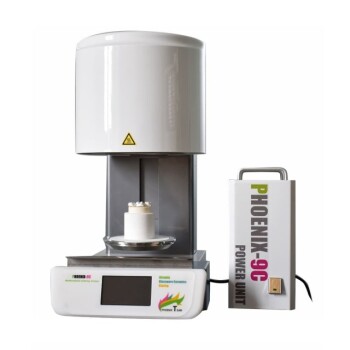
KINTEK specializes in high-performance laboratory equipment designed for rigorous research environments. Whether you need program-controlled muffle and tube furnaces for precise calcination ramp rates or precision drying ovens to protect your structural integrity, our solutions deliver the uniformity your catalysts demand.
Our extensive portfolio also includes:
- High-Temperature Furnaces: Vacuum, CVD, and Atmosphere-controlled systems.
- Material Processing: Crushing, milling, and high-pressure hydraulic presses.
- Specialized Labware: High-purity ceramics, crucibles, and PTFE products.
Don't let thermal instability compromise your research outcomes. Contact KINTEK today to find the perfect thermal solution for your lab and ensure consistent, high-activity results in every batch.
References
- L.M. Martínez T, J.A. Odriozola. Au/CeO2 metallic monolith catalysts: influence of the metallic substrate. DOI: 10.1007/s13404-013-0102-0
This article is also based on technical information from Kintek Solution Knowledge Base .
Related Products
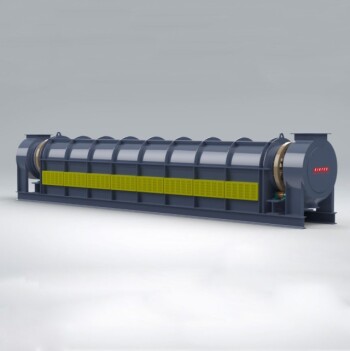
- Electric Rotary Kiln Pyrolysis Furnace Plant Machine Calciner Small Rotary Kiln Rotating Furnace
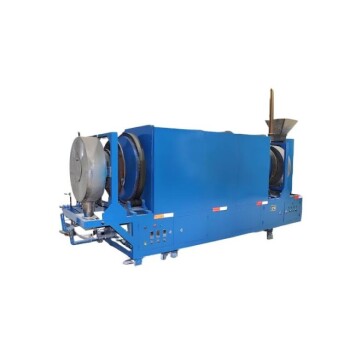
- Electric Rotary Kiln Continuous Working Small Rotary Furnace Heating Pyrolysis Plant
- Vertical High Temperature Graphite Vacuum Graphitization Furnace
- Graphite Vacuum Furnace High Thermal Conductivity Film Graphitization Furnace
- Ultra-High Temperature Graphite Vacuum Graphitization Furnace
People Also Ask
- What is a rotary kiln electric furnace? Achieve Superior Uniform Heating for Your Materials
- What are the characteristics of the slipping, slumping, and rolling modes of bed motion? Optimize Your Rotary Process
- What are the advantages of rotary kiln furnace? Achieve Superior Uniformity & Efficiency
- What is the temperature of a rotating kiln? It Depends on Your Material and Process Goal
- What are the principles of a rotary kiln? Master the Mechanics of High-Temperature Processing