Knowledge Why are special hot-work die steel molds preferred over traditional graphite molds for the cold sintering of ZnO?
Author avatar

Tech Team · Kintek Solution

Updated 4 days ago

Why are special hot-work die steel molds preferred over traditional graphite molds for the cold sintering of ZnO?


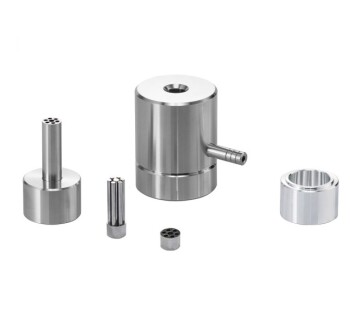
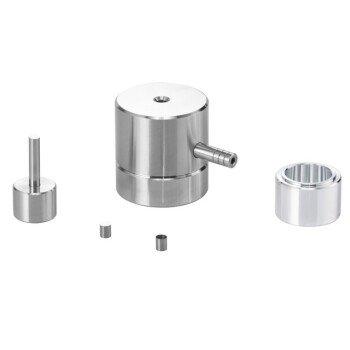
Special hot-work die steel molds are preferred primarily because they offer the superior structural strength required to withstand ultra-high pressures, often exceeding 300 MPa. In contrast, traditional graphite molds are structurally limited to pressures between 50 and 100 MPa, making them unsuitable for the forces necessary in the cold sintering of Zinc Oxide (ZnO).

The structural capability of steel molds to sustain pressures above 300 MPa is the key enabler for high-pressure rheological mechanisms, allowing ZnO powder to densify effectively at temperatures as low as 250°C.

The Critical Role of Pressure Capacity

Overcoming Material Limitations

The defining difference between these two mold types is their pressure tolerance.

Traditional graphite molds typically fail when subjected to pressures exceeding 50 to 100 MPa.

Cold sintering processes for Zinc Oxide generally demand pressures far beyond this threshold to trigger the necessary physical changes in the material.

Unlocking Ultra-High Pressure Processing

Special hot-work die steel molds are engineered to operate reliably at pressures exceeding 300 MPa.

This capability allows the processing equipment to exert sufficient force on the ZnO powder without risking mold deformation or catastrophic failure.

Mechanism of Densification

High-Pressure Rheological Mechanisms

The preference for steel is not just about durability; it is about enabling specific physics.

The ultra-high pressure supported by steel molds facilitates high-pressure rheological mechanisms.

Under these extreme conditions, the solid powder particles exhibit flow characteristics similar to fluids, filling voids and increasing density efficiently.

Low-Temperature Processing

Because high pressure drives the densification, the reliance on thermal energy is drastically reduced.

Using steel molds allows the process to occur at relatively low temperatures, such as 250°C.

This is significantly lower than the temperatures required if the pressure were limited to the 100 MPa ceiling of graphite molds.

Understanding the Trade-offs

The Risk of Using Graphite

Attempting to use traditional graphite molds for cold sintering creates a strict upper limit on performance.

If you restrict pressure to the safe range of graphite (50–100 MPa), you cannot activate the high-pressure rheological mechanisms required for cold sintering.

Consequently, you would fail to achieve proper densification at low temperatures, likely resulting in a porous or structurally weak final product.

Making the Right Choice for Your Goal

When selecting mold materials for sintering applications, the decision relies heavily on your processing parameters.

  • If your primary focus is Cold Sintering (Low Temperature/High Density): You must use special hot-work die steel molds to safely achieve the >300 MPa pressure required for rheological flow at 250°C.
  • If your primary focus is Standard Sintering (High Temperature/Low Pressure): Traditional graphite molds may be sufficient, provided the process pressure remains strictly below 100 MPa.

Selecting the correct mold material is the foundational step in successfully leveraging pressure to replace heat in ceramic processing.

Summary Table:

Feature Traditional Graphite Molds Special Hot-Work Die Steel Molds
Pressure Limit 50 - 100 MPa > 300 MPa
Temperature Goal High Sintering Temps Low (e.g., 250°C)
Mechanism Thermal Diffusion High-Pressure Rheological Flow
Suitability Standard Sintering Cold Sintering (ZnO)
Risk Structural Failure > 100 MPa Engineered for Ultra-High Force

Maximize Your Sintering Precision with KINTEK

Are you looking to master cold sintering or high-pressure material processing? KINTEK specializes in providing the high-performance laboratory equipment and consumables required for advanced material science. From specialized hot-work die steel molds and hydraulic presses (pellet, hot, and isostatic) to high-temperature furnaces and advanced ceramics, we provide the tools that enable your breakthroughs.

Our technical experts are ready to help you select the ideal configuration for your Zinc Oxide (ZnO) research or industrial application. Ensure structural integrity and achieve superior densification today.

Contact KINTEK to find your perfect equipment solution!

Related Products

People Also Ask

Related Products

Custom PTFE Teflon Parts Manufacturer Laboratory High Temperature Mixing Paddle Mixer

Custom PTFE Teflon Parts Manufacturer Laboratory High Temperature Mixing Paddle Mixer

The PTFE mixing paddle mixer is a versatile and robust tool designed for laboratory use, particularly in environments requiring high resistance to chemicals and extreme temperatures. Crafted from high-quality PTFE, this mixer boasts several key features that enhance its functionality and durability.

1800℃ Muffle Oven Furnace for Laboratory

1800℃ Muffle Oven Furnace for Laboratory

KT-18 muffle furnace with Japan Al2O3 polycrystalline fibe and Silicon Molybdenum heating element, up to 1900℃, PID temperature control and 7" smart touch screen. Compact design, low heat loss, and high energy efficiency. Safety interlock system and versatile functions.

Ultra-High Temperature Graphite Vacuum Graphitization Furnace

Ultra-High Temperature Graphite Vacuum Graphitization Furnace

The ultra-high temperature graphitization furnace utilizes medium frequency induction heating in a vacuum or inert gas environment. The induction coil generates an alternating magnetic field, inducing eddy currents in the graphite crucible, which heats up and radiates heat to the workpiece, bringing it to the desired temperature. This furnace is primarily used for graphitization and sintering of carbon materials, carbon fiber materials, and other composite materials.

1700℃ Laboratory High Temperature Tube Furnace with Alumina Tube

1700℃ Laboratory High Temperature Tube Furnace with Alumina Tube

Looking for a high-temperature tube furnace? Check out our 1700℃ Tube Furnace with Alumina Tube. Perfect for research and industrial applications up to 1700C.

1200℃ Split Tube Furnace with Quartz Tube Laboratory Tubular Furnace

1200℃ Split Tube Furnace with Quartz Tube Laboratory Tubular Furnace

KT-TF12 split tube furnace: high-purity insulation, embedded heating wire coils, and max. 1200C. Widely used for new materials and chemical vapour deposition.

1400℃ Muffle Oven Furnace for Laboratory

1400℃ Muffle Oven Furnace for Laboratory

Get precise high-temperature control up to 1500℃ with KT-14M Muffle furnace. Equipped with a smart touch screen controller and advanced insulation materials.

Dental Porcelain Zirconia Sintering Ceramic Vacuum Press Furnace

Dental Porcelain Zirconia Sintering Ceramic Vacuum Press Furnace

Get precise dental results with Dental Vacuum Press Furnace. Automatic temperature calibration, low noise tray, and touch screen operation. Order now!

1400℃ Laboratory High Temperature Tube Furnace with Alumina Tube

1400℃ Laboratory High Temperature Tube Furnace with Alumina Tube

Looking for a tube furnace for high-temperature applications? Our 1400℃ Tube Furnace with Alumina Tube is perfect for research and industrial use.

Engineering Advanced Fine Ceramics Head Tweezers with Pointed Elbow Zirconia Ceramic Tip

Engineering Advanced Fine Ceramics Head Tweezers with Pointed Elbow Zirconia Ceramic Tip

Zirconia ceramic tweezers are a high-precision tool made of advanced ceramic materials, especially suitable for operating environments that require high precision and corrosion resistance. This type of tweezers not only has excellent physical properties, but is also popular in the medical and laboratory fields because of its biocompatibility.

Custom PTFE Teflon Parts Manufacturer for Acid and Alkali Resistant Chemical Powder Material Scoops

Custom PTFE Teflon Parts Manufacturer for Acid and Alkali Resistant Chemical Powder Material Scoops

Known for its excellent thermal stability, chemical resistance and electrical insulating properties, PTFE is a versatile thermoplastic material.

Small Vacuum Heat Treat and Tungsten Wire Sintering Furnace

Small Vacuum Heat Treat and Tungsten Wire Sintering Furnace

The small vacuum tungsten wire sintering furnace is a compact experimental vacuum furnace specially designed for universities and scientific research institutes. The furnace features a CNC welded shell and vacuum piping to ensure leak-free operation. Quick-connect electrical connections facilitate relocation and debugging, and the standard electrical control cabinet is safe and convenient to operate.

Graphite Vacuum Continuous Graphitization Furnace

Graphite Vacuum Continuous Graphitization Furnace

High-temperature graphitization furnace is a professional equipment for graphitization treatment of carbon materials. It is a key equipment for the production of high-quality graphite products. It has high temperature, high efficiency and uniform heating. It is suitable for various high-temperature treatments and graphitization treatments. It is widely used in metallurgy, electronics, aerospace, etc. industry.

High Pressure Laboratory Vacuum Tube Furnace Quartz Tubular Furnace

High Pressure Laboratory Vacuum Tube Furnace Quartz Tubular Furnace

KT-PTF High Pressure Tube Furnace: Compact split tube furnace with strong positive pressure resistance. Working temp up to 1100°C and pressure up to 15Mpa. Also works under controller atmosphere or high vacuum.

Vacuum Cold Trap Direct Cold Trap Chiller

Vacuum Cold Trap Direct Cold Trap Chiller

Improve vacuum system efficiency and extend pump life with our Direct Cold Trap. No chilling fluid required, compact design with swivel casters. Stainless steel and glass options available.

Platinum Sheet Electrode for Laboratory and Industrial Applications

Platinum Sheet Electrode for Laboratory and Industrial Applications

Elevate your experiments with our Platinum Sheet Electrode. Crafted with quality materials, our safe and durable models can be tailored to fit your needs.

Precision Machined Zirconia Ceramic Ball for Engineering Advanced Fine Ceramics

Precision Machined Zirconia Ceramic Ball for Engineering Advanced Fine Ceramics

zirconia ceramic ball have the characteristics of high strength, high hardness, PPM wear level, high fracture toughness, good wear resistance, and high specific gravity.

Laboratory Jaw Crusher

Laboratory Jaw Crusher

Discover the small jaw crusher for efficient, flexible, and affordable crushing in labs and small mines. Ideal for coal, ores, and rocks. Learn more now!

5L Heating Chilling Circulator Cooling Water Bath Circulator for High and Low Temperature Constant Temperature Reaction

5L Heating Chilling Circulator Cooling Water Bath Circulator for High and Low Temperature Constant Temperature Reaction

KinTek KCBH 5L Heating Chilling Circulator - Ideal for labs and industrial conditions with multi-functional design and reliable performance.

Laboratory Disc Rotary Mixer for Efficient Sample Mixing and Homogenization

Laboratory Disc Rotary Mixer for Efficient Sample Mixing and Homogenization

Efficient Laboratory Disc Rotary Mixer for Precise Sample Mixing, Versatile for Various Applications, DC Motor and Microcomputer Control, Adjustable Speed and Angle.

PTFE Electrolytic Cell Electrochemical Cell Corrosion-Resistant Sealed and Non-Sealed

PTFE Electrolytic Cell Electrochemical Cell Corrosion-Resistant Sealed and Non-Sealed

Choose our PTFE Electrolytic Cell for reliable, corrosion-resistant performance. Customize specifications with optional sealing. Explore now.


Leave Your Message