Knowledge Why are stainless steel containers used for lithium melt modification? Ensure Purity and Corrosion Resistance
Author avatar

Tech Team · Kintek Solution

Updated 4 days ago

Why are stainless steel containers used for lithium melt modification? Ensure Purity and Corrosion Resistance


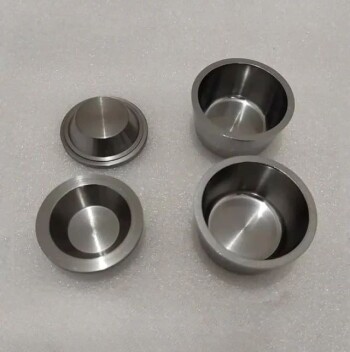
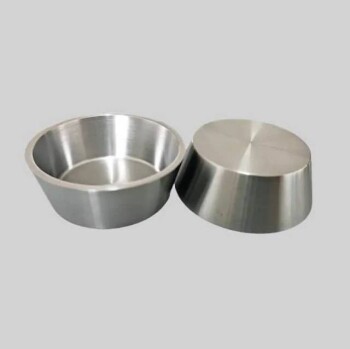
Stainless steel containers and corrosion-resistant crucibles are chosen specifically to withstand the extreme chemical reactivity of molten lithium at elevated temperatures. These materials provide a stable, inert environment around 250°C, preventing the vessel itself from reacting with the lithium and compromising the experiment.

The integrity of a lithium melt modification experiment relies entirely on the inertness of the reaction carrier. By using materials that resist chemical attack, researchers ensure that the resulting Li-Si-N melt remains pure and that observations regarding surface tension are accurate.

The Critical Role of Chemical Inertness

Preventing Secondary Reactions

Molten lithium is an aggressive solvent and highly chemically active. If placed in a standard container, it would likely initiate immediate secondary reactions with the vessel walls.

Stainless steel and corrosion-resistant crucibles are selected because they possess the necessary chemical inertness to resist this attack. This isolation prevents the container from becoming an unintended participant in the chemical reaction.

Preserving Melt Purity

The primary goal of these experiments is often to modify the lithium melt, such as creating a specific Li-Si-N composition.

If the container were to degrade, leached elements would contaminate the mixture. Using resistant carriers ensures the chemical composition of the melt remains exactly as the researcher intended.

Ensuring Accurate Data Collection

Observing Surface Tension

A key objective in these experiments is observing physical properties, specifically the reduced surface tension of the modified melt.

Surface tension is highly sensitive to impurities. Any reaction between the melt and the crucible would alter the fluid properties, leading to skewed or invalid data.

Isolating Experimental Variables

To generate reliable data, the container must be a neutral variable.

Just as alumina is used in lead experiments to prevent the "selective leaching" of alloy elements, stainless steel allows lithium researchers to attribute all observed changes solely to the experimental parameters, not the equipment.

Common Pitfalls and Requirements

The Danger of Material Incompatibility

Using a container with even slight solubility in lithium can ruin an experiment. At 250°C, even minor chemical interactions can escalate quickly, altering the baseline of the study.

Thermal Stability Essentials

Chemical resistance is not enough; the carrier must also maintain structural integrity under heat. The vessel must safely contain the molten mixture at operating temperatures without warping or losing mechanical strength.

Making the Right Choice for Your Experiment

Selecting the correct reaction carrier is about prioritizing the validity of your data.

  • If your primary focus is Chemical Purity: Select a crucible material that is chemically inert to prevent foreign elements from leaching into your Li-Si-N melt.
  • If your primary focus is Physical Property Measurement: Ensure your container will not degrade, as dissolved contaminants will artificially alter observations like surface tension.

The success of a melt modification experiment is defined by the container's ability to remain invisible to the chemical process.

Summary Table:

Requirement Importance in Lithium Experiments Recommended Material Features
Chemical Inertness Prevents secondary reactions with molten lithium High resistance to aggressive solvents
Melt Purity Ensures Li-Si-N composition remains uncontaminated Low leaching properties at 250°C
Data Integrity Protects surface tension observations from impurities Neutral variable carrier characteristics
Thermal Stability Maintains structural integrity under high heat High mechanical strength; anti-warping

Elevate Your Lithium Research with KINTEK Precision

Don't let equipment degradation compromise your experimental data. KINTEK specializes in high-performance laboratory solutions designed for the most demanding thermal and chemical environments. Whether you need corrosion-resistant crucibles, high-temperature furnaces, or specialized PTFE and ceramic consumables, our products ensure your lithium melt modifications remain pure and precise.

Our Value to You:

  • Advanced Material Science: Expertly selected materials to withstand aggressive molten lithium.
  • Comprehensive Lab Support: From vacuum furnaces and high-pressure reactors to crushing systems and battery research tools.
  • Reliability: Engineered for structural integrity and chemical inertness at elevated temperatures.

Contact KINTEK today to find the perfect reaction carrier for your lab!

Related Products

People Also Ask

Related Products

Alumina Al2O3 Ceramic Crucible Semicircle Boat with Lid for Engineering Advanced Fine Ceramics

Alumina Al2O3 Ceramic Crucible Semicircle Boat with Lid for Engineering Advanced Fine Ceramics

Crucibles are containers widely used for melting and processing various materials, and semicircular boat-shaped crucibles are suitable for special smelting and processing requirements. Their types and uses vary by material and shape.

Electron Beam Evaporation Coating Tungsten Crucible and Molybdenum Crucible for High Temperature Applications

Electron Beam Evaporation Coating Tungsten Crucible and Molybdenum Crucible for High Temperature Applications

Tungsten and molybdenum crucibles are commonly used in electron beam evaporation processes due to their excellent thermal and mechanical properties.

Arc-Shaped Alumina Ceramic Crucible High Temperature Resistant for Engineering Advanced Fine Ceramics

Arc-Shaped Alumina Ceramic Crucible High Temperature Resistant for Engineering Advanced Fine Ceramics

In the journey of scientific exploration and industrial production, every detail is crucial. Our arc-shaped alumina ceramic crucibles, with their excellent high temperature resistance and stable chemical properties, have become a powerful assistant in laboratories and industrial fields. They are made of high-purity alumina materials and manufactured through precision processes to ensure excellent performance in extreme environments.

Custom Machined and Molded PTFE Teflon Parts Manufacturer with PTFE Crucible and Lid

Custom Machined and Molded PTFE Teflon Parts Manufacturer with PTFE Crucible and Lid

PTFE crucibles, made from pure Teflon, offer chemical inertness and resistance from -196°C to 280°C, ensuring compatibility with a wide range of temperatures and chemicals. These crucibles feature machine-finished surfaces for easy cleaning and prevention of contamination, making them ideal for precise laboratory applications.

Engineering Advanced Fine Ceramics Alumina Crucibles (Al2O3) for Thermal Analysis TGA DTA

Engineering Advanced Fine Ceramics Alumina Crucibles (Al2O3) for Thermal Analysis TGA DTA

TGA/DTA thermal analysis vessels are made of aluminum oxide (corundum or aluminum oxide). It can withstand high temperature and is suitable for analyzing materials that require high temperature testing.

Engineering Advanced Fine Alumina Al2O3 Ceramic Crucible for Laboratory Muffle Furnace

Engineering Advanced Fine Alumina Al2O3 Ceramic Crucible for Laboratory Muffle Furnace

Alumina ceramic crucibles are used in some materials and metal melting tools, and flat-bottomed crucibles are suitable for melting and processing larger batches of materials with better stability and uniformity.

Electron Beam Evaporation Coating Gold Plating Tungsten Molybdenum Crucible for Evaporation

Electron Beam Evaporation Coating Gold Plating Tungsten Molybdenum Crucible for Evaporation

These crucibles act as containers for the gold material evaporated by the electron evaporation beam while precisely directing the electron beam for precise deposition.

Evaporation Crucible for Organic Matter

Evaporation Crucible for Organic Matter

An evaporation crucible for organic matter, referred to as an evaporation crucible, is a container for evaporating organic solvents in a laboratory environment.

Boron Nitride (BN) Crucible for Phosphorous Powder Sintered

Boron Nitride (BN) Crucible for Phosphorous Powder Sintered

Phosphorus powder sintered boron nitride (BN) crucible has a smooth surface, dense, pollution-free and long service life.

Electron Beam Evaporation Coating Oxygen-Free Copper Crucible and Evaporation Boat

Electron Beam Evaporation Coating Oxygen-Free Copper Crucible and Evaporation Boat

Electron Beam Evaporation Coating Oxygen-Free Copper Crucible enables precise co-deposition of various materials. Its controlled temperature and water-cooled design ensure pure and efficient thin film deposition.

Molybdenum Disilicide (MoSi2) Thermal Elements Electric Furnace Heating Element

Molybdenum Disilicide (MoSi2) Thermal Elements Electric Furnace Heating Element

Discover the power of Molybdenum Disilicide (MoSi2) Heating Element for high-temperature resistance. Unique oxidation resistance with stable resistance value. Learn more about its benefits now!

Electron Beam Evaporation Coating Conductive Boron Nitride Crucible BN Crucible

Electron Beam Evaporation Coating Conductive Boron Nitride Crucible BN Crucible

High-purity and smooth conductive boron nitride crucible for electron beam evaporation coating, with high temperature and thermal cycling performance.

1200℃ Muffle Furnace Oven for Laboratory

1200℃ Muffle Furnace Oven for Laboratory

Upgrade your lab with our 1200℃ Muffle Furnace. Achieve fast, precise heating with Japan alumina fibers and Molybdenum coils. Features TFT touch screen controller for easy programming and data analysis. Order now!

High Temperature Muffle Oven Furnace for Laboratory Debinding and Pre Sintering

High Temperature Muffle Oven Furnace for Laboratory Debinding and Pre Sintering

KT-MD High temperature debinding and pre-sintering furnace for ceramic materials with various molding processes. Ideal for electronic components such as MLCC and NFC.

Custom PTFE Teflon Parts Manufacturer for Non-Standard Insulator Customization

Custom PTFE Teflon Parts Manufacturer for Non-Standard Insulator Customization

PTFE insulator PTFE has excellent electrical insulation properties in a wide temperature and frequency range.

Laboratory CVD Boron Doped Diamond Materials

Laboratory CVD Boron Doped Diamond Materials

CVD boron-doped diamond: A versatile material enabling tailored electrical conductivity, optical transparency, and exceptional thermal properties for applications in electronics, optics, sensing, and quantum technologies.

Custom PTFE Teflon Parts Manufacturer for PTFE Bottle Oil Fume Sampling Tube

Custom PTFE Teflon Parts Manufacturer for PTFE Bottle Oil Fume Sampling Tube

PTFE products are generally called "non-stick coating", which is a synthetic polymer material that replaces all hydrogen atoms in polyethylene with fluorine.

Custom PTFE Teflon Parts Manufacturer for Conductive Glass Substrate Cleaning Rack

Custom PTFE Teflon Parts Manufacturer for Conductive Glass Substrate Cleaning Rack

The PTFE conductive glass substrate cleaning rack is used as the carrier of the square solar cell silicon wafer to ensure efficient and pollution-free handling during the cleaning process.

Custom PTFE Teflon Parts Manufacturer for Acid and Alkali Resistant Chemical Powder Material Scoops

Custom PTFE Teflon Parts Manufacturer for Acid and Alkali Resistant Chemical Powder Material Scoops

Known for its excellent thermal stability, chemical resistance and electrical insulating properties, PTFE is a versatile thermoplastic material.

Custom PTFE Teflon Parts Manufacturer for Hydrothermal Synthesis Reactor Polytetrafluoroethylene Carbon Paper and Carbon Cloth Nano-growth

Custom PTFE Teflon Parts Manufacturer for Hydrothermal Synthesis Reactor Polytetrafluoroethylene Carbon Paper and Carbon Cloth Nano-growth

Acid and alkali resistant polytetrafluoroethylene experimental fixtures meet different requirements. The material is made of brand new polytetrafluoroethylene material, which has excellent chemical stability, corrosion resistance, airtightness, high lubricity and non-stickiness, electrical corrosion and good anti-aging ability, and can work for a long time at temperatures from -180℃ to +250℃.


Leave Your Message