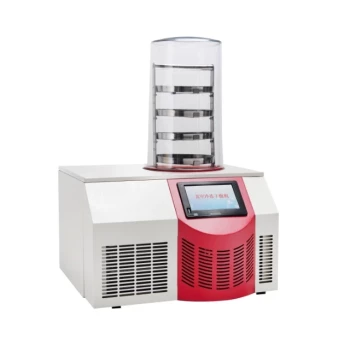
Vacuum drying ovens are critical for the final post-processing of health monitoring sensors, specifically those utilizing conducting polymer layers. They provide a controlled environment essential for thoroughly removing residual solvents and unreacted monomer impurities without subjecting delicate materials to damaging high temperatures.
By combining low temperatures with reduced pressure, vacuum drying prevents thermal degradation and eliminates internal mechanical stresses. This process is the linchpin for ensuring the electrical stability and biological safety required for long-term wearable health devices.
The Science of Polymer Purification
Efficient Removal of Contaminants
Conducting polymer layers often retain chemical byproducts after fabrication. Vacuum drying ovens are specifically engineered to extract these residual solvents and unreacted monomers.
Mechanism of Action
The vacuum environment lowers the boiling point of trapped liquids. This allows impurities to evaporate efficiently without requiring excessive heat.
Preventing Thermal Damage
Standard drying methods often rely on high heat, which can damage sensitive materials. Vacuum drying utilizes a low-temperature environment to achieve purification.
Avoiding Oxidative Degradation
Heat combined with oxygen is destructive to polymers. By drying in a vacuum, you prevent thermal oxidative degradation, preserving the integrity of the polymer chains.
Enhancing Sensor Performance and Safety
Eliminating Mechanical Stress
As films dry and contract, internal forces can build up. Vacuum drying effectively eliminates residual stress within the film layer.
Ensuring Structural Integrity
By removing this stress, the physical durability of the sensor is improved. This prevents cracking or warping during the sensor's operational life.
Guaranteeing Electrical Stability
The presence of impurities can interfere with signal transmission. Thorough purification ensures the sensor maintains consistent electrical properties over time.
Achieving Biological Safety
Health monitoring sensors are often wearable and in contact with the skin. Removing toxic monomers and solvents is strictly necessary to ensure biological safety for the user.
Understanding the Risks of Improper Drying
The Cost of Oxidation
If you opt for standard air drying, you risk exposing the polymer to oxygen. This can lead to chain scission and a total loss of the material's conductive properties.
The Impact of Residuals
Failing to remove unreacted monomers compromises biocompatibility. In a wearable context, this poses a significant risk of skin irritation or toxicity for the user.
Making the Right Choice for Your Manufacturing Process
When establishing a production line for health sensors, the drying method defines the final quality of the product.
- If your primary focus is Data Accuracy: Prioritize vacuum drying to remove impurities that cause electrical drift and signal noise.
- If your primary focus is User Safety: rely on vacuum drying to eliminate toxic monomers, ensuring the device is safe for long-term skin contact.
- If your primary focus is Durability: Use the low-temperature vacuum process to prevent thermal degradation and remove internal physical stresses.
Vacuum drying is the only method that simultaneously protects the polymer structure while ensuring the chemical purity required for medical-grade electronics.
Summary Table:
| Feature | Vacuum Drying Benefit | Impact on Health Sensors |
|---|---|---|
| Temperature | Low-heat processing | Prevents thermal degradation of sensitive polymers |
| Pressure | Reduced boiling points | Efficiently removes residual solvents and monomers |
| Environment | Oxygen-free atmosphere | Prevents oxidative degradation and chain scission |
| Stress Relief | Controlled evaporation | Eliminates internal mechanical stress and prevents cracking |
| Safety | High purification | Ensures biocompatibility for long-term skin contact |
Elevate Your Sensor Manufacturing Precision with KINTEK
Don't compromise the integrity of your medical-grade electronics. KINTEK specializes in advanced laboratory solutions designed to meet the rigorous demands of health sensor production. Our high-performance vacuum drying ovens and cooling solutions provide the precise environment needed to eliminate toxic residuals while preserving electrical stability.
From high-temperature furnaces and vacuum systems to specialized PTFE and ceramic consumables, KINTEK delivers the tools required for cutting-edge research and industrial excellence. Whether you are developing wearable devices or advanced battery technologies, our expertise ensures your products are safe, durable, and accurate.
Ready to optimize your post-processing workflow? Contact KINTEK today to discover how our comprehensive range of laboratory equipment can enhance your lab's efficiency and product safety.
References
- Lê Văn Cường, Hyeonseok Yoon. Advances in the Use of Conducting Polymers for Healthcare Monitoring. DOI: 10.3390/ijms25031564
This article is also based on technical information from Kintek Solution Knowledge Base .
Related Products
- 56L Vertical Laboratory Vacuum Drying Oven
- 23L Laboratory Vacuum Drying Oven
- Laboratory Scientific Electric Heating Blast Drying Oven
- Benchtop Laboratory Vacuum Freeze Dryer
- Dental Porcelain Zirconia Sintering Ceramic Vacuum Press Furnace
People Also Ask
- Why is a laboratory vacuum drying oven recommended for rice straw residues? Protect Your Biomass Integrity
- What role does a laboratory vacuum drying oven play in the preparation of modified multi-walled carbon nanotubes?
- What is the importance of using a laboratory vacuum drying oven? Preserving Slow-Release Microcapsule Integrity
- Why is a Laboratory Vacuum Drying Oven recommended for PBAT microspheres? Protect Sensitive Polymer Integrity
- What role does a laboratory vacuum drying oven play in processing nanoparticle powder samples? Protect Sample Integrity