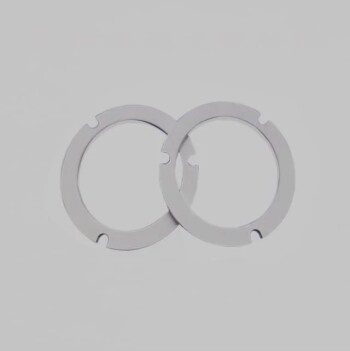
Viton O-rings are the standard defense against system failure in microreactors because they combine exceptional thermal resistance with robust chemical stability. Specifically designed to withstand the rigors of high-temperature oxidation reactions, these components maintain a reliable seal against vacuum and pressure, preventing leaks and ensuring experimental accuracy even at operating temperatures as high as 300°C.
The critical value of Viton lies in its ability to maintain structural integrity under extreme thermal stress. By preventing gas leakage or air ingress at temperatures up to 300°C, these O-rings are the primary safeguard for the validity of your experimental data.
The Challenge of High-Temperature Environments
Operating Beyond Standard Limits
Standard sealing materials often degrade, harden, or melt when subjected to intense heat. Viton O-rings are formulated to remain functional and elastic in environments where other elastomers fail.
They provide a dependable interface solution for microreactors operating at temperatures up to 300°C.
Chemical Stability in Oxidation
High temperatures often accelerate chemical reactions that can attack sealing materials. Viton possesses exceptional chemical stability, allowing it to resist degradation during aggressive oxidation reactions.
Ensuring System Integrity and Safety
Maintaining Vacuum and Pressure
Microreactors frequently operate under strict vacuum or high-pressure conditions. A compromised seal leads to immediate loss of pressure control, invalidating the experiment.
Viton O-rings provide the mechanical resilience necessary to hold these seals tight, ensuring the physical parameters of the reaction remain constant.
Preventing Gas Leakage
The containment of reactant gases is a safety and performance priority. These O-rings create a barrier that prevents potentially hazardous gases from escaping the microreactor interface blocks.
Blocking External Contamination
Data integrity relies on purity. Viton seals prevent external air from entering the system, which eliminates the variable of unwanted atmospheric contamination.
Understanding the Limitations
The Nature of Consumables
While Viton is highly durable, it is classified as a "consumable" for a reason. Continuous cycling at peak temperatures (near 300°C) will eventually impact the material's elasticity.
Routine Inspection is Critical
You must not treat these seals as permanent fixtures. Over time, heat and chemical exposure can lead to compression set, reducing the seal's effectiveness. Regular inspection and replacement are required to prevent sudden failure.
Making the Right Choice for Your Goal
To ensure your microreactor operates at peak performance, consider your specific experimental needs:
- If your primary focus is data accuracy: Prioritize Viton to eliminate variable shifts caused by air ingress or unexpected pressure loss.
- If your primary focus is operational safety: Rely on fresh Viton seals to strictly contain hazardous reactant gases during oxidation processes.
Ultimately, the reliability of your microreactor's seal is the foundation upon which your high-temperature experimental results are built.
Summary Table:
| Key Feature | Benefit for Microreactors | Maximum Performance |
|---|---|---|
| Thermal Resistance | Maintains elasticity and seal integrity under extreme heat | Operating temps up to 300°C |
| Chemical Stability | Resists degradation during aggressive high-temp oxidation | High oxidation resistance |
| Mechanical Resilience | Prevents vacuum loss and air ingress for data accuracy | Maintains pressure & vacuum |
| Safety Containment | Blocks leakage of potentially hazardous reactant gases | Reliable gas barrier |
Secure Your Research with KINTEK’s Precision Sealing Solutions
Don’t let a compromised seal jeopardize your experimental data or laboratory safety. KINTEK specializes in high-performance laboratory equipment and essential consumables designed for the most demanding environments. Whether you need high-temperature high-pressure reactors and autoclaves or high-grade Viton O-rings, ceramics, and crucibles, we provide the reliability your research demands.
Our experts are ready to help you select the perfect sealing interfaces and consumables to optimize your microreactor's performance. Contact us today to ensure your system’s integrity!
References
- Sunday Odiba, Paul A. Russell. Micro-Reactor System for Complete Oxidation of Volatile Organic Compounds. DOI: 10.3390/catal10080846
This article is also based on technical information from Kintek Solution Knowledge Base .
Related Products
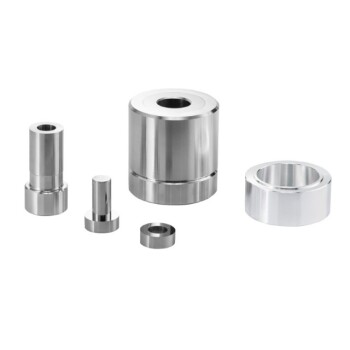
- Ring Press Mold for Lab Applications
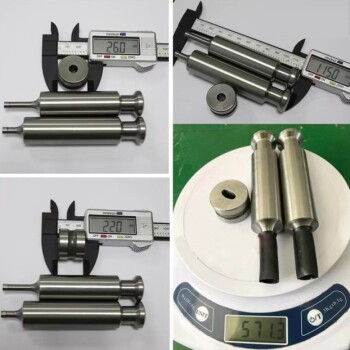
- Round Bidirectional Press Mold for Lab
- Cylindrical Press Mold with Scale for Lab
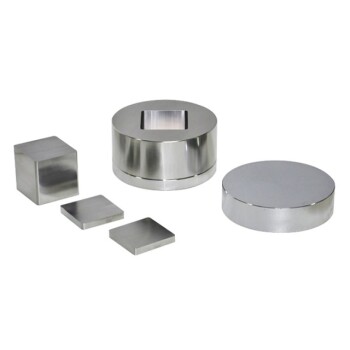
- Multi-Punch Rotary Tablet Press Mold Ring for Rotating Oval and Square Molds
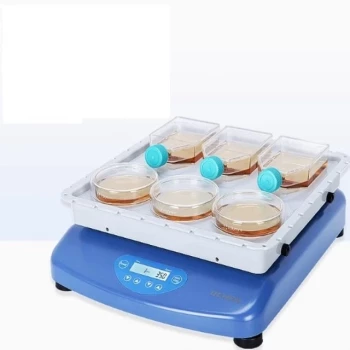
- 5L Heating Chilling Circulator Cooling Water Bath Circulator for High and Low Temperature Constant Temperature Reaction
People Also Ask
- How to use a press mold? Master the Art of Creating Consistent Ceramic Forms
- Why are pressure molds with non-conductive resin inner walls required for battery testing? Ensure Data Accuracy
- What is the press mould method? A Guide to Consistent, Detailed Ceramic Forms
- What is the function of press molds during the preparation of SiCf/Ti-43Al-9V composites? Achieve Structural Precision
- What is a press mold used for? Achieve Repeatable Precision and Efficiency