Zirconia grinding jars and balls are the preferred standard for preparing all-solid-state lithium-sulfur battery composite electrodes. This preference is driven by two non-negotiable requirements: the need for high-density impact to drive mechanochemical reactions (such as sulfur amorphization) and the absolute necessity of preventing metallic contamination in sensitive sulfide electrolytes.
Core Takeaway The synthesis of solid-state battery materials relies on a delicate balance of high-energy physics and strict chemical purity. Zirconia is the material of choice because it delivers the high kinetic energy required to structurally alter sulfur while remaining chemically inert, ensuring the ionic conductivity of the electrolyte is not compromised by conductive impurities.
The Critical Role of Chemical Inertness
Protecting Sensitive Sulfide Electrolytes
Sulfide solid electrolytes are notoriously sensitive to foreign materials. Even trace amounts of conductive contaminants can degrade their performance.
Zirconia prevents side reactions. Unlike stainless steel, zirconia is chemically stable and inert. It does not react with sulfur or sulfide compounds, preventing the introduction of impurities that would otherwise trigger degradation or reduce the electrochemical stability of the final composite.
Eliminating Metallic Contamination
Long-duration ball milling creates significant friction and abrasion. If the grinding media wears down, it sheds material into your mixture.
Zirconia possesses exceptional wear resistance. Its extreme hardness ensures that even during high-energy milling, the jars and balls do not degrade significantly. This maintains the purity of the raw materials, preventing metal particles from contaminating the sulfide electrolyte and ruining its insulating properties.
The Necessity of High Mechanical Energy
Driving Sulfur Amorphization
For lithium-sulfur batteries to function effectively, the sulfur often needs to undergo a structural change, specifically amorphization.
Zirconia delivers high-impact force. This structural change requires substantial mechanical energy. Because zirconia is exceptionally hard and tough, it can transfer the necessary energy to the sulfur particles to achieve this amorphous state without shattering the grinding media itself.
Leveraging High Density for Kinetic Efficiency
Effectiveness in ball milling is largely determined by the kinetic energy of the impact ($E = \frac{1}{2}mv^2$).
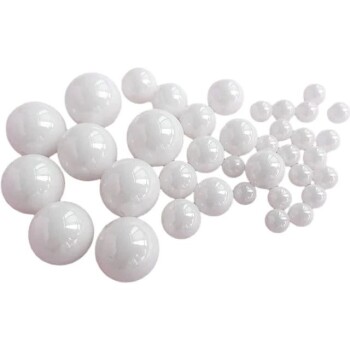
High density equals higher impact energy. Zirconia balls are significantly denser than many other ceramic alternatives. This high density generates sufficient impact kinetic energy to thoroughly mix nano-silicon, sulfide electrolytes, and carbon additives, ensuring efficient mechanochemical reactions and uniform composite structures.
Understanding the Trade-offs
The Risk of Component Degradation
While zirconia allows for high-energy processing, the very properties that make it effective can be a double-edged sword if not managed.
Energy management is key. The high density of zirconia balls delivers intense energy that effectively mixes materials, but excessive milling energy can potentially degrade the delicate sulfide electrolyte structure itself. The process requires precise optimization of milling time and speed to utilize zirconia's density without "over-milling" the electrolyte.
Cost vs. Purity
Zirconia is generally more expensive than lower-grade ceramics or steel grinding media.
Purity dictates the investment. In the context of all-solid-state batteries, this cost is a necessary investment. The "trade-off" of using cheaper media is an almost certain failure of the electrolyte due to contamination. Therefore, the higher upfront cost of zirconia is negligible compared to the cost of wasted precursor materials caused by impurity-induced failure.
Making the Right Choice for Your Goal
When setting up your synthesis protocol for solid-state batteries, your equipment choice dictates your ceiling for success.
- If your primary focus is maximizing ionic conductivity: You must use zirconia to prevent metallic abrasion, as even microscopic metal particles can block ion pathways and degrade electrolyte performance.
- If your primary focus is efficient sulfur utilization: You must use zirconia to ensure sufficient impact energy is transferred to the mixture to fully amorphize the sulfur.
Ultimately, zirconia is not just an option but a prerequisite for high-performance solid-state battery research, bridging the gap between mechanical durability and chemical purity.
Summary Table:
| Feature | Zirconia (YSZ) Advantage | Impact on Battery Synthesis |
|---|---|---|
| Chemical Purity | Non-reactive and inert | Prevents degradation of sensitive sulfide electrolytes |
| Wear Resistance | Extreme hardness | Eliminates metallic contamination from abrasion |
| Material Density | High density (approx. 6.0 g/cm³) | Maximizes kinetic energy for sulfur amorphization |
| Mechanical Toughness | High fracture toughness | Ensures media durability during high-energy milling |
| Thermal Stability | Low thermal expansion | Maintains structural integrity during long milling cycles |
Elevate Your Solid-State Battery Research with KINTEK
Achieving the perfect balance of high-energy physics and chemical purity is critical for high-performance lithium-sulfur batteries. KINTEK specializes in providing high-precision laboratory equipment and consumables designed for the most demanding energy research.
Our premium zirconia grinding jars and high-density grinding balls ensure your sulfide electrolytes remain free from metallic contamination while delivering the impact force required for sulfur amorphization. Beyond grinding, we offer a comprehensive suite of tools for battery researchers, including:
- High-Temperature Furnaces (CVD, Vacuum, Tube, & Muffle) for material synthesis.
- Hydraulic Presses (Pellet & Isostatic) for electrode preparation.
- Electrolytic Cells & Battery Consumables for electrochemical testing.
- Crushing & Sieving Systems for consistent particle size control.
Ready to optimize your synthesis protocol? Contact us today to consult with our experts and discover how KINTEK can enhance your lab's efficiency and material performance.
Related Products
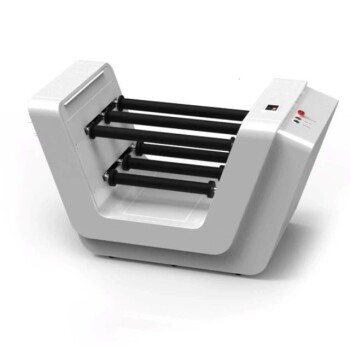
- Laboratory Jar Ball Mill with Alumina Zirconia Grinding Jar and Balls
- Precision Machined Zirconia Ceramic Ball for Engineering Advanced Fine Ceramics
- Laboratory Jar Mill with Agate Grinding Jar and Balls
- Laboratory Ball Mill Jar Mill with Metal Alloy Grinding Jar and Balls
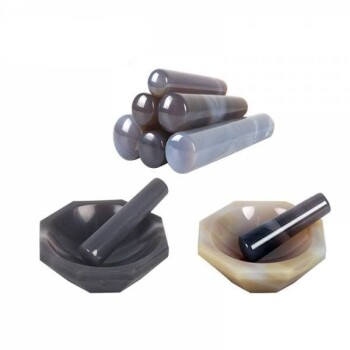
- Nature Agate Mortar and Pestle for Grinding and Mixing
People Also Ask
- What are the primary functions of using a ball mill for BZCY72 powder? Achieve High Purity and Enhanced Sintering
- In what way does a laboratory ball mill affect material properties when modifying PHBV/pulp fiber composites?
- Why is a laboratory ball mill required for ultra-fine fly ash? Unlock Nano-Scale Adsorption Power
- What is the function of a laboratory ball mill in the preparation of AMMCs? Optimize Dispersion & Grain Refinement
- What is the function of a laboratory ball mill in the pretreatment of waste tire char (WTC)? Optimize Material Reactivity