Knowledge Why are zirconia grinding jars and balls selected for sulfide solid electrolytes? Ensure High Ionic Conductivity
Author avatar

Tech Team · Kintek Solution

Updated 1 day ago

Why are zirconia grinding jars and balls selected for sulfide solid electrolytes? Ensure High Ionic Conductivity


Zirconia is the definitive material choice for this process because it uniquely solves the problem of contamination. Zirconia grinding jars and balls combine extreme hardness with chemical inertness, allowing for high-energy milling that refines sulfide electrolytes without introducing the metallic impurities that degrade their electrochemical performance.

The Bottom Line: Sulfide electrolytes are exceptionally sensitive to metallic contamination and moisture. Zirconia media provide the high impact energy required for synthesis while acting as a chemically neutral barrier, preventing the side reactions and iron doping that occur with standard stainless steel equipment.

Ensuring Electrochemical Purity

Eliminating Metallic Contamination

The primary danger in milling sulfide electrolytes is the introduction of impurities. Standard stainless steel media shed microscopic metallic iron particles during high-energy milling.

Zirconia is extremely hard and wear-resistant. It withstands prolonged milling processes without shedding conductive debris, ensuring the synthesized electrolyte remains pure and electrically stable.

Chemical Inertness

Sulfide precursors are highly active and chemically volatile. Zirconia is chemically inert, meaning it will not react with these sensitive materials.

By using zirconia, you prevent side reactions between the grinding media and the sulfide powder. This preserves the chemical integrity of the precursors and ensures the final product maintains high ionic conductivity.

Optimizing Mechanical Energy

High Impact for Amorphization

Synthesizing solid electrolytes often requires converting crystalline materials into an amorphous (glassy) state to improve conductivity. This requires significant kinetic energy.

Zirconia balls have a high density, which translates to high impact energy during the milling process. This energy is critical for efficiently promoting amorphization and homogenizing the mixture.

Shortening Reaction Times

The combination of high hardness and high density allows for more aggressive milling parameters. This effectively shortens the reaction time required to achieve the desired particle refinement.

Environmental Control

Protection from Moisture

Sulfide electrolytes are prone to hydrolysis and oxidation if exposed to moisture in the air. High-quality zirconia jars are designed to be hermetically sealed.

These sealed jars maintain an inert argon gas environment throughout the milling process. This prevents the ingress of moisture and oxygen, protecting the material from degradation during synthesis.

Common Pitfalls to Avoid

The Risk of Stainless Steel

It is a critical error to substitute stainless steel jars or balls to save cost or time. The introduction of iron impurities, even in trace amounts, can cause severe electrochemical degradation.

Mismatched Hardness

Using grinding media that is softer than the material being milled will result in rapid wear of the media and contamination of the batch. Zirconia’s extreme hardness ensures it remains harder than the sulfide precursors, preventing this "media consumption."

Making the Right Choice for Your Synthesis

To ensure the success of your sulfide solid electrolyte preparation, apply the following principles:

  • If your primary focus is Ionic Conductivity: Prioritize high-purity zirconia to eliminate any risk of metallic iron contamination, which acts as a barrier to ion transport.
  • If your primary focus is Process Efficiency: Leverage the high density of zirconia balls to maximize impact energy, which promotes faster amorphization and reduces total milling time.
  • If your primary focus is Material Stability: Ensure your zirconia jars are rated for high-quality sealing to maintain an argon atmosphere and prevent hydrolysis.

Zirconia is not just a container; it is a critical process variable that safeguards the purity and performance of your final electrolyte.

Summary Table:

Key Feature Benefit for Sulfide Electrolytes Why It Matters
Extreme Hardness Exceptional wear resistance Prevents metallic iron contamination and conductive debris
Chemical Inertness No reaction with active precursors Preserves chemical integrity and prevents side reactions
High Density High kinetic impact energy Facilitates efficient amorphization and shorter milling times
Hermetic Sealing Maintains inert atmosphere Protects moisture-sensitive sulfides from oxidation/hydrolysis

Elevate Your Battery Research with KINTEK Precision

Don't compromise the electrochemical performance of your sulfide solid electrolytes with inferior milling media. KINTEK specializes in high-performance laboratory solutions, providing premium zirconia grinding jars and balls specifically designed for high-energy amorphization and contamination-free synthesis.

Beyond milling, KINTEK offers a comprehensive range of equipment for advanced materials research, including:

  • High-Temperature Furnaces & Reactors (Muffle, Vacuum, CVD/PECVD)
  • Hydraulic Presses (Pellet, Isostatic) for high-density electrolyte forming
  • Electrolytic Cells & Battery Consumables
  • Crushing & Sieving Systems

Ensure the purity and ionic conductivity of your materials today. Contact our technical experts at KINTEK to find the perfect milling configuration for your laboratory needs!

Related Products

People Also Ask

Related Products

Laboratory Single Horizontal Jar Mill

Laboratory Single Horizontal Jar Mill

KT-JM3000 is a mixing and grinding instrument for placing a ball milling tank with a volume of 3000ml or less. It adopts frequency conversion control to realize timing, constant speed, direction change, overload protection and other functions.

Laboratory Ball Mill Jar Mill with Metal Alloy Grinding Jar and Balls

Laboratory Ball Mill Jar Mill with Metal Alloy Grinding Jar and Balls

Grind and mill with ease using metal alloy grinding jars with balls. Choose from 304/316L stainless steel or tungsten carbide and optional liner materials. Compatible with various mills and features optional functions.

Laboratory Ten-Body Horizontal Jar Mill for Lab Use

Laboratory Ten-Body Horizontal Jar Mill for Lab Use

The Ten-body horizontal jar mill is for 10 ball mill pots (3000ml or less). It has frequency conversion control, rubber roller movement, and PE protective cover.

High Energy Planetary Ball Mill for Laboratory Horizontal Tank Type Milling Machine

High Energy Planetary Ball Mill for Laboratory Horizontal Tank Type Milling Machine

KT-P4000H uses the unique Y-axis planetary motion trajectory, and utilizes the collision, friction and gravity between the sample and the grinding ball to have a certain anti-sinking ability, which can obtain better grinding or mixing effects and further improve the sample output.

Stainless Steel Laboratory Ball Mill for Dry Powder and Liquid with Ceramic Polyurethane Lining

Stainless Steel Laboratory Ball Mill for Dry Powder and Liquid with Ceramic Polyurethane Lining

Discover the versatile stainless steel dry powder/liquid horizontal ball mill with ceramic/polyurethane lining. Ideal for ceramic, chemical, metallurgical, and building materials industries. High grinding efficiency and uniform particle size.

High Energy Planetary Ball Mill Milling Machine for Laboratory

High Energy Planetary Ball Mill Milling Machine for Laboratory

Experience fast and effective sample processing with the F-P2000 high-energy planetary ball mill. This versatile equipment offers precise control and excellent grinding capabilities. Perfect for laboratories, it features multiple grinding bowls for simultaneous testing and high output. Achieve optimal results with its ergonomic design, compact structure, and advanced features. Ideal for a wide range of materials, it ensures consistent particle size reduction and low maintenance.

High Energy Planetary Ball Mill Milling Machine for Laboratory

High Energy Planetary Ball Mill Milling Machine for Laboratory

The biggest feature is that the high energy planetary ball mill can not only perform fast and effective grinding, but also has good crushing ability

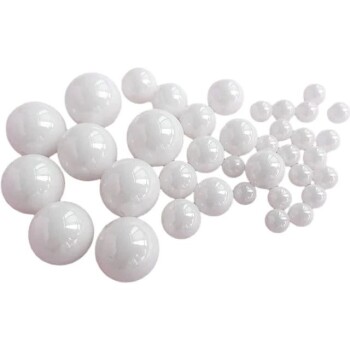
Precision Machined Zirconia Ceramic Ball for Engineering Advanced Fine Ceramics

Precision Machined Zirconia Ceramic Ball for Engineering Advanced Fine Ceramics

zirconia ceramic ball have the characteristics of high strength, high hardness, PPM wear level, high fracture toughness, good wear resistance, and high specific gravity.

Laboratory Planetary Ball Mill Rotating Ball Milling Machine

Laboratory Planetary Ball Mill Rotating Ball Milling Machine

KT-P400E is a desktop multi-directional planetary ball mill with unique grinding and mixing capabilities. It offers continuous and intermittent operation, timing, and overload protection, making it ideal for various applications.

Laboratory Horizontal Planetary Ball Mill Milling Machine

Laboratory Horizontal Planetary Ball Mill Milling Machine

Improve sample uniformity with our Horizontal Planetary Ball Mills. KT-P400H reduces sample deposition and KT-P400E has multi-directional capabilities. Safe, convenient and efficient with overload protection.

Lab Vibration Mill

Lab Vibration Mill

Vibration Mill for Efficient Sample Preparation, Suitable for Crushing and Grinding a Variety of Materials with Analytical Precision. Supports Dry / Wet / Cryogenic Grinding and Vacuum/Inert Gas Protection.

Hybrid High Energy Vibratory Ball Mill for Lab Use

Hybrid High Energy Vibratory Ball Mill for Lab Use

KT-BM400 is used for rapid grinding or mixing of dry, wet and frozen small amount of samples in the laboratory. It can be configured with two 50ml ball mill jars

High Energy Vibratory Laboratory Ball Mill Grinding Mill Single Tank Type

High Energy Vibratory Laboratory Ball Mill Grinding Mill Single Tank Type

High-energy vibration ball mill is a small desktop laboratory grinding instrument.It can be ball-milled or mixed with different particle sizes and materials by dry and wet methods.

Dental Porcelain Zirconia Sintering Ceramic Vacuum Press Furnace

Dental Porcelain Zirconia Sintering Ceramic Vacuum Press Furnace

Get precise dental results with Dental Vacuum Press Furnace. Automatic temperature calibration, low noise tray, and touch screen operation. Order now!

High Energy Vibratory Ball Mill for Lab Use

High Energy Vibratory Ball Mill for Lab Use

The high-energy vibrating ball mill is a high-energy oscillating and impacting multifunctional laboratory ball mill. The table-top type is easy to operate, small in size, comfortable and safe.

1700℃ Muffle Oven Furnace for Laboratory

1700℃ Muffle Oven Furnace for Laboratory

Get superior heat control with our 1700℃ Muffle Furnace. Equipped with intelligent temperature microprocessor, TFT touch screen controller & advanced insulation materials for precise heating up to 1700C. Order now!

Ultra-High Temperature Graphite Vacuum Graphitization Furnace

Ultra-High Temperature Graphite Vacuum Graphitization Furnace

The ultra-high temperature graphitization furnace utilizes medium frequency induction heating in a vacuum or inert gas environment. The induction coil generates an alternating magnetic field, inducing eddy currents in the graphite crucible, which heats up and radiates heat to the workpiece, bringing it to the desired temperature. This furnace is primarily used for graphitization and sintering of carbon materials, carbon fiber materials, and other composite materials.

Graphite Vacuum Furnace Negative Material Graphitization Furnace

Graphite Vacuum Furnace Negative Material Graphitization Furnace

Graphitization furnace for battery production has uniform temperature and low energy consumption. Graphitization furnace for negative electrode materials: an efficient graphitization solution for battery production and advanced functions to enhance battery performance.

Vacuum Hot Press Furnace Machine for Lamination and Heating

Vacuum Hot Press Furnace Machine for Lamination and Heating

Experience clean and precise lamination with Vacuum Lamination Press. Perfect for wafer bonding, thin-film transformations, and LCP lamination. Order now!

Electrode Polishing Material for Electrochemical Experiments

Electrode Polishing Material for Electrochemical Experiments

Looking for a way to polish your electrodes for electrochemical experiments? Our polishing materials are here to help! Follow our easy instructions for best results.


Leave Your Message