The exceptional heat resistance of ceramics stems directly from their powerful atomic bonds. Unlike metals, the atoms in a ceramic are locked into a rigid structure by strong ionic and covalent bonds. It requires an immense amount of thermal energy to vibrate these atoms enough to break these bonds, which is why ceramics maintain their integrity at temperatures that would instantly melt most metals.
The defining characteristic of ceramics is not just their hardness, but the immense thermal energy required to overcome their powerful atomic and molecular attractions. This fundamental structure is the root cause of their exceptional performance at high temperatures.
The Atomic Foundation of Heat Resistance
To understand why ceramics excel in high-heat environments, we must look at their structure on the smallest scale. Their properties are not accidental; they are a direct result of their chemical bonding and atomic arrangement.
Strong Ionic and Covalent Bonds
The primary reason for a ceramic's thermal stability is the nature of its atomic bonds. Most ceramics feature a mix of ionic bonds (where electrons are transferred between atoms) and covalent bonds (where electrons are shared).
These bond types are significantly stronger than the metallic bonds found in metals, which are characterized by a weaker "sea" of shared electrons. This strong, localized bonding holds the atoms firmly in place.
A Rigid Crystal Lattice
These powerful bonds lock the atoms into a highly ordered and rigid three-dimensional structure known as a crystal lattice. This structure is incredibly stable and resists deformation.
For a material to melt or soften, its atoms must be able to move and slide past one another. The rigid lattice of a ceramic severely restricts this movement, requiring a massive input of energy—in the form of heat—to disrupt it.
High Melting Points
The direct consequence of strong bonds and a rigid lattice is an extremely high melting point. While aluminum melts at 660°C (1220°F), many advanced ceramics like silicon carbide don't melt at all under normal pressure; they decompose at temperatures over 2700°C (4900°F).
How This Structure Influences Key Properties
The atomic arrangement doesn't just raise the melting point; it dictates other critical thermal properties that make ceramics so useful for high-temperature applications.
Thermal Stability and Low Conductivity
The tightly held electrons and rigid lattice make it difficult for heat (vibrational energy) to travel through the material. This makes many ceramics, like boron nitride, excellent thermal insulators. They don't just survive the heat; they block it from passing through.
Chemical Inertness
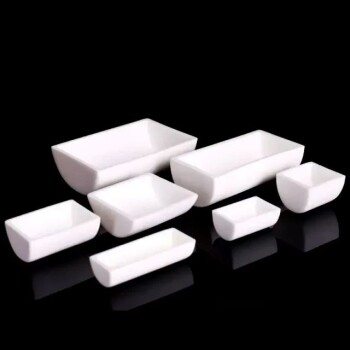
The same strong bonds that provide thermal resistance also make ceramics very stable and unreactive, even when exposed to corrosive chemicals at high temperatures. This is why crucibles used for melting metals are made from ceramics like fused quartz.
Resistance to Thermal Shock
Thermal shock is the cracking that occurs when a material experiences rapid temperature changes, causing it to expand or contract unevenly. Some ceramics, like fused quartz, are engineered to have extremely low thermal expansion, making them highly resistant to this type of failure.
Understanding the Trade-offs
The properties that make ceramics heat-resistant also introduce a critical weakness: brittleness. Understanding this trade-off is essential for proper application.
Inherent Brittleness
The flip side of a rigid atomic lattice is an inability to deform. Unlike a metal that will bend when stressed, a ceramic's lattice cannot easily accommodate stress by allowing atoms to slip past one another.
When the force becomes too great, the bonds don't bend—they fracture catastrophically. This is why a ceramic plate shatters when dropped, while a metal sheet will only dent.
Difficulty in Manufacturing
The high melting points and extreme hardness that make ceramics so durable also make them very difficult to shape and process. They cannot be easily cast, melted, or machined like metals, which contributes to their higher manufacturing cost.
Making the Right Choice for Your Goal
Selecting the correct ceramic depends entirely on the specific demands of the high-temperature environment.
- If your primary focus is containing molten materials: You need high thermal stability and chemical inertness, making materials like fused quartz ideal for crucibles.
- If your primary focus is thermal insulation: You need a material with low thermal conductivity, pointing to ceramics like boron nitride.
- If your primary focus is structural integrity at high heat: You need durability and strength, which is why a robust material like silicon carbide is used in demanding industrial and semiconductor applications.
Ultimately, understanding the atomic-level strengths and weaknesses of ceramics allows for their precise and effective application in the most demanding thermal environments.
Summary Table:
| Key Property | Why It Matters for Heat Resistance |
|---|---|
| Strong Ionic/Covalent Bonds | Requires immense thermal energy to break, leading to high melting points. |
| Rigid Crystal Lattice | Restricts atomic movement, preventing deformation and melting. |
| Low Thermal Conductivity | Acts as an effective thermal insulator, blocking heat transfer. |
| Chemical Inertness | Resists corrosion and reaction with molten materials or chemicals. |
Need a high-performance ceramic solution for your lab? The exceptional thermal properties of ceramics are essential for demanding applications like heat treatment, material synthesis, and analysis. KINTEK specializes in premium lab equipment and consumables, including crucibles and insulation made from advanced ceramics like fused quartz and boron nitride. Our products are designed to deliver superior performance, reliability, and safety in your high-temperature processes. Contact us today to find the perfect ceramic solution for your specific laboratory needs.
Visual Guide

Related Products
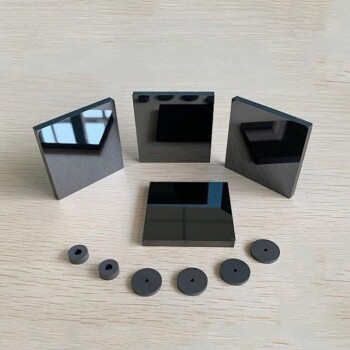
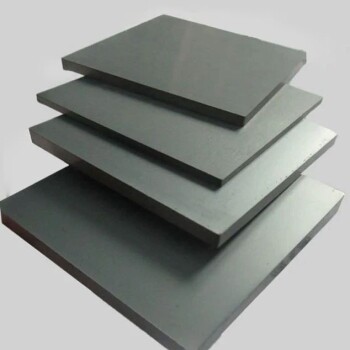
- Silicon Carbide (SIC) Ceramic Sheet Wear-Resistant Engineering Advanced Fine Ceramics
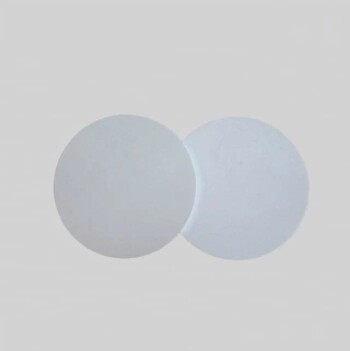
- Boron Nitride (BN) Ceramic Plate
- Silicon Carbide (SIC) Ceramic Plate for Engineering Advanced Fine Ceramics
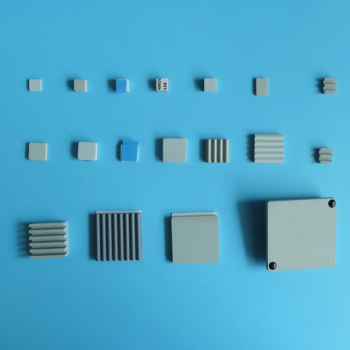
- Silicon Carbide (SIC) Ceramic Sheet Flat Corrugated Heat Sink for Engineering Advanced Fine Ceramics
- Custom-Made Alumina Zirconia Special-Shaped Ceramic Plates for Engineering Advanced Fine Ceramics Processing
People Also Ask
- What are the common uses of silicon carbide? Unlock Extreme Performance in Harsh Environments
- Why is silicon carbide more efficient? Unlock Higher Power Density with SiC's Superior Material Properties
- What are the properties and applications of silicon carbide ceramics? Solve Extreme Engineering Challenges
- What are the applications of silicon carbide? From Abrasives to High-Tech Semiconductors
- What are the uses of silicon carbide ceramics in different industries? Master Extreme Performance in Aerospace, Semiconductors & More