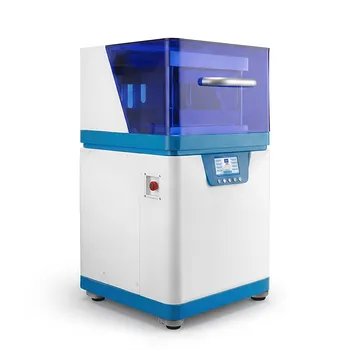
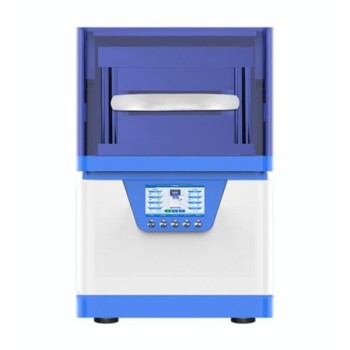
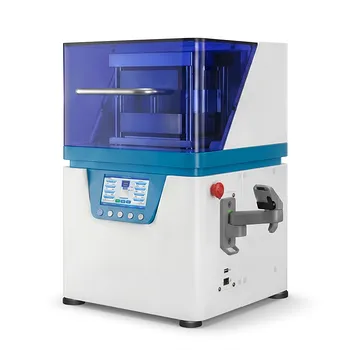
Isostatic pressing reduces the sintering temperature of LSGM green bodies by creating an exceptionally dense and uniform particle arrangement. By applying equal pressure from all directions, this method minimizes the distance atoms must travel to fill gaps between particles, allowing the material to reach full densification with 50 to 100 °C less heat than traditional pressing methods.
Isostatic pressing optimizes the physical contact between powder particles, which lowers the thermal energy threshold required for sintering. This process ensures high density and structural integrity while protecting the material from the risks associated with extreme heat.
The Mechanics of Isostatic Pressing
Eliminating Density Gradients
Standard hydraulic pressing often creates internal pressure variations, where some areas of the powder are packed tighter than others. An isostatic press uses a liquid medium to apply uniform pressure (up to 400 MPa) from every direction simultaneously. This eliminates density gradients, ensuring the LSGM green body has a consistent internal structure.
Increasing Initial Green Density
The high pressure applied during the molding stage forces LSGM particles into the tightest possible packing arrangement. By maximizing the "green density" (the density before firing), the amount of pore space that needs to be closed during sintering is significantly reduced. This high starting point is critical for achieving a final ceramic density of 99.6%.
Why Physical Packing Lowers Thermal Requirements
Reducing Atomic Diffusion Distance
Sintering is essentially a process of atomic diffusion where atoms move to bridge the gaps between particles. Because isostatic pressing brings the particles into closer physical proximity, the distance atoms must migrate is drastically shortened. This allows the densification process to complete at a lower temperature of 1300 °C.
Optimizing Surface Contact Area
The uniform compression increases the number of contact points between LSGM powder particles. These contact points act as pathways for material transport during the heating phase. More contact points mean the sintering kinetics are accelerated, enabling the material to fuse efficiently without requiring the higher energy levels of standard firing cycles.
Understanding the Trade-offs and Pitfalls
Process Complexity and Tooling
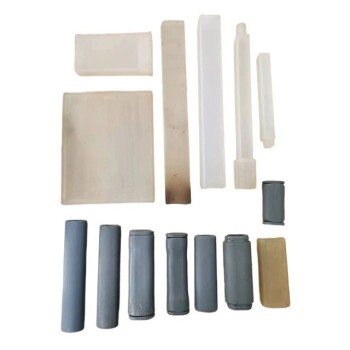
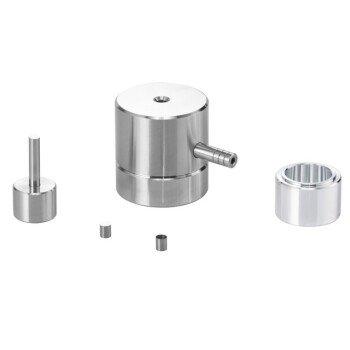
Isostatic pressing requires the powder to be sealed in flexible molds, such as rubber or silicone, which are then submerged in a high-pressure fluid. This is more time-consuming than high-speed mechanical pressing and requires specialized equipment. If the mold is not perfectly sealed, the liquid medium can contaminate the LSGM powder, ruining the batch.
Geometric Limitations
While isostatic pressing is excellent for achieving uniform density, it is less precise for forming complex, sharp-edged geometries compared to rigid-die pressing. The flexible nature of the molds means that near-net-shaping is more difficult to control. Post-sintering machining may be required if high dimensional precision is necessary for the final sensor or substrate.
How to Apply This to Your Project
Making the Right Choice for Your Goal
To determine if isostatic pressing is the right pre-treatment for your Sr/Mg-doped lanthanum gallate components, consider your primary production objective:
- If your primary focus is maximum electrolyte density: Use an isostatic press at 200–400 MPa to ensure a density of 99.6% and prevent gas leakage in fuel cell applications.
- If your primary focus is preventing structural failure: Prioritize isostatic pressing to eliminate the internal voids and micro-cracks that typically lead to warping or shattering during high-temperature sintering.
- If your primary focus is energy efficiency: Leverage the 50–100 °C reduction in sintering temperature to lower furnace power consumption and extend the lifespan of your heating elements.
By utilizing isostatic pressing, you transform the physical state of the green body to make the subsequent chemical bonding process as efficient as possible.
Summary Table:
| Feature | Isostatic Pressing | Standard Hydraulic Pressing |
|---|---|---|
| Pressure Distribution | Uniform (Omnidirectional) | Non-uniform (Uniaxial/Biaxial) |
| Density Gradients | Eliminated | Common (Internal variations) |
| Green Density | Exceptionally High | Lower / Variable |
| Sintering Temp. | 50 °C to 100 °C Reduction | Standard high-temp firing |
| Final Density | Up to 99.6% | Typically Lower |
| Atomic Diffusion | Accelerated (Short distance) | Standard (Longer distance) |
Optimize Your LSGM Processing with KINTEK
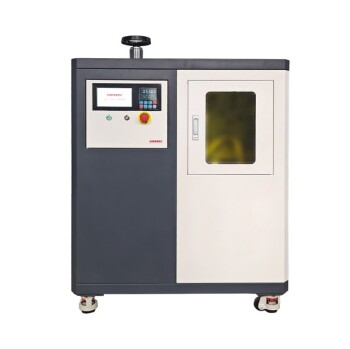
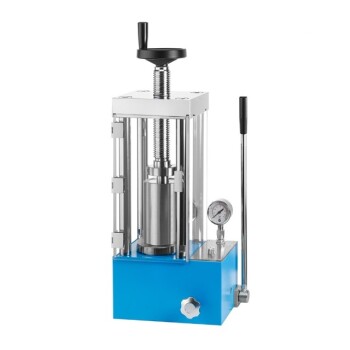
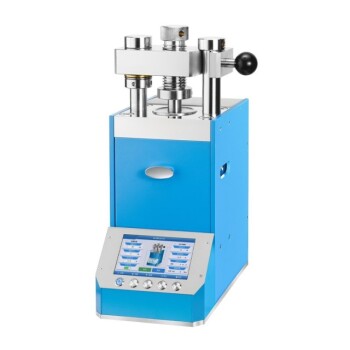
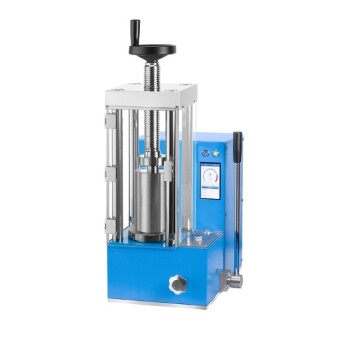
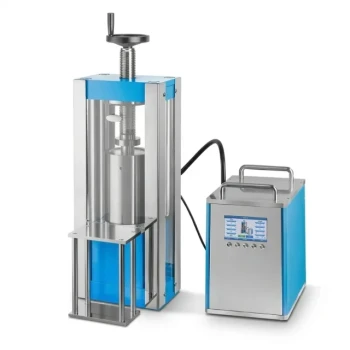
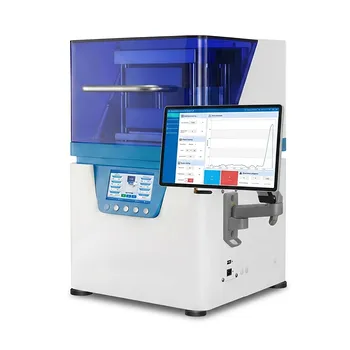
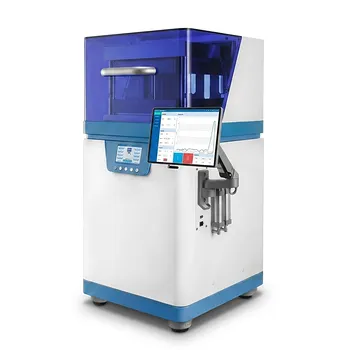
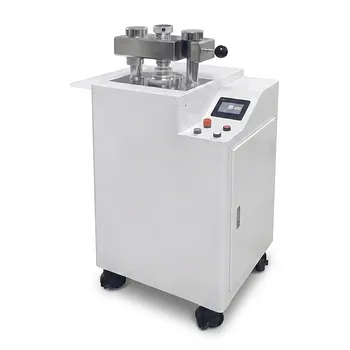
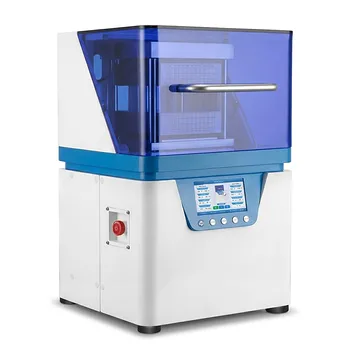
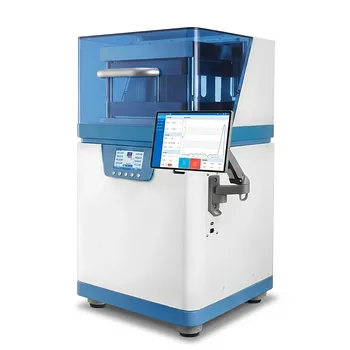
Achieve superior material density and energy efficiency with KINTEK’s precision-engineered isostatic and hydraulic presses (pellet, hot, isostatic). Whether you are working with Sr/Mg-doped lanthanum gallate or advanced fuel cell ceramics, our equipment is designed to minimize sintering temperatures, prevent structural defects, and ensure a final density of up to 99.6%.
Beyond pressing solutions, KINTEK offers a complete laboratory ecosystem, including:
- High-Temperature Furnaces: Muffle, tube, vacuum, and atmosphere furnaces for precise thermal control.
- Material Preparation: Advanced crushing, milling, and sieving systems.
- Research Consumables: High-quality ceramics, crucibles, and PTFE products.
- Thermal Solutions: ULT freezers, freeze dryers, and cooling traps.
Contact our experts today to discover how KINTEK can enhance your laboratory efficiency and provide the reliability your research demands!
References
- Egor V. Gordeev, Н. М. Поротникова. Approaches for the preparation of dense ceramics and sintering aids for Sr/Mg doped lanthanum gallate: focus review. DOI: 10.15826/elmattech.2023.2.022
This article is also based on technical information from Kintek Solution Knowledge Base .
Related Products
- Warm Isostatic Press for Solid State Battery Research
- Manual Cold Isostatic Pressing Machine CIP Pellet Press
- Automatic Lab Cold Isostatic Press CIP Machine Cold Isostatic Pressing
- Electric Lab Cold Isostatic Press CIP Machine for Cold Isostatic Pressing
- Electric Split Lab Cold Isostatic Press CIP Machine for Cold Isostatic Pressing
People Also Ask
- What is the temperature of a warm isostatic press? Achieve Optimal Densification for Your Materials
- What is the function of a Warm Isostatic Press (WIP) in all-solid-state pouch cells? Optimize Battery Density
- Why are Warm Isostatic Presses (WIP) necessary for solid-state batteries? Achieve Atomic-Level Contact
- What advantages does a warm isostatic press offer over a traditional uniaxial press for Li6PS5Cl electrolyte sheets?
- How do warm isostatic presses improve dry electrode performance? Enhance ASSB Conductivity with Heat & Pressure