Warm Isostatic Pressing (WIP) is a specialized densification technique used to fuse the internal layers of all-solid-state batteries. It applies high uniform fluid pressure (typically around 500 MPa) and controlled heat (around 80°C) simultaneously to the pouch cell. This process forces the solid-state electrolyte and electrode current collectors into intimate physical contact, effectively eliminating the microscopic gaps that impede battery performance.
The core challenge in solid-state batteries is that solid electrolytes cannot "wet" surfaces like liquids, leading to poor contact and high resistance. WIP solves this by applying isotropic densification—pressure from every direction—to create a unified, high-density structure with minimal interfacial resistance and extended cycle life.
The Mechanics of the WIP Process
Simultaneous Heat and Pressure
The WIP process involves placing the pouch cell into a sealed cylinder filled with a liquid medium. This medium is heated and pressurized via a booster source.
Unlike cold pressing, the addition of heat softens the materials slightly, allowing them to deform plastically. This ensures that the pressure is more effective at compacting the materials without damaging them.
Isotropic vs. Uniaxial Application
A standard press applies force from only one direction (uniaxial), which often leads to density gradients and uneven layers.
In contrast, WIP applies isostatic pressure, meaning the force is exerted equally from all sides. This results in superior uniformity and accuracy across the entire cell structure.
Critical Functions in Cell Fabrication
Elimination of Micro-Voids
The primary function of WIP is the removal of micro-voids—tiny air gaps trapped between the battery layers.
By collapsing these voids, the process significantly increases the density of the component layers. This is essential for ensuring the structural integrity of the solid electrolyte.
Reduction of Interfacial Resistance
For a battery to function, ions must move smoothly between the electrodes and the electrolyte.
WIP presses these layers together so tightly that interfacial contact resistance is drastically reduced. This direct physical contact facilitates smooth ion movement, which is directly responsible for improved rate performance.
Promoting Uniform Lithium Deposition
The uniformity achieved through WIP does more than just hold the battery together; it impacts chemical performance.
A uniform density profile promotes uniform lithium deposition during charging. This helps prevent the localized stress points that can lead to accelerated component failure.
Understanding the Trade-offs
Process Complexity vs. Component Quality
While standard pressing is simpler, it creates non-uniform density that can lead to early battery failure. WIP requires more complex equipment—heated cylinders and fluid boosters—but is often necessary to achieve a viable product.
Material Dependencies
WIP is particularly useful when powders do not form well at room temperature. However, to achieve maximum strength, the process often requires the addition of a binder with high plasticizing capacity to the powder before pressing.
Making the Right Choice for Your Manufacturing
To optimize the final packaging and molding of your solid-state cells, align the process with your specific performance targets:
- If your primary focus is Cycle Life: Prioritize WIP parameters that maximize density, as reduced contact resistance is the key to longevity.
- If your primary focus is Structural Integrity: Utilize WIP to replace uniaxial pressing, ensuring distinct elimination of density gradients that cause mechanical failure.
By treating the cell with uniform heat and pressure, you convert a stack of loose layers into a cohesive, high-performance energy storage unit.
Summary Table:
| Feature | Uniaxial Pressing | Warm Isostatic Pressing (WIP) |
|---|---|---|
| Pressure Direction | Single direction (Vertical) | Isostatic (Uniform from all sides) |
| Temperature | Room temperature | Controlled heat (approx. 80°C) |
| Density Profile | Potential density gradients | Uniform, high-density structure |
| Interfacial Contact | Moderate contact | Intimate, high-performance contact |
| Application | Basic powder compaction | Advanced solid-state cell densification |
Elevate Your Solid-State Battery Research with KINTEK
Precision is critical in the development of all-solid-state batteries. KINTEK specializes in advanced laboratory equipment, providing the high-performance isostatic presses and hydraulic systems required to achieve the extreme pressures and thermal precision necessary for cell densification.
From high-temperature furnaces and crushing systems to specialized isostatic presses and PTFE consumables, our portfolio is designed to eliminate interfacial resistance and maximize cycle life for your energy storage projects.
Ready to transform your battery fabrication process? Contact our technical experts today to find the perfect pressing and thermal solution for your laboratory.
Related Products
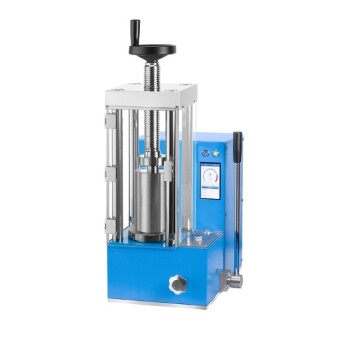
- Warm Isostatic Press for Solid State Battery Research
- Electric Lab Cold Isostatic Press CIP Machine for Cold Isostatic Pressing
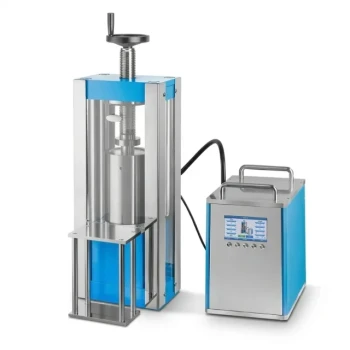
- Electric Split Lab Cold Isostatic Press CIP Machine for Cold Isostatic Pressing
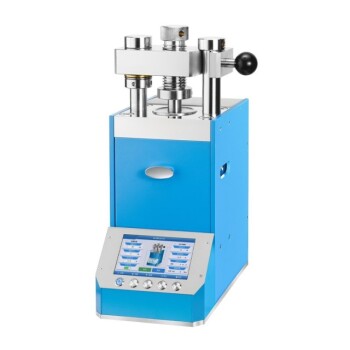
- Automatic Lab Cold Isostatic Press CIP Machine Cold Isostatic Pressing
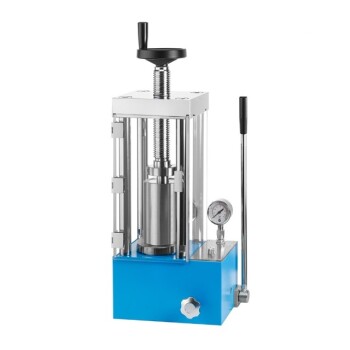
- Manual Cold Isostatic Pressing Machine CIP Pellet Press
People Also Ask
- What is the temperature of a warm isostatic press? Achieve Optimal Densification for Your Materials
- Why are Warm Isostatic Presses (WIP) necessary for solid-state batteries? Achieve Atomic-Level Contact
- What advantages does a warm isostatic press offer over a traditional uniaxial press for Li6PS5Cl electrolyte sheets?
- How do warm isostatic presses improve dry electrode performance? Enhance ASSB Conductivity with Heat & Pressure
- What is an isostatic press used for? Achieve Uniform Density & Eliminate Defects