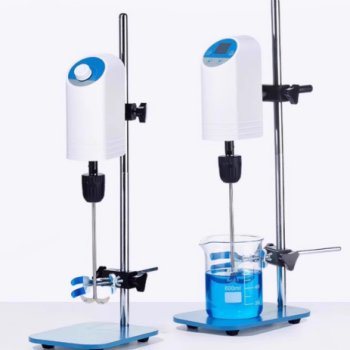
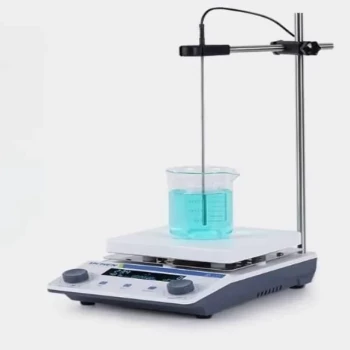
A benchtop mechanical stirrer is the engine of efficiency in electrochemical regeneration, transforming a stagnant bath into a highly active reaction environment. It provides the continuous dynamic disturbance necessary to maintain high process rates, ensuring that the reduction of metals occurs uniformly and without interruption.
Core Takeaway The mechanical stirrer solves the physical limitations of electrolysis by eliminating concentration gradients and thermal hot spots. By forcing fresh ions to the cathode and dissipating heat, it shifts the process from being diffusion-limited to being reaction-efficient.
Overcoming Concentration Polarization
The primary barrier to efficient electrolysis is not chemical, but physical. As the reaction proceeds, the environment immediately surrounding the cathode changes drastically compared to the rest of the tank.
Breaking the Depletion Layer
When current flows, metal ions at the cathode surface are consumed instantly. In a stagnant solution, this creates a "depletion layer" where few ions remain.
Concentration polarization occurs when this layer creates high resistance, stalling the reaction. The mechanical stirrer disrupts this layer, physically forcing fresh electrolyte against the cathode surface.
Accelerating Ion Migration
Passive diffusion is often too slow for industrial regeneration needs.
The stirrer actively facilitates the migration of target metal ions, such as copper and nickel, from the bulk solution to the electrode. This active transport is the primary driver for significantly enhanced electrochemical reduction efficiency.
Ensuring Thermal and Chemical Stability
Electrochemical processes generate energy, often in the form of resistive heating. Managing this energy is critical for process safety and quality.
Preventing Local Overheating
Without agitation, heat accumulates in pockets around the electrodes.
These "hot spots" can damage the electrolyte or the equipment. The stirrer acts as a thermal regulator, distributing this generated heat throughout the bath to maintain a constant, uniform temperature.
Avoiding Chemical Instability
Temperature fluctuations change how chemicals react.
Local overheating can trigger unwanted side reactions or chemical instability, compromising the purity of the recovered metal. By ensuring thermal homogeneity, the stirrer guarantees that the intended reduction reaction remains the dominant process.
Operational Trade-offs
While the benefits of stirring are clear, understanding the operational context is vital for proper equipment selection.
Dynamic Disturbance vs. Static Diffusion
Reliance on static diffusion (no stirring) saves energy but creates a bottleneck.
The trade-off for introducing a mechanical stirrer is the need for additional equipment and power. However, this is negligible compared to the loss of throughput caused by relying solely on natural diffusion, which cannot sustain industrial recovery rates.
Uniformity vs. Stratification
In complex electrolytes, components can separate by density over time.
A lack of stirring leads to stratification, where the top and bottom of the tank have different chemical compositions. Continuous mixing ensures that the electrolyte components remain uniformly distributed, guaranteeing consistent plating quality across the entire cathode surface.
Optimizing Your Regeneration Process
The mechanical stirrer is not just an accessory; it is a control variable.
- If your primary focus is Speed and Efficiency: Ensure the stirrer speed is sufficient to completely eliminate concentration polarization, maximizing the migration rate of copper and nickel ions.
- If your primary focus is Quality and Stability: Prioritize continuous circulation to prevent local overheating, ensuring the bath temperature remains uniform to avoid chemical instability.
Mastering the hydrodynamics of your electrolyte bath is the most effective way to guarantee consistent, high-yield metal recovery.
Summary Table:
| Feature | Impact of Stirring | Impact of Stagnant Solution |
|---|---|---|
| Ion Transport | Active migration; breaks depletion layer | Slow passive diffusion; high resistance |
| Temperature | Uniform thermal distribution | Localized overheating & hotspots |
| Chemical Purity | High; prevents unwanted side reactions | Low; risk of stratification & instability |
| Process Rate | High-speed, reaction-efficient | Stalled; diffusion-limited bottleneck |
| Output Quality | Consistent plating across cathode | Irregular and inconsistent recovery |
Optimize Your Electrochemical Processes with KINTEK
Maximize your metal recovery rates and ensure chemical stability with KINTEK’s precision laboratory solutions. KINTEK specializes in high-performance laboratory equipment, providing the essential tools needed for advanced electrochemical research and industrial electrolyte regeneration.
Whether you require high-torque benchtop mechanical stirrers, specialized electrolytic cells and electrodes, or precision high-temperature furnaces, our comprehensive portfolio is designed to meet the rigorous demands of battery research and chemical processing. We also offer a wide range of cooling solutions, hydraulic presses, and essential consumables like PTFE and ceramics to streamline your workflow.
Ready to upgrade your lab's efficiency and achieve superior results? Contact us today to find the perfect equipment for your application!
References
- Paweł Lochyński, Maciej Karczewski. Electrochemical Reduction of Industrial Baths Used for Electropolishing of Stainless Steel. DOI: 10.1155/2018/8197202
This article is also based on technical information from Kintek Solution Knowledge Base .
Related Products
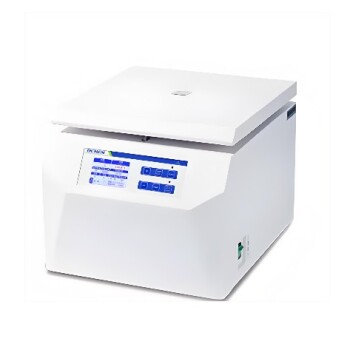
- Benchtop High Speed Small Lab Centrifuge for Serum Separation and Low Temperature Dehydration
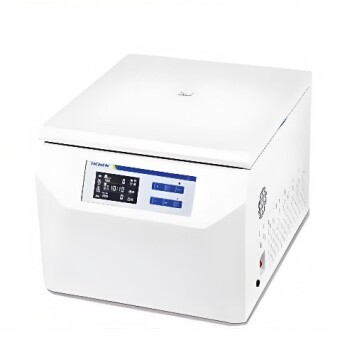
- Laboratory Benchtop High Speed Small Centrifuge for Low Temp Serum Separation Dehydration Research
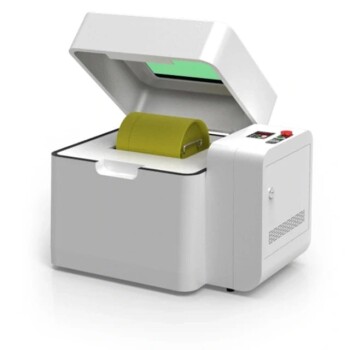
- Laboratory Single Horizontal Jar Mill
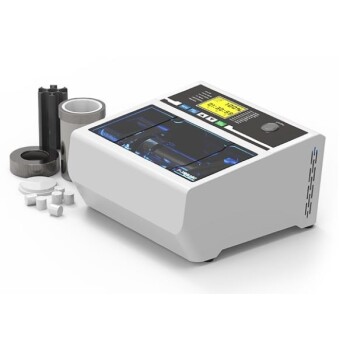
- Laboratory Micro Horizontal Jar Mill for Precision Sample Preparation in Research and Analysis
- High Performance Laboratory Stirrers for Diverse Applications
People Also Ask
- How is a benchtop laboratory centrifuge used in the desorption and regeneration of composite adsorbent beads?
- What is the primary function of a laboratory centrifuge? Master PAAMP-b-PVK Block Copolymer Purification
- What role does a Laboratory Centrifuge play in the production of succinic acid? Critical Solid-Liquid Separation Guide
- What are the advantages and disadvantages of a centrifuge? Weighing Speed Against Cost and Risk
- How does a centrifuge work and for what purpose? Unlock the Power of Rapid Sample Separation