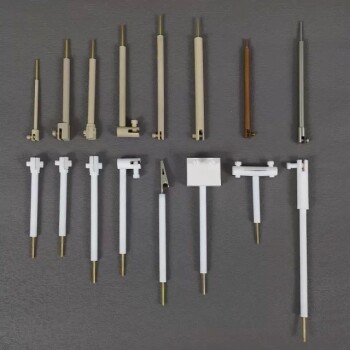
A double-junction reference electrode is the critical defense mechanism required when performing electrochemical deposition in non-aqueous phases like dichloromethane. By employing an outer salt bridge, typically composed of 3.5 M KCl agar, you create a necessary physical barrier that blocks the reference electrode's internal electrolyte from leaking into your reaction vessel. This isolation prevents the introduction of contaminants that would otherwise destabilize the system.
The double-junction design serves a dual purpose: it protects the reaction chemistry from chloride ion contamination and ensures the structural integrity of emulsion nanodroplets. This separation is the only way to guarantee stable, reproducible potential measurements during long-duration electrosynthesis.
The Problem: Contamination and Instability
The Risk of Electrolyte Leakage
Standard single-junction reference electrodes contain an internal electrolyte solution essential for their operation. However, in direct contact with a sample, this internal fluid inevitably leaks into the reaction mixture.
In many electrochemical contexts, this leakage is negligible. However, in non-aqueous systems involving dichloromethane, the introduction of foreign ions is detrimental.
Interference from Chloride Ions
The primary offender in this leakage process is often the chloride ion (Cl⁻).
If these ions escape the electrode, they act as impurities within the continuous phase. This chemical interference disrupts the delicate balance required for precise electrochemical deposition.
Destabilization of Nanodroplets
The stakes are highest when working with emulsion systems containing nanodroplets.
The stability of these nanodroplets is highly sensitive to ionic strength and chemical composition. Electrolyte leakage compromises this stability, potentially causing the droplets to coalesce or degrade, which ruins the deposition process.
The Solution: The Double-Junction Advantage
The Salt Bridge Barrier
The defining feature of the double-junction electrode is the additional salt bridge.
Acting as a buffer zone, materials like 3.5 M KCl agar physically separate the internal reference element from the sample. This allows for electrical continuity while strictly limiting mass transfer between the two liquids.
Ensuring Long-Term Reproducibility
For electrosynthesis experiments that run over long durations, consistent conditions are mandatory.
By preventing the slow seep of contaminants, the double-junction setup maintains a constant chemical environment. This ensures that the electrode potential measurements you see at hour one are comparable to those at hour ten.
Operational Considerations and Trade-offs
Complexity of Setup
While necessary, the double-junction configuration introduces a slight increase in setup complexity compared to standard electrodes.
You must ensure the outer bridge solution (the agar) is properly prepared and free of air bubbles to maintain connectivity.
Bridge Maintenance
The integrity of the measurement depends entirely on the state of the salt bridge.
Users must monitor the agar or bridge solution to ensure it does not dry out or degrade over time, as a compromised bridge results in open circuits or erratic potential readings.
Making the Right Choice for Your Goal
When designing your electrochemical cell for non-aqueous solvents, your hardware choice dictates your data quality.
- If your primary focus is nanodroplet stability: You must use a double-junction electrode to prevent chloride ions from chemically attacking or aggregating your emulsion.
- If your primary focus is long-term data consistency: Rely on the double-junction design to eliminate potential drift caused by gradual electrolyte contamination of the solvent.
Use the physical isolation of a double-junction system to turn a volatile, sensitive reaction into a controlled, reproducible process.
Summary Table:
| Feature | Single-Junction Electrode | Double-Junction Electrode |
|---|---|---|
| Design | Single electrolyte interface | Secondary salt bridge (e.g., KCl agar) |
| Leakage Risk | High; electrolyte enters sample | Low; buffer zone isolates sample |
| Contamination | Frequent (Chloride ions) | Minimized; protects reaction purity |
| Sample Stability | Risk of nanodroplet coalescence | Maintains emulsion integrity |
| Best Use Case | General aqueous solutions | Non-aqueous (DCM), sensitive emulsions |
Elevate Your Electrochemical Precision with KINTEK
Precision in non-aqueous electrochemistry demands equipment that eliminates variables. KINTEK specializes in high-performance laboratory solutions designed for the most sensitive research environments. Whether you are performing complex electrosynthesis or battery research, our range of electrolytic cells, electrodes, and high-pressure reactors ensures your systems remain stable and contamination-free.
From advanced crushing and milling systems to precision hydraulic presses and high-temperature furnaces, KINTEK provides the tools necessary for groundbreaking material science. Don't let electrolyte leakage compromise your nanodroplet stability or data reproducibility.
Contact KINTEK today to find the perfect electrochemical hardware for your lab.
Contact Us for Expert Solutions
References
- Matthew W. Glasscott, Jeffrey E. Dick. Electrosynthesis of high-entropy metallic glass nanoparticles for designer, multi-functional electrocatalysis. DOI: 10.1038/s41467-019-10303-z
This article is also based on technical information from Kintek Solution Knowledge Base .
Related Products
- Reference Electrode Calomel Silver Chloride Mercury Sulfate for Laboratory Use
- Copper Sulfate Reference Electrode for Laboratory Use
- Metal Disc Electrode Electrochemical Electrode
- Laboratory CVD Boron Doped Diamond Materials
- Graphite Disc Rod and Sheet Electrode Electrochemical Graphite Electrode
People Also Ask
- What is the function of a reference electrode? Master Precision in Three-Electrode Reactor Reconstruction
- What is the recommended maintenance for the filling solution of a reference electrode? A Guide to Stable & Accurate Readings
- Which electrode is used as a ground reference? Master the Key to Accurate Electrochemical Measurements
- What is the reference electrode in potentiometry? The Key to Stable & Accurate Measurements
- Which electrode is used as a reference? A Guide to Accurate Electrochemical Measurements