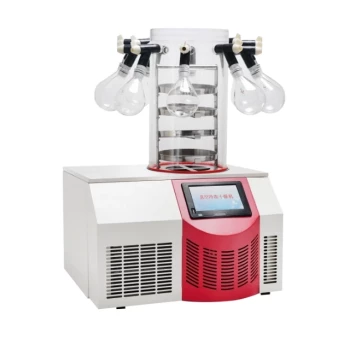
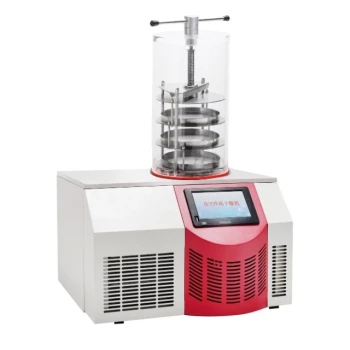
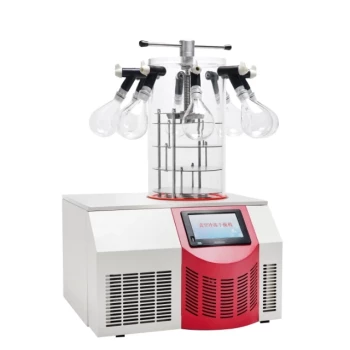
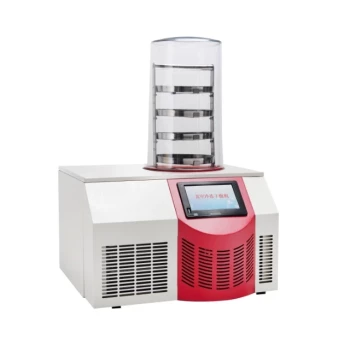
Preserving the pore structure is the defining challenge in aerogel fabrication. A freeze dryer or supercritical CO2 drying equipment is strictly necessary to remove solvents without exerting destructive capillary pressure on the material's framework. Unlike standard heating methods, these specialized tools ensure the critical three-dimensional hierarchical structure remains intact, guaranteeing the high surface area and porosity required for high-performance applications.
Conventional drying causes delicate nanostructures to implode under the force of surface tension. Specialized drying methods bypass the liquid-gas transition, eliminating capillary forces and locking in the material's original high-porosity architecture.
The Mechanism of Structural Preservation
The Enemy: Capillary Pressure
In conventional atmospheric heating and drying, the solvent evaporates from the liquid phase to the gas phase. This transition generates significant surface tension at the pore walls.
In the delicate lattice of a Metal-Organic Framework (MOF) aerogel, this force is destructive. It creates capillary pressure strong enough to pull the pore walls inward, causing the entire structure to shrink and collapse.
The Solution: Eliminating Surface Tension
To prevent this collapse, you must remove the solvent without allowing a distinct liquid-gas interface to form within the pores.
Freeze dryers achieve this through sublimation, where the solvent freezes and transitions directly from solid to gas. Supercritical CO2 equipment achieves this by taking the solvent to a supercritical state where liquid and gas phases are indistinguishable. Both methods effectively eliminate capillary pressure.
Impact on Material Performance
Maximizing Specific Surface Area
The primary value of an MOF aerogel lies in its massive surface area. If the structure collapses during drying, the internal walls bond to each other, drastically reducing the available surface area.
Specialized drying preserves the hierarchical pore structure, keeping the internal pathways open and accessible.
Ensuring High Porosity
Aerogels are defined by their low density and high void volume. Conventional drying results in a dense, shrunken xerogel rather than a true aerogel.
By using freeze drying or supercritical CO2, you maintain high porosity, ensuring the material retains the "airy" characteristics essential for its function.
Maintaining Mechanical Strength
Structural integrity is not just about porosity; it is about stability. A collapsed structure often suffers from irregular stress points.
Preserving the original three-dimensional framework ensures the resulting composite maintains excellent mechanical strength and stability, rather than becoming brittle or deformed.
Understanding the Trade-offs
Process Complexity vs. Material Quality
While conventional atmospheric drying is simple and requires minimal equipment, it is fundamentally incompatible with high-performance aerogel production.
The trade-off for achieving high surface area and porosity is the absolute requirement for specialized, complex equipment. You cannot achieve "high-performance" metrics using standard thermal evaporation techniques; the physics of capillary action will invariably ruin the sample.
Making the Right Choice for Your Goal
To ensure your MOF composite aerogel meets performance standards, apply the following guidelines:
- If your primary focus is High Specific Surface Area: You must use specialized drying to prevent pore collapse and keep internal surface sites accessible.
- If your primary focus is Mechanical Integrity: You should avoid atmospheric heating to eliminate the capillary stresses that deform and weaken the 3D framework.
Ultimately, the choice of drying method dictates whether you produce a high-performance aerogel or a collapsed, low-value solid.
Summary Table:
| Feature | Atmospheric Drying | Freeze Drying (Sublimation) | Supercritical CO2 Drying |
|---|---|---|---|
| Phase Transition | Liquid to Gas | Solid to Gas | Supercritical Fluid |
| Capillary Pressure | High (Destructive) | Negligible | Zero |
| Pore Structure | Collapsed (Xerogel) | Preserved (Aerogel) | Preserved (Aerogel) |
| Surface Area | Low | High | Very High |
| Final Quality | Brittle/Dense | High-Performance | Superior Performance |
Elevate Your Material Research with KINTEK Precision
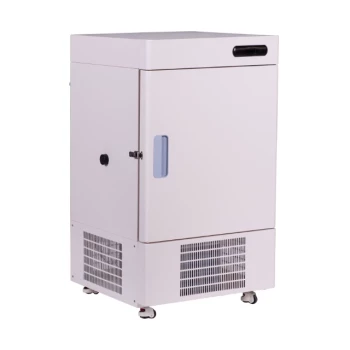
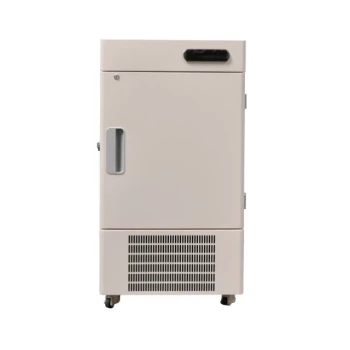
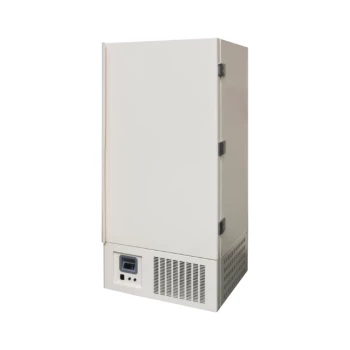
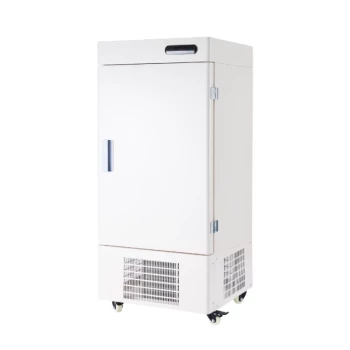
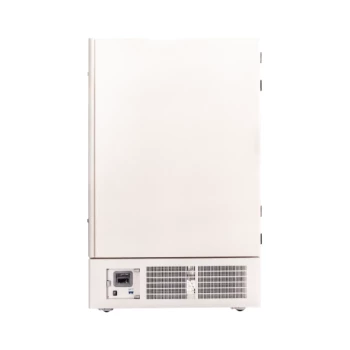
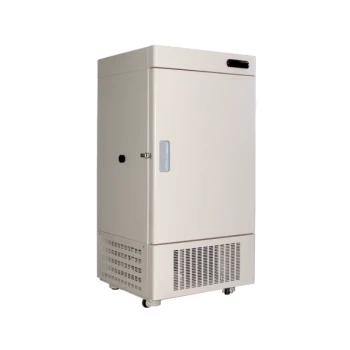
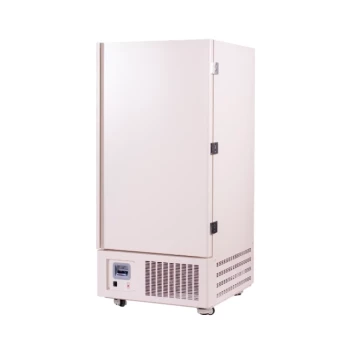
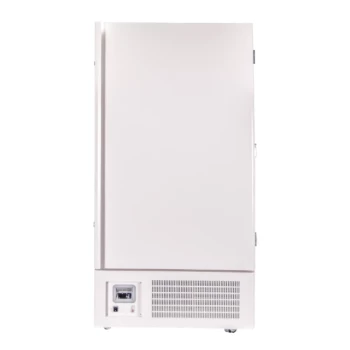
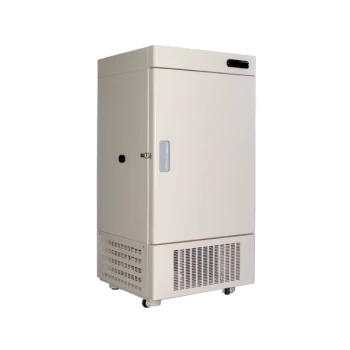
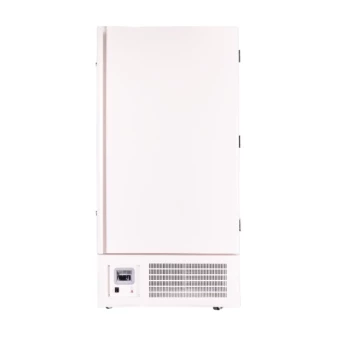
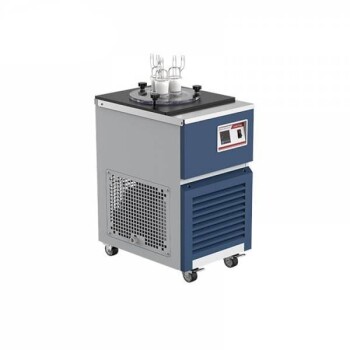
Don't let capillary forces compromise your breakthrough. KINTEK specializes in advanced laboratory solutions designed to preserve the integrity of your most delicate nanostructures. Whether you are developing high-performance MOF aerogels or advanced composites, our high-quality freeze dryers, cooling solutions (ULT freezers, freeze dryers), and crushing and milling systems ensure your materials maintain their critical three-dimensional architecture.
From high-temperature furnaces and vacuum systems to specialized PTFE products and ceramics, KINTEK provides the essential tools for researchers who demand excellence.
Ready to achieve superior surface area and mechanical strength? Contact our laboratory specialists today to find the perfect equipment for your specific application.
References
- Shuxian Tang, Gang Wei. Recent Advances in Metal–Organic Framework (MOF)-Based Composites for Organic Effluent Remediation. DOI: 10.3390/ma17112660
This article is also based on technical information from Kintek Solution Knowledge Base .
Related Products
- High Performance Laboratory Freeze Dryer
- High Performance Laboratory Freeze Dryer for Research and Development
- Benchtop Laboratory Freeze Dryer for Lab Use
- Benchtop Laboratory Vacuum Freeze Dryer
- 108L Vertical Ultra Low Temperature ULT Freezer
People Also Ask
- What role does a laboratory freeze dryer play in the synthesis of graphene-based electrocatalysts? Preserve 3D Structures
- What are the technical advantages of using a laboratory freeze dryer for porous carbon precursors? Preserve 3D Networks
- What types of liquid samples can be processed using a laboratory freeze dryer? Preserve Your Sensitive Materials
- How do laboratory freeze dryers support scientific research? Preserve Sample Integrity for Reproducible Results
- Why is a laboratory freeze dryer preferred over traditional heating? Preserve Biochar Structure & Maximize Porosity