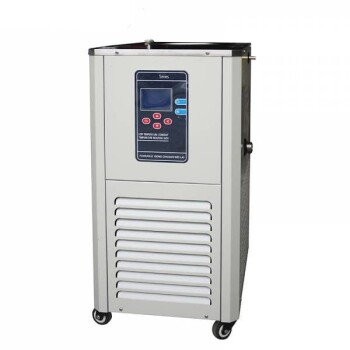
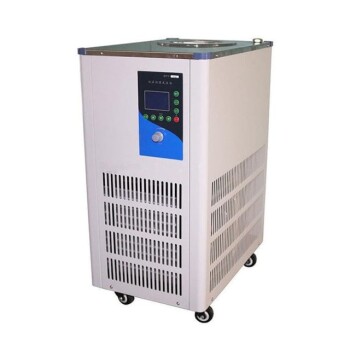
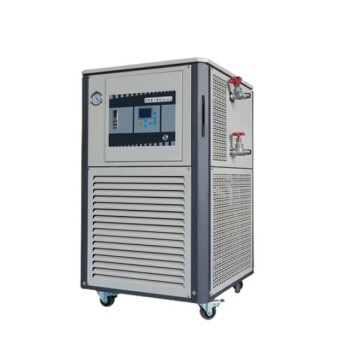
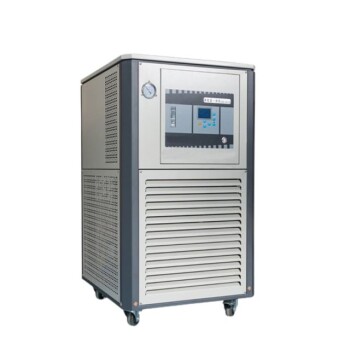
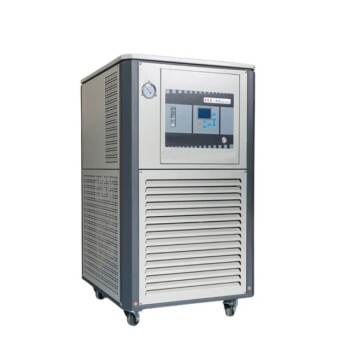
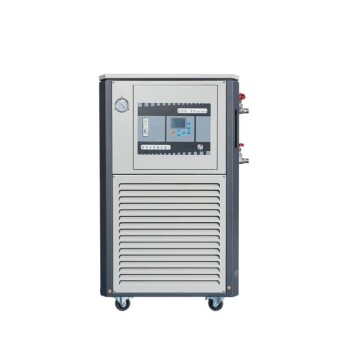
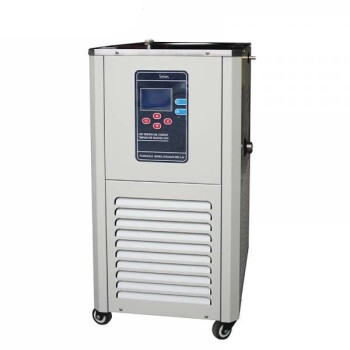
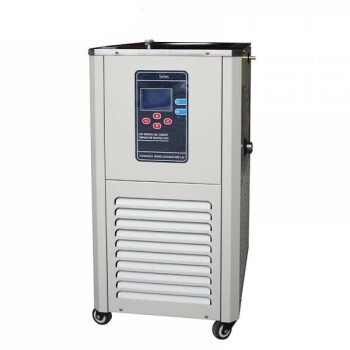
A high-precision cooling circulation system is mandatory for Plasma Electrolytic Oxidation (PEO) because the process generates intense exothermic heat that must be continuously dissipated. Without this thermal regulation, the extreme temperatures generated by micro-discharges would cause the electrolyte to decompose and evaporate, leading to structural defects in the ceramic coating. The system ensures the electrolyte remains at a stable, low temperature (typically between 5°C and 25°C) to guarantee uniform layer growth and prevent thermal damage.
Core Takeaway The PEO process relies on managing the significant Joule heat generated by localized temperatures exceeding 4000K. A precision cooling system is the primary defense against electrolyte deterioration and coating ablation, ensuring that the final oxide layer is uniform, crack-free, and reproducible.
The Thermal Dynamics of PEO
Managing Extreme Micro-Discharge Temperatures
The PEO process is defined by high-voltage micro-discharges on the metal surface. These localized zones experience instantaneous temperatures that can exceed 4000K.
While these discharges create the ceramic layer, they also transfer massive amounts of heat into the surrounding electrolyte.
Counteracting Joule Heating
In addition to micro-discharges, the electrochemical process generates significant Joule (Ohmic) heat throughout the system.
If this heat is not actively removed, the bulk temperature of the electrolyte bath will rise rapidly. Uncontrolled temperature spikes destabilize the entire reaction environment.
Preserving Electrolyte Stability
Preventing Chemical Decomposition
A stable electrolyte is essential for consistent film formation. Excessive heat causes the chemical components of the electrolyte to deteriorate or decompose.
A cooling circulation system maintains the bath at a constant low temperature, preventing these adverse chemical changes.
Controlling Evaporation and Concentration
Unregulated heat leads to excessive evaporation of the water in the electrolyte solution.
This evaporation alters the concentration of ions in the bath, leading to fluctuations in chemical reaction rates and making it impossible to reproduce experimental data.
Ensuring Coating Quality and Uniformity
Avoiding Ablation and Cracking
Thermal stress is a primary cause of coating failure. If the electrolyte becomes too hot, the coating suffers from ablation (burning off) or develops severe structural cracks.
By keeping the environment cool, the system prevents excessive local thermal stress, protecting the integrity of the growing ceramic layer.
Stabilizing Discharge Modes
The uniformity of the oxide layer depends on the continuity of the discharge modes.
A stable temperature environment ensures that these discharges remain consistent. This results in a uniform microstructure with controlled pore size and distribution.
Operational Risks and Trade-offs
The Necessity of Circulation
Cooling the bath is not enough; the coolant must be effectively circulated.
Without proper circulation (often aided by stirring), temperature gradients will form. This leads to uneven ion concentration fields, resulting in inconsistent coating thickness across the workpiece.
The Cost of Thermal fluctuation
Even minor fluctuations in temperature can alter reaction kinetics.
In research or high-precision manufacturing, a lack of precision control leads to poor reproducibility. You cannot guarantee the same coating properties batch-to-batch without a strictly controlled thermal baseline.
Making the Right Choice for Your Goal
To maximize the quality of your PEO coatings, consider your specific objectives when configuring your cooling system.
- If your primary focus is Structural Integrity: maintain the electrolyte temperature strictly between 5°C and 20°C to minimize the risk of thermal cracking and ablation.
- If your primary focus is Process Reproducibility: prioritize a system with high-precision feedback loops to prevent reaction rate fluctuations caused by evaporation or chemical decomposition.
Ultimately, the cooling system is not just an accessory; it is the critical stabilizer that transforms chaotic thermal energy into a controlled, high-performance surface treatment.
Summary Table:
| Feature | Impact of High-Precision Cooling | Risk of Inadequate Cooling |
|---|---|---|
| Temperature Range | Stable 5°C - 25°C | Rapid spikes, bulk electrolyte boiling |
| Electrolyte Integrity | Prevent chemical decomposition | Evaporation & ionic concentration shifts |
| Coating Structure | Uniform, crack-free ceramic layers | Ablation, thermal cracking, and defects |
| Process Stability | Consistent discharge modes | Chaotic reaction kinetics & poor reproducibility |
| Thickness Control | Even layer growth across workpiece | Inconsistent thickness due to thermal gradients |
Elevate Your PEO Precision with KINTEK
Don't let thermal instability compromise your research or manufacturing quality. KINTEK specializes in advanced laboratory solutions, including high-performance cooling solutions (ULT freezers, cold traps, chillers) and specialized electrolytic cells designed for demanding processes like Plasma Electrolytic Oxidation.
From high-temperature furnaces and reactors to precision crushing systems and hydraulic presses, our comprehensive portfolio empowers scientists and engineers to achieve reproducible, high-performance results. Contact KINTEK today to find the perfect thermal regulation system for your surface treatment applications!
References
- Navid Attarzadeh, C.V. Ramana. Plasma Electrolytic Oxidation Ceramic Coatings on Zirconium (Zr) and ZrAlloys: Part I—Growth Mechanisms, Microstructure, and Chemical Composition. DOI: 10.3390/coatings11060634
This article is also based on technical information from Kintek Solution Knowledge Base .
Related Products
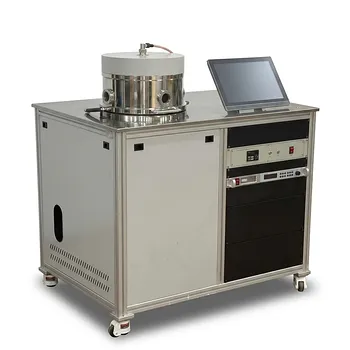
- RF PECVD System Radio Frequency Plasma-Enhanced Chemical Vapor Deposition RF PECVD
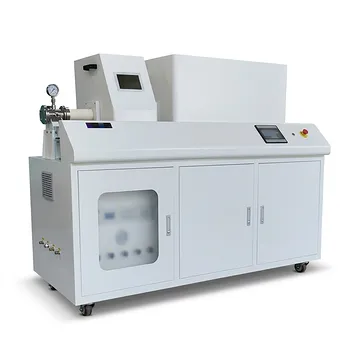
- Chemical Vapor Deposition CVD Equipment System Chamber Slide PECVD Tube Furnace with Liquid Gasifier PECVD Machine
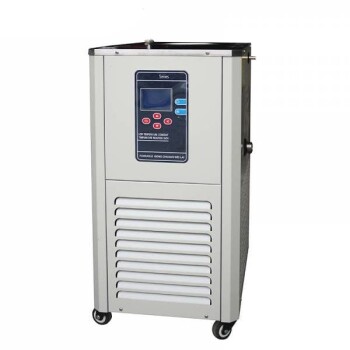
- 5L Chilling Circulator Cooling Water Bath Circulator for Low Temperature Constant Temperature Reaction Bath
- 100L Chilling Circulator Cooling Water Circulator for Low Temperature Constant Temperature Reaction Bath Water Bath Cooling
- 80L Chilling Circulator Cooling Water Circulator for Water Bath Cooling and Low Temperature Constant Temperature Reaction Bath
People Also Ask
- What is plasma enhanced chemical vapour deposition PECVD used for? Enable Low-Temp Thin Films for Electronics & Solar
- What is the role of RF-PECVD in VFG preparation? Mastering Vertical Growth and Surface Functionality
- What is an example of PECVD? RF-PECVD for High-Quality Thin Film Deposition
- What is plasma enhanced chemical Vapour deposition process used for fabrication of? A Guide to Low-Temperature Thin Films
- What is plasma chemical vapor deposition? A Low-Temperature Thin Film Coating Solution